






The Power of Three Simple Moves
The secret to this routine's effectiveness lies in its use of compound exercises. Squats, push-ups, and planks each engage multiple muscle groups simultaneously. This approach is incredibly efficient, helping you build strength, improve endurance, and burn
calories in a short amount of time. Squats target your entire lower body and core. Push-ups work your chest, shoulders, triceps, and core. Planks are a supreme core-strengthening exercise that also engages your back and shoulders. Together, they provide a balanced, full-body workout using nothing but your own body weight, making it a versatile and accessible way to get stronger.
Your 3-Minute Dynamic Warm-Up
Never skip a warm-up. A proper warm-up increases blood flow, prepares your muscles for exercise, and helps prevent injury. Spend about three minutes on these dynamic movements to get your body ready. Perform each of the following for 30-60 seconds: Jumping Jacks to elevate your heart rate. Arm Circles (forward and backward) to mobilize your shoulder joints. Leg Swings (forward/backward and side-to-side) to open up your hips. Torso Twists to gently warm up your spine and core.
Movement 1: The Foundational Squat
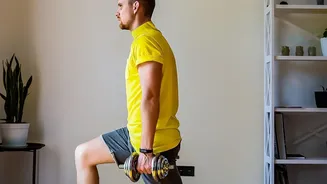
The squat is a fundamental movement for building lower body and core strength. To perform it correctly, stand with your feet shoulder-width apart, toes pointing slightly out. Keep your chest up and your back straight as you send your hips backward and down, as if sitting in a chair. Lower yourself until your thighs are parallel to the floor, ensuring your knees track over your feet but do not extend past your toes. Drive through your heels to return to the starting position, squeezing your glutes at the top.
Movement 2: The Powerful Push-Up
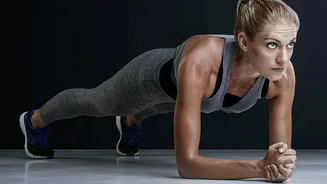
The push-up is an excellent exercise for upper-body strength. Start in a high plank position with your hands slightly wider than your shoulders and your body in a straight line from your head to your heels. As you lower down, keep your elbows tucked relatively close to your body, not flaring out to the sides. Lower your chest toward the floor until your arms form a 90-degree angle, then press back up to the start. If a standard push-up is too challenging, you can modify it by placing your hands on an elevated surface like a bench or by performing the movement on your knees.
Movement 3: The Core-Strengthening Plank
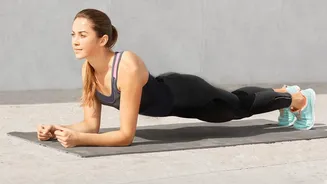
The plank is an isometric exercise that builds incredible core stability. To perform a forearm plank, place your forearms on the ground with your elbows directly under your shoulders. Extend your legs back, resting on your toes. Your body should form a straight, rigid line from your head to your heels. Engage your core and glutes to prevent your hips from sagging or rising too high. Avoid arching your back or letting your head drop. Hold this position for the prescribed time, focusing on maintaining your form.
Putting It All Together: The 20-Minute Circuit
This workout is structured as a simple circuit. The goal is to move from one exercise to the next with minimal rest in between, keeping your heart rate up. After the 3-minute warm-up, follow this 15-minute work block: - Squats: 45 seconds - Rest: 15 seconds - Push-Ups: 45 seconds - Rest: 15 seconds - Plank: 45 seconds - Rest: 15 seconds That completes one round. Rest for 60 seconds, then repeat the entire circuit two more times for a total of three rounds. This structure combines strength work with a cardiovascular challenge.
Your 2-Minute Cool-Down
After your final round, don't just stop. A cool-down helps your heart rate return to normal gradually and can improve flexibility. Spend the last two minutes of your workout performing gentle, static stretches. A standing quad stretch, a forward fold to lengthen the hamstrings, and a chest stretch against a wall are all excellent options to target the muscles you just worked. Hold each stretch for about 30 seconds without bouncing.