



Understanding Karat: The Basics of Gold Purity
When you see the letter 'K' after a number on a piece of gold, you're looking at its karat value. A karat is a unit of measurement for the purity of gold, measured on a scale of 0 to 24. Think of it as 24 parts making up the whole. The higher the karat number,
the greater the proportion of pure gold in the metal. For instance, 24K gold means 24 out of 24 parts are pure gold, while 18K gold means 18 parts are pure gold and the remaining 6 parts are other metals. It's important not to confuse 'karat' with 'carat,' which is a unit of weight for gemstones like diamonds.
What is 24K Gold? The Purest Form
24K gold is the purest gold you can get, containing 99.9% gold content. It has a distinct, bright, almost orange-yellow colour because it has not been mixed with any other metals. While this purity makes it highly valuable, it also makes the metal extremely soft and malleable. Because it can easily scratch, bend, or change shape with daily handling, 24K gold is rarely used to make everyday jewellery. Instead, its primary use is for investment purposes, such as in gold bars and coins, or for special ceremonial pieces where the symbolism of purity is paramount.
22K, 18K, and 14K: The Practical Choices for Jewellery
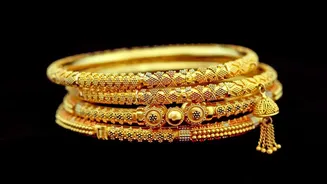
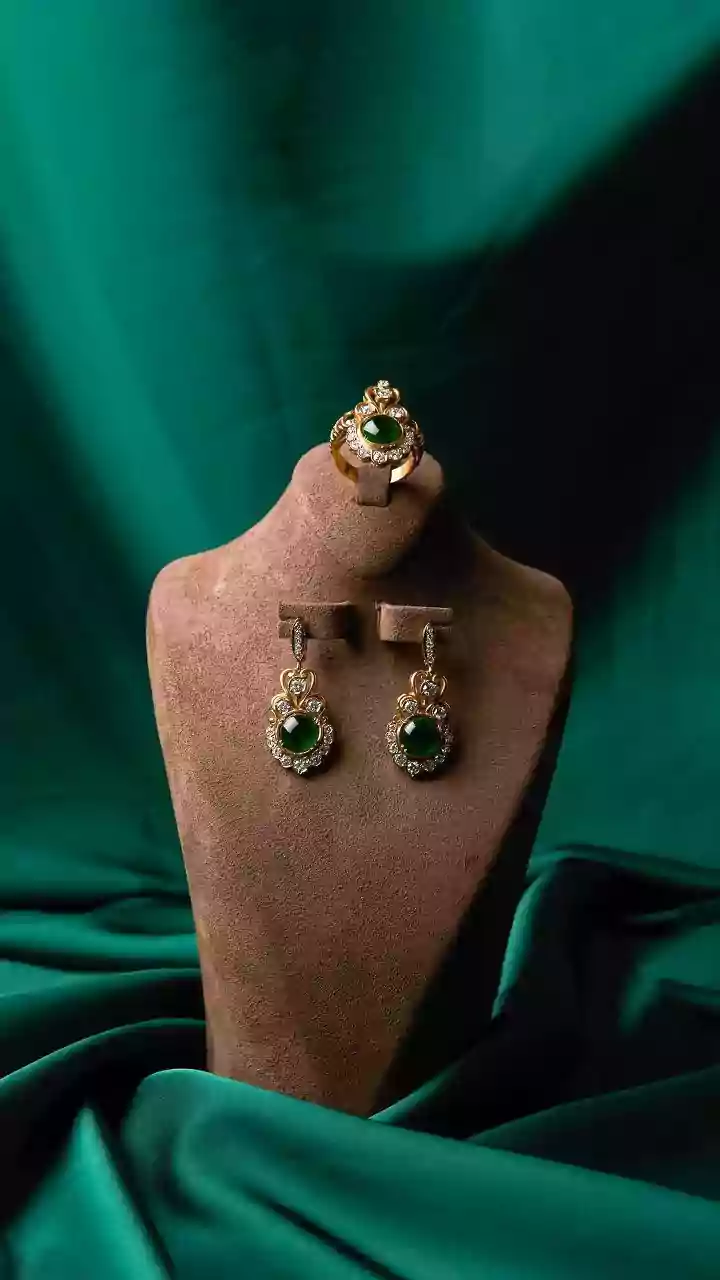
To create jewellery that can withstand daily life, pure gold is mixed with other metals like copper, silver, zinc, or palladium to form an alloy. This process enhances its strength and durability. 22K Gold: Comprising 91.6% pure gold and 8.4% alloy metals, 22K gold is a popular choice for traditional gold jewellery in India. It offers a rich yellow colour close to that of pure gold but is significantly more durable, making it ideal for plain gold ornaments and wedding jewellery. 18K Gold: With 75% pure gold and 25% alloy metals, 18K gold strikes an excellent balance between purity and strength. It is harder and more durable than 22K gold, making it the preferred choice for diamond and gemstone-studded jewellery, as it can hold stones more securely. Its versatility also allows for the creation of white gold and rose gold by changing the alloy composition. 14K Gold: Containing 58.3% gold, 14K is even more durable and affordable. It's a popular choice for everyday wear, especially in Western countries, because it is highly resistant to scratches and damage.
Which Purity is Right For You?
The best karat for you depends entirely on your needs, lifestyle, and what you want from the jewellery. If your priority is a rich, traditional colour and high intrinsic value for pieces worn on special occasions, 22K gold is an excellent choice. It's perfect for wedding sets, festival wear, and heirloom pieces. If you're looking for an engagement ring, a piece with delicate stone settings, or something you plan to wear every day, 18K gold is the more practical and durable option. It provides the strength needed to protect gemstones while still offering a luxurious feel. For those who are very active or want a highly durable and budget-friendly option for daily use, 14K gold is a fantastic alternative. Ultimately, the choice isn't about which karat is 'better,' but which is best suited for the specific purpose of the jewellery.
How to Verify Purity: The Importance of BIS Hallmarking
In India, the Bureau of Indian Standards (BIS) provides a system to certify the purity of gold jewellery, known as hallmarking. It has been mandatory for jewellers in India to sell hallmarked gold jewellery since June 2021. A BIS hallmark is your assurance that the gold you are buying conforms to a set of standards for purity. When you purchase gold, look for the BIS hallmark, which consists of three key components: the triangular BIS logo, a mark indicating the purity in Karat and fineness (e.g., 22K916 for 22K gold), and a six-digit alphanumeric Hallmark Unique Identification (HUID) number. Always ask the jeweller to show you these marks and ensure your bill or invoice specifies the gold's purity and weight.