


The Tale of the Tape
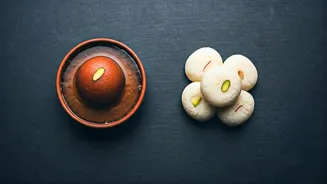
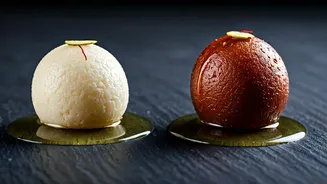
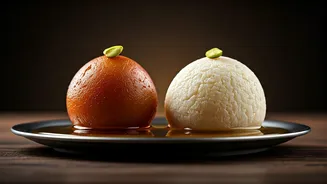
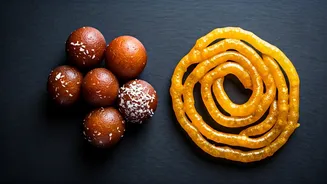
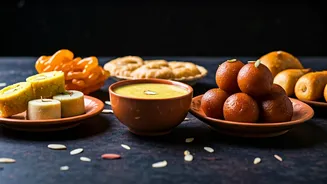
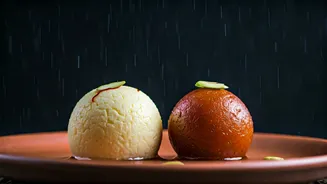
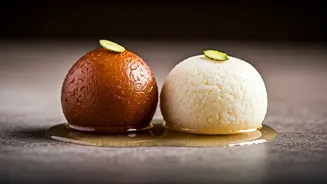
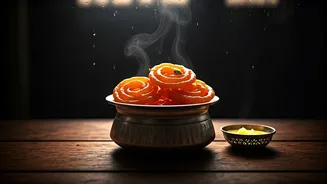
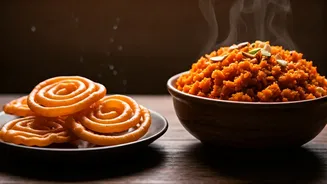
Let’s meet the contenders. In one corner, we have the Gulab Jamun: a dense, golden-brown sphere of fried milk solids (khoya) soaked in a fragrant, heavy sugar syrup often flavoured with cardamom and rose water. [3, 17] It’s rich, decadent, and comforting—a
warm hug in a bowl. [28] In the other corner stands the Rasgulla: a pristine white, spongy ball of fresh cottage cheese (chhena) boiled and steeped in a light, clear sugar syrup. [8, 12] It’s delicate, airy, and refreshingly sweet. [26] The fundamental difference lies in their core ingredient and preparation: Gulab Jamun is made from reduced milk solids and fried, giving it a richer, heavier profile. [8, 20] Rasgulla, by contrast, is made from fresh cheese curd and boiled, resulting in a lighter, spongier texture. [8, 20]
A Contentious Origin Story
The history of these sweets is as rich as their flavour. Gulab Jamun is widely believed to have Persian roots, an Indian adaptation of a similar fritter brought to the subcontinent by Central Asian Turkic invaders during the Mughal era. [3, 5, 11] The name itself is a giveaway: 'Gulab' refers to the rosewater-scented syrup, and 'Jamun' to the jamun fruit, which the dark-coloured sweet resembles. [4, 5] The Rasgulla's history, however, is a tale of fierce rivalry between two states: West Bengal and Odisha. [7] Odisha's claim dates back to the 12th century, where a similar sweet called 'Kheer Mohana' was traditionally offered to Lord Jagannath at the Puri temple. [7, 12, 21] West Bengal credits confectioner Nobin Chandra Das with inventing the modern, spongy 'Rosogolla' in Kolkata in 1868. [7, 21, 24] The debate became so heated that it led to a legal battle for Geographical Indication (GI) status. Ultimately, both states won recognition for their own distinct versions: 'Banglar Rosogolla' in 2017 and 'Odisha Rasagola' in 2019. [22, 23, 29]
The Arena of Taste and Texture
This is where loyalties are truly tested. Biting into a warm Gulab Jamun is an act of pure indulgence. The slightly caramelised outer layer gives way to a soft, melt-in-your-mouth interior that has soaked up every drop of the thick, aromatic syrup. [26] It’s a flavour bomb—intensely sweet, milky, and rich. [28] Rasgulla offers a completely different experience. It's often served chilled and has a bouncy, springy texture. [17] The magic happens when you chew, and the spongy structure releases the light, sugary syrup it holds within. [28] It’s less about decadence and more about a clean, refreshing sweetness that doesn't overwhelm the palate. [26] Those who prefer a lighter dessert often gravitate towards Rasgulla, while those seeking warmth and richness find their champion in Gulab Jamun. [20, 26]
The Court of Cultural Occasion
In India, sweets are deeply woven into the fabric of culture, celebration, and hospitality. [6, 13, 19] Gulab Jamun is a heavyweight contender at major celebrations. Its warmth and richness make it a staple at weddings, winter family gatherings, and festivals like Diwali. [6, 26] It’s the dessert you serve when you want to convey a sense of opulence and festive cheer. Rasgulla, being lighter, is often enjoyed as a post-meal dessert or a refreshing treat on a warm day. It is a star during Durga Puja in West Bengal and holds deep religious significance in Odisha, where 'Rasagola' is offered to the goddess Lakshmi during the Rath Yatra festival. [12, 24] While Gulab Jamun feels like a celebratory feast, Rasgulla is the versatile sweet that can be enjoyed anytime, making it a ubiquitous presence in sweet shops year-round.