




The Sun’s Unpredictable Temper
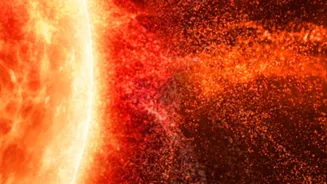
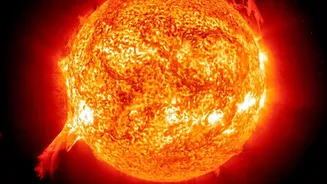
The Sun, our life-giving star, has a volatile side. It periodically releases enormous bursts of energy and matter in two main forms: solar flares and coronal mass ejections (CMEs). A solar flare is an intense flash of radiation, while a CME is a colossal
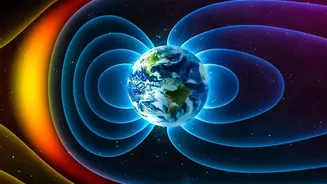
bubble of plasma and magnetic field that hurtles through space. When these events are directed at Earth, they can have significant consequences for our technology-dependent society. We are currently in a period of high solar activity, known as a solar maximum, which means the frequency of these powerful events is increasing, making the need for accurate predictions more urgent than ever.
Satellites in the Firing Line
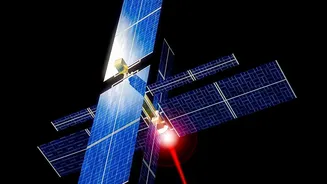
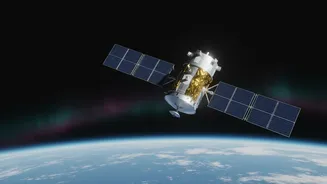
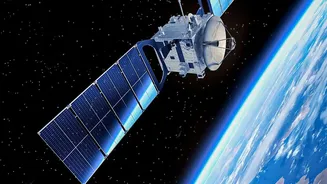
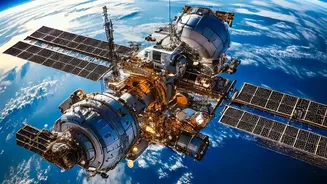
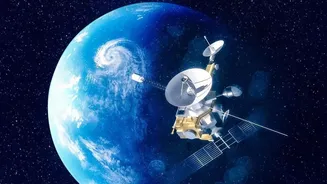
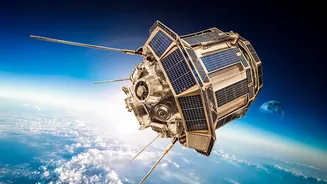
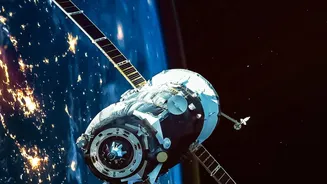
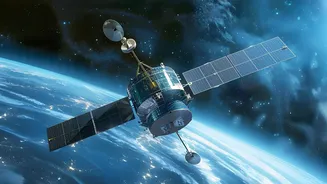
Satellites orbiting Earth are particularly vulnerable to these cosmic blasts. One major effect is increased atmospheric drag on satellites in Low Earth Orbit (LEO). A solar storm heats and expands Earth's upper atmosphere, creating more friction for satellites, which can cause them to slow down, lose altitude, and even fall out of orbit. In 2022, a relatively minor storm led to the loss of 40 new Starlink satellites. Furthermore, high-energy particles from a storm can damage or destroy sensitive satellite electronics, while the event can also disrupt the radio signals used for GPS and other communications, leading to positioning errors or complete blackouts.
The Challenge of Cosmic Weather Forecasting
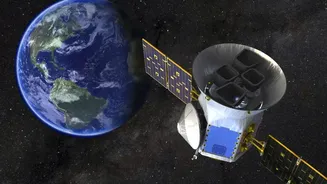
Predicting space weather is incredibly challenging. Currently, scientists rely on a network of ground-based telescopes and spacecraft, like ISRO’s Aditya-L1 and the NASA/ESA SOHO satellite, which are positioned between the Earth and Sun. These give us a direct view of solar activity, but they only provide a limited warning time—from minutes for a solar flare's radiation to hours or a few days for a CME's arrival. This short lead time gives satellite operators, power grid managers, and airlines very little opportunity to take protective measures, such as repositioning satellites or re-routing flights. The economic impact of a severe storm is estimated to be in the hundreds of billions, or even trillions, of dollars.
A New Era of Prediction
The next generation of forecasting tools promises to change the game. A key development is the use of new vantage points in space. The European Space Agency’s upcoming Vigil mission, planned for launch in 2031, will be positioned at a unique point (L5) that allows it to see the side of the Sun days before it rotates to face Earth. This 'side view' will provide an unprecedented four to five-day warning for developing solar activity. In addition, researchers are developing sophisticated Artificial Intelligence (AI) models. These AI systems are trained on years of solar observation data to identify subtle patterns that precede solar flares and CMEs, offering the potential for more accurate and timely warnings.
What It Means for India
For a nation as digitally integrated as India, these advancements are crucial. India's own solar observatory, Aditya-L1, is already providing vital data for understanding and assessing the impact of solar dynamics on our space environment. Better forecasts mean more reliable satellite communication for everything from television broadcasts and internet services to banking transactions. It will lead to more accurate and dependable GPS for logistics, agriculture, and daily navigation. For a country that relies on satellites for disaster management and national security, having a several-day heads-up on a potentially disruptive solar storm allows for proactive measures to safeguard these critical assets, ensuring services remain stable and secure.