





The Astronaut's Lifeboat
Before India can send its ‘Vyomanauts’ into orbit, it must first perfect the art of saving them if something goes wrong. This is the sole job of the Crew Escape System (CES). Think of it as the ultimate emergency eject button, but for an entire space
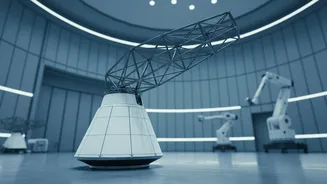
capsule. The CES is a rapid-response safety mechanism designed to pull the crew module—the part of the spacecraft carrying the astronauts—away from a failing rocket in milliseconds. It's a system that has one core philosophy: the mission can fail, the multi-crore rocket can be lost, but the crew must survive. This principle is the absolute bedrock of the entire Gaganyaan programme, and every test of the CES is a test of that commitment.
A High-Altitude, High-Stakes Simulation
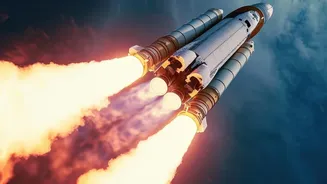
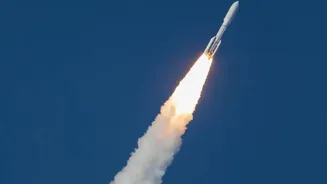
The latest test was a dramatic in-flight abort demonstration, designed to mimic one of the most dangerous moments of a launch. A test vehicle, essentially a simplified rocket, carried a full-scale crew module to a high-altitude, high-velocity phase of its ascent. At a specific point, the mission deliberately simulated a catastrophic failure. This triggered the autonomous Integrated Vehicle Health Management system, the rocket's digital nervous system, which instantly commanded the escape. With a powerful burst, the solid motors of the CES ignited, generating more acceleration than the launch vehicle itself to violently pull the crew module clear of the 'failing' rocket below.
A Flawless Automated Sequence
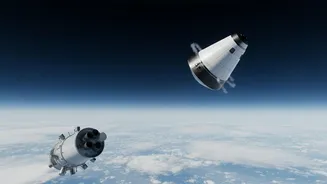
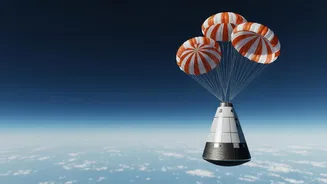
What makes this test a landmark success is its automation. From the moment the anomaly was detected, the entire escape sequence unfolded without any human intervention. After being ripped away from the rocket, the Crew Escape System itself jettisoned from the crew module. Then, a precisely timed series of parachutes began to deploy. First, smaller drogue parachutes stabilised the capsule, followed by the massive main parachutes that slowed its descent for a gentle splashdown in the Bay of Bengal. The entire sequence, from abort trigger to splashdown, worked perfectly, validating the complex software and hardware designed to make life-or-death decisions in the blink of an eye.
One Giant Leap for Gaganyaan
Successfully testing the Crew Escape System is not just a technical win; it's a critical milestone that directly impacts the timeline for India’s first human spaceflight mission. Every component of the Gaganyaan programme must be ‘human-rated’, a certification that demands the highest standards of safety and reliability. This successful validation of the in-flight abort capability is one of the most significant hurdles to clear on the path to human rating the launch vehicle. It builds immense confidence within ISRO and among international partners that India is developing a robust and safe method for sending its citizens to space. The system is a cornerstone of the entire programme, demonstrating a maturity in engineering and an unwavering focus on astronaut safety.
The Road to India's First Crewed Mission
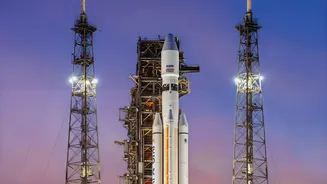
This test is part of a rigorous series of validations. ISRO has already conducted a Pad Abort Test, which simulated an emergency on the launch pad, and will conduct further tests simulating different failure scenarios at various stages of flight. With each successful trial, from parachute tests to module recovery operations, the dream of Gaganyaan gets closer to reality. The next major steps include more uncrewed test flights, including one featuring the humanoid robot Vyommitra, to test the end-to-end mission capabilities. Following these, ISRO will be ready to select and launch the first Indian astronauts, who will make history orbiting the Earth from 400 kilometres above, secured by the knowledge that their lifeboat has been tested and proven.