







With 'Very Severe Cyclonic Storm' Arnab barrelling towards India's east coast, authorities are urging extreme caution. Landfall is expected on Wednesday morning, bringing intense winds and rain. Here’s what you need to know before you travel.
Arnab's Path and Intensity
Cyclone Arnab
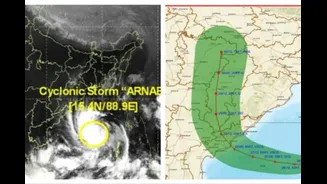
has rapidly intensified over the Bay of Bengal and is projected to make landfall along the Andhra Pradesh coast early on October 28. According to the India Meteorological Department (IMD), the storm will cross the coast near Yanam (Puducherry), between Visakhapatnam and Bapatla, as a 'Very Severe Cyclonic Storm'. As of Tuesday evening, the cyclone was located roughly 170 km southeast of Visakhapatnam, moving towards the coast at about 20 kmph. Forecasts predict maximum sustained wind speeds of 125-135 kmph, with gusts reaching up to 150 kmph at the time of landfall.
High-Alert Zones and Official Warnings
A red message, the highest level of warning, has been issued for the coasts of Andhra Pradesh and adjoining south Odisha. The primary impact zone includes coastal districts of Andhra Pradesh such as Visakhapatnam, Kakinada, Konaseema, East and West Godavari, and Krishna. Southern Odisha districts, including Ganjam, Gajapati, and Koraput, are also on high alert for extremely heavy rainfall and strong winds. Authorities are warning of a potential storm surge of 1.0 to 1.5 metres above the usual astronomical tide, which is likely to inundate low-lying coastal areas, especially around Kakinada and Yanam.
Major Disruptions to Travel
Significant travel disruption is already underway and expected to worsen. The Ministry of Civil Aviation has reviewed readiness, with flights to and from key airports like Visakhapatnam and Vijayawada likely to be affected or suspended. Air India has issued an advisory asking passengers to check their flight status before heading to the airport. The Ministry of Railways has cancelled over 90 train services as a precautionary measure, particularly those running along the coast. Road travel is also strongly discouraged due to the risks of flooding, uprooted trees, and damage to infrastructure. Authorities have advised allowing extra time for any essential journey to the airport.
Evacuations and Safety Measures
State governments have initiated large-scale evacuations, with tens of thousands of people being moved from vulnerable, low-lying areas to cyclone shelters. In Andhra Pradesh alone, authorities began evacuating nearly 90,000 people. The Odisha government has also prepared to move thousands of residents to safety and has closed schools and anganwadi centres in several southern districts. Fishing operations have been completely suspended, and fishermen have been warned not to venture into the sea. The National Disaster Response Force (NDRF) and state disaster response teams have been deployed to the high-risk districts to assist with evacuations and conduct rescue operations.
How to Stay Informed
In a rapidly evolving situation like a cyclone, it is critical to rely on official sources for information. The most reliable updates will come from the India Meteorological Department (IMD) website and its social media channels. The National Disaster Management Authority (NDMA) also provides crucial safety advisories. Travellers should stay in close contact with their airlines and check the websites of Indian Railways for the latest on cancellations and rescheduling. Heeding the advice of local and state authorities is paramount for ensuring personal safety during this severe weather event.