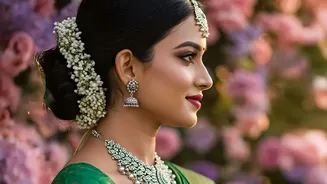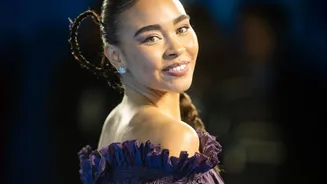




1. The Classic Two-Braid Halo
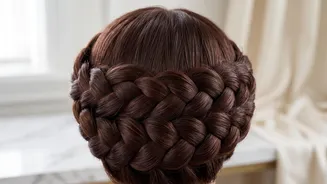
Often called a milkmaid braid, this is the most straightforward way to achieve a halo effect and is particularly forgiving for medium-length hair. The technique involves parting your hair down the middle, creating two regular three-strand braids (pigtails),
and then lifting each braid up and over the top of your head, like a headband. You pin one braid in place, then lay the second one over or under it to create the illusion of a single, continuous crown. The key is to secure the ends of the braids discreetly with bobby pins. This style works well because you are not trying to make one single braid stretch all the way around your head, which often requires significant length.
2. The Half-Up Halo Braid
This is arguably the best entry point for anyone with medium-length hair or those new to halo braiding. As the name suggests, you only work with the top section of your hair, leaving the rest to flow freely. You create two small braids, one on each side of your head starting near the temples, and then wrap them around the back of your head to meet in the middle, pinning them securely. This gives the beautiful crown effect from the front without requiring a full updo. It’s a romantic, soft look that is exceptionally well-suited for hair that is shoulder-length or slightly longer.
3. The Dutch Braid Halo
Unlike a French braid where you cross strands over the middle, a Dutch braid involves crossing them under. This simple change makes the braid pop, creating a more defined, three-dimensional look that sits on top of the hair rather than blending in. To create a Dutch halo, you start a single Dutch braid near one temple and weave it along your hairline, gradually incorporating more hair as you go around your head. While this style is often easier with long hair, it can be adapted for medium lengths with strategic pinning. The raised texture of the Dutch braid can make a big visual impact even if the braid itself isn't massive.
4. The Messy 'Boho' Halo
For a more relaxed and modern take, the bohemian or messy halo is a perfect choice. This style celebrates texture and imperfection, making it ideal for layered or medium-length hair where shorter pieces might naturally fall out. After creating your halo (using either the two-braid or Dutch braid method), the next step is to gently pull apart the sections of the braid—a technique often called 'pancaking'—to make it look fuller and softer. You can also pull out a few face-framing tendrils to complete the effortless, romantic vibe. This is a very forgiving style where precision is not the goal.
5. The Fishtail Halo Braid
If you're looking for a more intricate and delicate texture, the fishtail halo is a stunning option. A fishtail braid uses two strands instead of three, with small pieces crossing from one side to the other. While a full fishtail halo that wraps around the entire head typically requires long, thick hair, those with medium lengths can easily adopt this style in a half-up version. Simply create two fishtail braids from the front sections of your hair and pin them at the back. The resulting woven pattern is eye-catching and offers a sophisticated alternative to the classic three-strand braid.