
A New Eye on the Universe
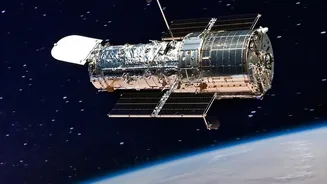
The James Webb Space Telescope (JWST) is changing our understanding of the universe by seeing what was previously invisible. Unlike telescopes that see visible light, JWST is designed to capture infrared light. This unique ability allows it to pierce
through the dense clouds of gas and dust that shroud many of the most interesting places in the cosmos, from stellar nurseries to the centers of galaxies. Recent images released by NASA and ESA celebrate the telescope's ongoing mission, showcasing its power to resolve fine details that were once just smudges of light. These new views are not just pretty pictures; they are rich datasets helping scientists answer fundamental questions about how cosmic structures form and evolve.
Peeking into Stellar Nurseries
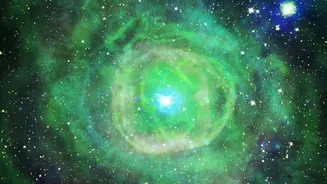
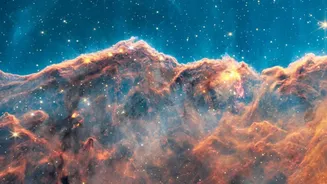
One of the most exciting revelations from these new images is a clearer view of star formation. Telescopes have captured stunning images of nebulae where stars are born, but JWST is showing us the process in much greater detail. For example, recent observations have looked deep into star-forming regions like the Lobster Nebula and the Orion Molecular Clouds. Within these dense clouds, JWST can spot protostars—young stars still gathering mass—and the swirling disks of material around them that will eventually form planets. By studying these hidden nurseries, astronomers can better understand the lifecycle of stars and the initial conditions that lead to the creation of planetary systems like our own.
The Secrets of Swirling Dust
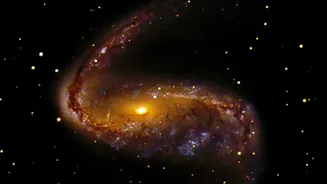
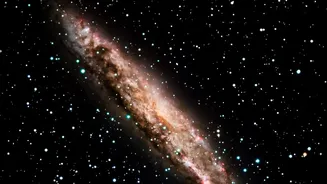
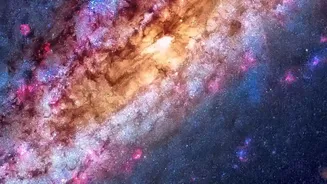
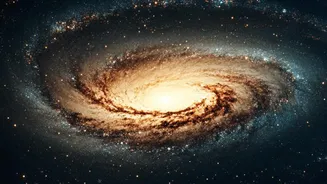
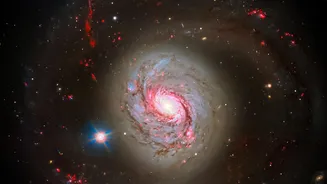
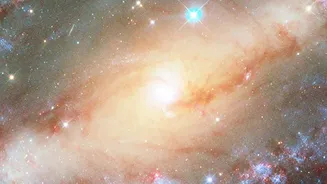
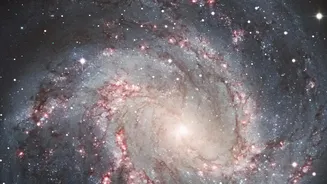
The very dust that once blocked our view is now a primary subject of study. The latest images of galaxies like Centaurus A and Messier 77 highlight intricate filaments and swirling structures of cosmic dust. This dust is not just space debris; it’s composed of heavy elements forged inside previous generations of stars. It serves as the raw material for new stars and planets. JWST's instruments can analyze the composition of this dust, revealing clues about a galaxy's history and chemical evolution. The images show how this dust is channelled towards the galactic center, often providing the fuel for the galaxy's central engine: its supermassive black hole.
Unmasking Black Hole Activity
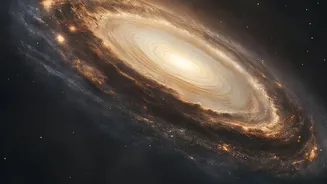
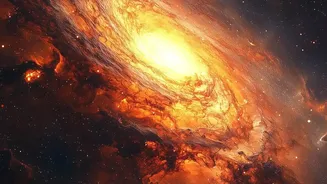
Supermassive black holes, millions or billions of times the mass of our sun, lurk at the center of most large galaxies. While the black holes themselves are invisible, their influence is enormous. New JWST observations are providing the clearest evidence yet of how these giants feed. Recent findings show gaseous filaments connecting a galaxy's outer regions directly to the accretion disk spinning around the central black hole. In other cases, JWST has managed to peer through thick dust to spot the tell-tale signs of a normally dormant black hole feasting on a star that wandered too close—a phenomenon known as a tidal disruption event. This allows astronomers to study black holes that were previously hidden, revealing that these cosmic monsters might be far more active than once thought.