



The Prize: Water Ice on the Moon
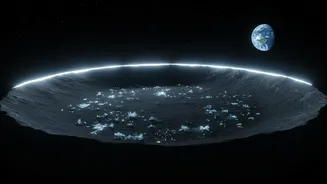
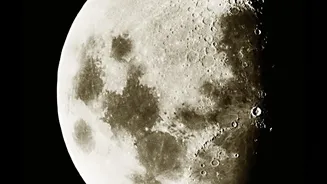
For decades, the Moon was thought to be a completely dry, barren world. However, data from missions like India's own Chandrayaan-2 orbiter have provided strong evidence of water ice hidden in Permanently Shadowed Regions (PSRs) near the lunar south pole.
These craters are some of the coldest places in the solar system, as their floors have not seen sunlight in billions of years, allowing ice to remain frozen in time. This water is a potential game-changer. It can provide drinking water and breathable oxygen for future astronauts, but its most transformative use is as a raw material for rocket propellant. Launching resources from Earth is incredibly expensive due to our planet's strong gravity, so the ability to 'live off the land' is crucial for establishing a long-term human presence on the Moon and beyond.
The Mission: Chandrayaan-4's Ambitious Goal
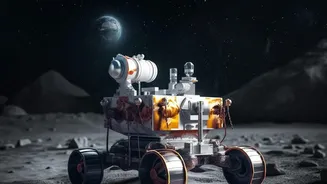
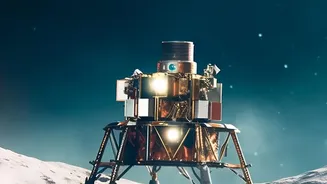
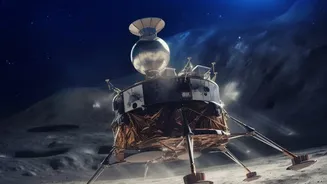
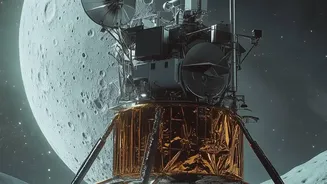
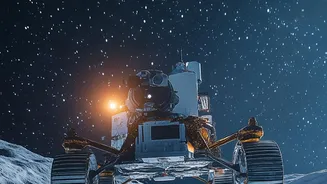
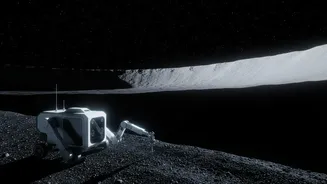
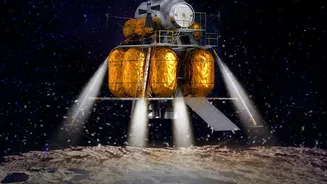
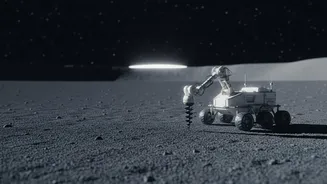
ISRO's answer to this challenge is Chandrayaan-4, a highly complex lunar sample-return mission slated for launch around 2028. Unlike its predecessors, the primary goal of Chandrayaan-4 is not just to land, but to collect lunar soil and rock samples from a water-ice-rich area and bring them back to Earth for detailed study. This will be India's first attempt at such a mission and, if successful, could be the world's first return of samples from the lunar polar region. The mission is so complex that it will require two separate launches using India's most powerful rocket, the LVM-3. Five different modules will work in concert: a lander to touch down, a robotic arm and drill to collect samples, an ascender to launch back into lunar orbit, and transfer and re-entry modules to bring the precious cargo home.
From Ice to Fuel: The Science of ISRU
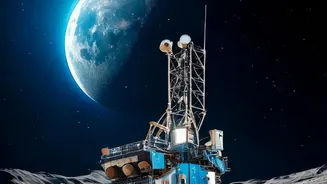
The long-term vision behind harvesting lunar ice is a concept called In-Situ Resource Utilization (ISRU), which essentially means using local resources to support space missions. The process for turning water into fuel is well-understood science. First, robotic systems would mine the icy regolith (lunar soil). This material would then be heated to release the water as vapor, which is then captured. The captured water (H₂O) is purified and then split into its constituent elements—hydrogen and oxygen—through a process called electrolysis. Liquid oxygen and liquid hydrogen are a powerful and clean-burning rocket propellant combination used in many modern rockets. By creating this fuel on the Moon, the lunar surface can be transformed from a destination into a refueling station for missions venturing deeper into the solar system.
The Bigger Picture: A Gateway to Deep Space
While Chandrayaan-4 is a sample-return mission, it serves as a crucial technology demonstrator for these future ISRU ambitions. The techniques for landing precisely, operating robotics, and ascending from the lunar surface are all building blocks for a sustainable presence. This effort is part of a much larger national vision for India's role in space. ISRO has stated goals of landing an Indian astronaut on the Moon by 2040 and establishing a lunar base before 2050. A subsequent mission, Chandrayaan-5, is a planned collaboration with the Japan Aerospace Exploration Agency (JAXA) to further explore the polar regions with a more advanced rover. By developing the capacity to produce fuel on the Moon, India is not just planning another mission; it is laying the groundwork to become a key player in the next era of space exploration, one where the Moon serves as a critical stepping stone to Mars and beyond.