


The Tyranny of Distance and Supplies
A round trip to Mars is not a short jaunt. Depending on planetary alignment, a one-way journey takes between six and nine months. Missions would likely require astronauts to stay on the Martian surface for over a year to await a favourable return window.
This adds up to a mission lasting roughly three years. For that entire duration, a human crew needs everything to survive: food, water, medical supplies, and breathable air. NASA estimates that a single astronaut consumes about 2.5 kg of food per day, and a crew would require many tonnes of supplies for the full journey. Unlike the International Space Station, which can be resupplied, a Mars mission is on its own once it leaves Earth. This massive upfront payload of supplies makes any human mission incredibly heavy and expensive.
The Robotic Reality: Lean and Enduring
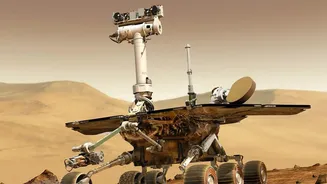
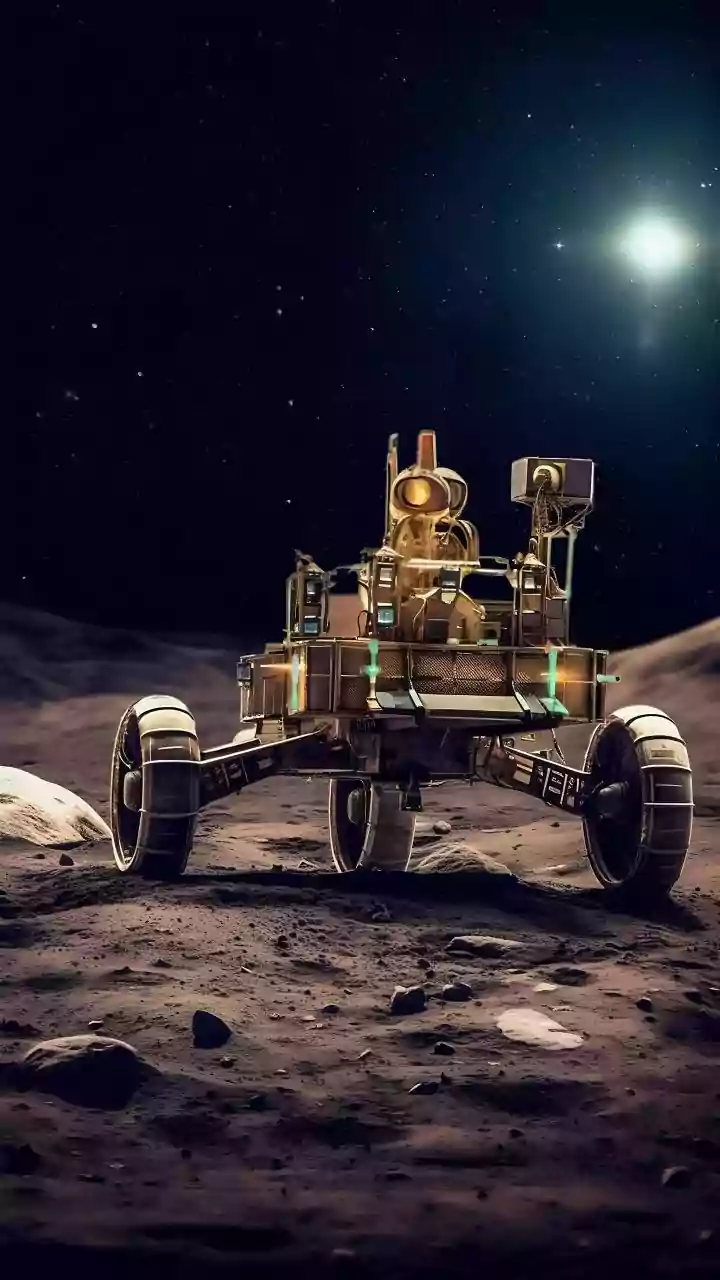
In stark contrast, robotic explorers are models of efficiency. A rover like Perseverance doesn't need food, water, or a life support system. Its needs are simpler: electrical power, which can be generated by solar panels or a radioisotope power source, and a communication link to Earth. This allows robots to operate for years, even decades, methodically carrying out their scientific objectives without the ticking clock of life-sustaining resources. They can endure the harsh radiation of space and the extreme temperatures on the Martian surface with far less complaint than a human body. This endurance and low overhead make them ideal for the slow, painstaking work of planetary science. For these reasons, robotic missions have been the backbone of Mars exploration, mapping the surface and analysing the geology long before any human could.
The Human Advantage: Adaptability and Insight
If robots are so efficient, why even consider sending humans? The answer lies in ingenuity and speed. While a rover moves at a crawl—NASA's Curiosity has a top speed of just 0.14 km/h—a human explorer can walk, climb, and navigate complex terrain with ease. More importantly, humans can make intuitive decisions and adapt to unexpected situations instantly. A geologist on Mars could identify a scientifically interesting rock formation and investigate it on the spot, a process that would take a rover team on Earth hours or days of communication due to the significant time delay in signals. Humans can perform complex repairs, operate delicate instruments with unmatched dexterity, and apply critical thinking in real-time, accelerating the pace of discovery in ways a pre-programmed robot cannot.
The Risk Equation
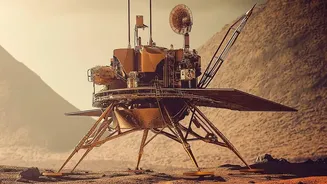
Beyond supplies, there is the unavoidable issue of risk. Space is an unforgiving environment. A human mission to Mars faces threats from cosmic radiation, the physical and psychological effects of long-duration spaceflight, and the immense challenge of landing a heavy vehicle on the planet's surface. Only about half of all robotic landing attempts on Mars have been successful, and a human-rated lander would need to be far larger and more complex. If a critical system fails on a robotic mission, the loss is financial and scientific. If it fails on a human mission, lives are at stake. This fundamental difference in risk makes mission planners weigh every decision with extreme care, often favouring the safer, unmanned option.
A Hybrid Future: Paving the Way for Humans
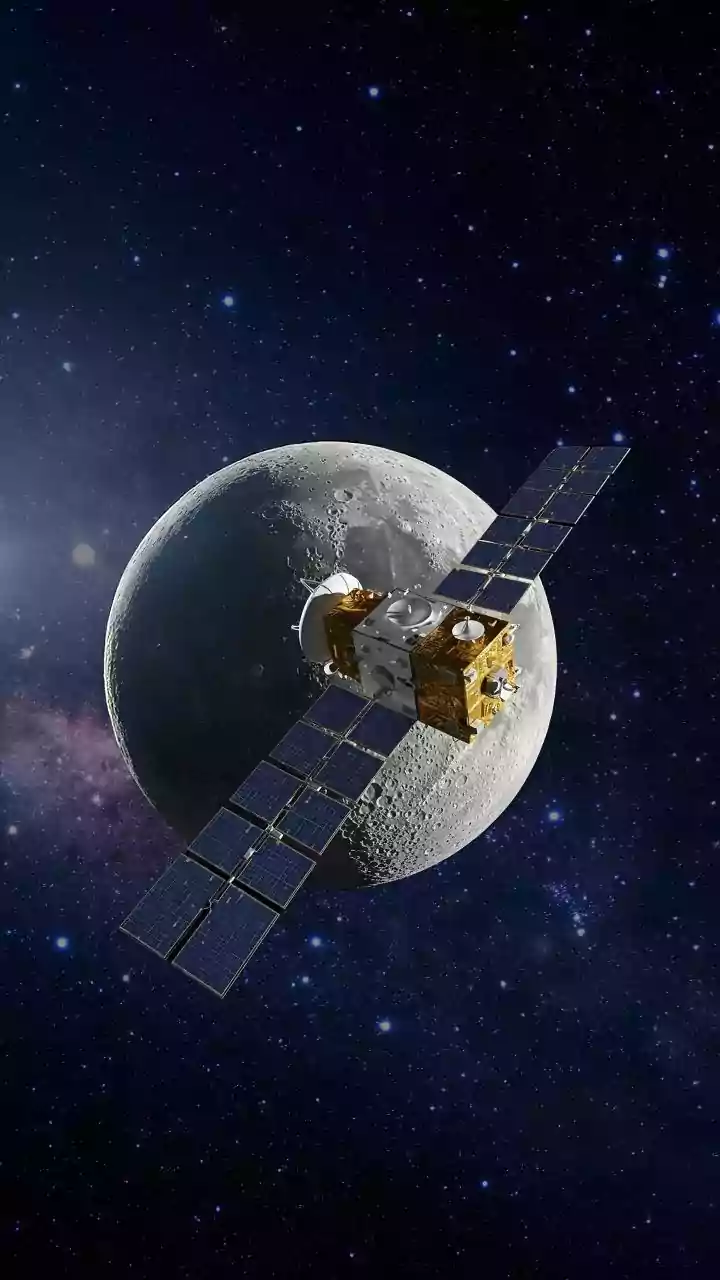
Ultimately, the debate isn't a simple 'either-or' choice. The future of Mars exploration is widely seen as a collaborative effort between humans and robots. Current and future robotic missions are explicitly designed to be precursors for human arrival. Robots are mapping terrain to find safe landing sites, analysing the atmosphere, and even testing technology to produce oxygen from Martian carbon dioxide, as NASA's MOXIE experiment has done. The strategy is to use robots for the advance work: scouting for resources like water ice, building basic infrastructure, and prepositioning supplies. This allows robots to do the dangerous, time-consuming foundational work, making an eventual human mission safer and more productive from the moment astronauts arrive.