



The Invisible Transfer
The core issue at play is cross-contamination. This term isn't just for restaurant kitchens or raw chicken; it applies to your leftovers, too. Cross-contamination is the transfer of harmful bacteria or other microorganisms from one surface to another.
In this case, the journey is from your mouth, to a used utensil, and directly into a container of otherwise perfectly good food. Every time you take a bite, your mouth's ecosystem, teeming with bacteria, is introduced to your fork or spoon. When that same utensil goes back into the main container for another scoop, you’re essentially inoculating your leftovers with a fresh batch of microbes.
Your Mouth's Impact on Food
Human saliva is a powerful digestive agent. It contains enzymes like amylase, which begins the process of breaking down starches the moment food enters your mouth. While essential for digestion, this process doesn't stop just because the food is now in a storage container. When introduced to your leftovers via a used utensil, these enzymes continue to work, starting to break down the food and accelerating spoilage long before you'd expect. This is why a container of food that has been 'double-dipped' might seem to go bad much faster. It's not your imagination; you've given the spoilage process a significant head start.
A Breeding Ground for Bacteria
Beyond speeding up spoilage, introducing oral bacteria into a container of food creates an ideal environment for microbial growth. While your own oral bacteria might not harm you directly, they can multiply rapidly in the nutrient-rich environment of your leftovers. Furthermore, this process can introduce foodborne pathogens if you happen to be carrying any, even from a mild cold. According to food safety guidelines, bacteria multiply fastest in the 'danger zone' between 4°C and 60°C. Each time you take the container out, scoop some food, and put it back, you’re potentially warming it up slightly and adding more bacteria, creating a perfect storm for contamination. This is why food safety authorities like the FSSAI emphasize portioning out food and not reheating the same batch multiple times.
The Golden Rules for Leftovers
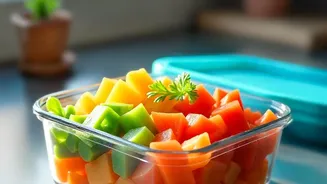
Adopting a safer approach is simple and requires just a few tweaks to your routine. Following these steps can help ensure your leftovers remain safe and delicious for as long as possible. First, always use a dedicated, clean utensil to serve food from a storage container. Never use a spoon you've already eaten from. Second, instead of eating directly from the main container, portion out the amount you intend to eat into a separate bowl or plate. This keeps the remaining food pristine. Third, when you reheat, make sure the food reaches an internal temperature of at least 74-75°C (165°F) to kill any potential bacteria that may have developed during storage. Finally, return the main container to the refrigerator promptly, within two hours of it being out at room temperature.
More Than Safety: Reducing Food Waste
Following this simple rule isn't just about avoiding a potential stomach ache. It’s also a powerful strategy for reducing food waste and saving money. When food spoils prematurely due to cross-contamination, it often gets thrown out. By handling your leftovers with care, you extend their life, ensuring you have a quick and easy meal ready to go for another day. Treating the main container as a source from which you serve, rather than a trough from which you graze, preserves the quality and safety of the food. It’s a small habit that has a significant impact, turning last night’s dinner into a reliable and safe future lunch.