





The Annual Pothole Plague
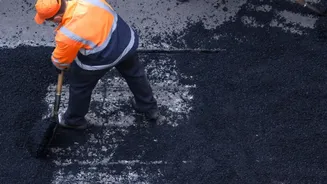
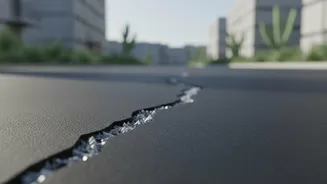
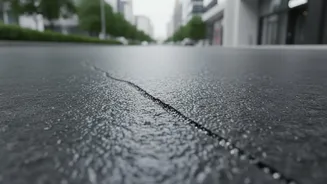
Every year, as the rains sweep across India, our roads begin to crumble. The constant deluge of water seeps into minor cracks in the asphalt and concrete, weakening the structure from within. The pressure from passing vehicles does the rest, creating
the jarring potholes that have become a dreaded, and costly, feature of the Indian monsoon. This endless cycle of damage and repair puts a massive strain on municipal budgets and resources. Traditional repair methods are often a temporary fix, with patches washing away in subsequent downpours, leading to a frustrating loop for both commuters and civic authorities.
A Living Solution to a Concrete Problem
Enter bacterial concrete, also known as self-healing concrete. It sounds like science fiction, but it's a very real and promising field of civil engineering. The concept involves embedding specific, non-pathogenic bacteria into the concrete mix at the time of production. These are not just any bacteria; species from the Bacillus genus are often chosen for their remarkable ability to survive in the highly alkaline environment of concrete. They remain dormant, encased in tough spores, waiting for the one thing that usually signals destruction: water.
How Bacteria Become Microscopic Masons
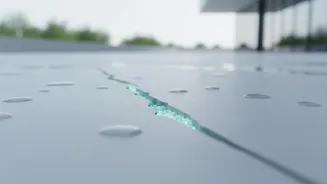
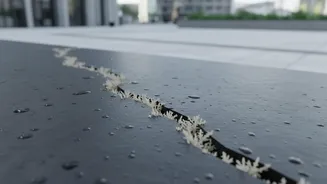
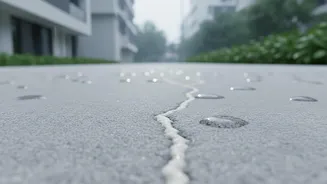
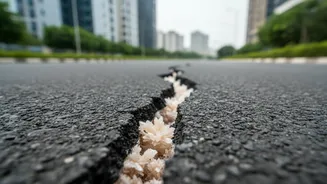
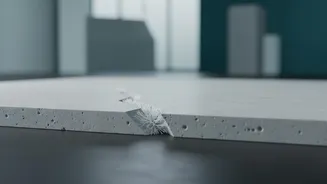
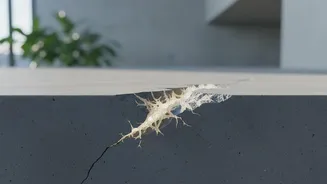
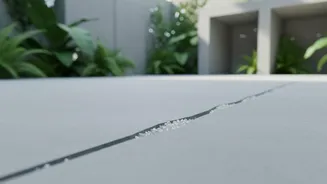
The secret to this technology lies in a natural process called Microbially Induced Calcium Carbonate Precipitation (MICP). Here’s how it works: when a crack forms on the road's surface, rainwater seeps in. This water acts as a trigger, awakening the dormant bacterial spores. Along with the bacteria, a nutrient source, such as calcium lactate, is also added to the concrete mix. Once awake, the bacteria consume this nutrient and, as a byproduct of their metabolic process, precipitate calcium carbonate — essentially, limestone. This newly formed limestone crystallizes and fills the crack, effectively 'healing' the concrete from the inside out. The process seals the fissure, preventing further water ingress and stopping a small crack from becoming a major pothole.
From Lab to Road: The Indian Context
While the technology has been developed over the last couple of decades, its application for India's unique infrastructure challenges is now a major focus for researchers. Various Indian institutes are studying the effectiveness of different bacterial strains and economical nutrient sources to make the technology viable for widespread use. The headline's “city road tests” refer to these crucial pilot projects and performance evaluations, which are essential before large-scale deployment. Research is underway to propose economical and sustainable self-healing concrete mixes specifically designed for structures like roads, which are highly prone to cracking. These tests measure everything from compressive strength to durability against the elements, ensuring the bio-concrete can withstand real-world traffic and weather conditions.
The Road Ahead: Promise and Hurdles
The advantages of self-healing concrete are significant. It promises more durable, longer-lasting roads, a drastic reduction in maintenance costs, and enhanced safety for commuters. By reducing the need for constant repairs, it also lowers the carbon footprint associated with cement production and transport for patch-up jobs. However, challenges remain. The primary hurdle is cost. The special bacteria and nutrient additives currently make bacterial concrete more expensive than conventional mixes. Researchers are actively working on finding cheaper nutrient sources to bring down the price. Scaling up production and ensuring the bacteria remain viable over long periods are other areas of intense research. The goal is to develop a solution that is not just effective, but also economically practical for public works departments across the country.