
Why Venus? Earth's 'Evil Twin'
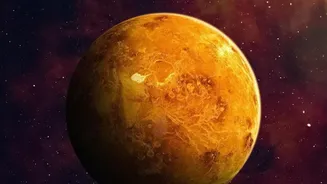
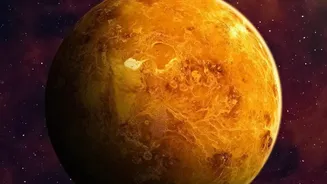
Venus is often called Earth's twin due to its similar size, mass, and density. But the similarities end there. It's a hellish world with surface temperatures hot enough to melt lead and a crushing atmospheric pressure over 90 times that of Earth's. Its
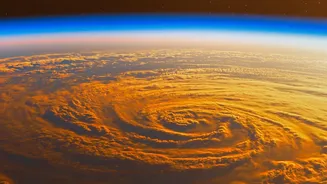
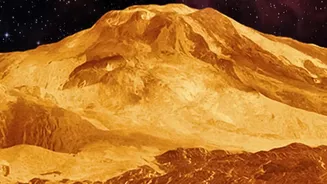
thick, toxic atmosphere is primarily carbon dioxide, with clouds of sulfuric acid, creating an extreme runaway greenhouse effect. Scientists are fascinated by why two planets that started so similarly evolved so differently. Studying Venus could provide invaluable insights into planetary climate change, offering a cautionary tale for our own world. The Shukrayaan mission aims to investigate these long-standing mysteries, from its geology to its complex atmospheric dynamics.
Inside Shukrayaan-1: The Mission
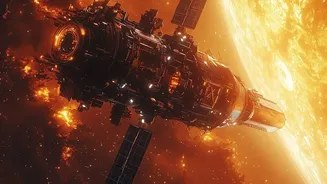
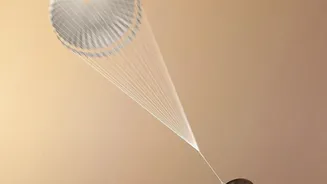
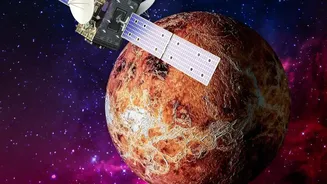
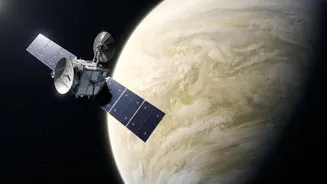
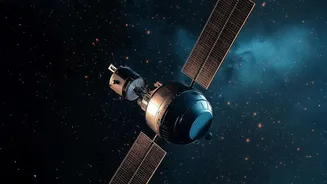
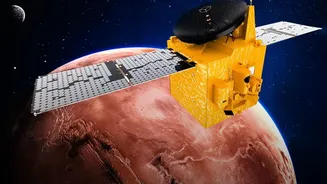
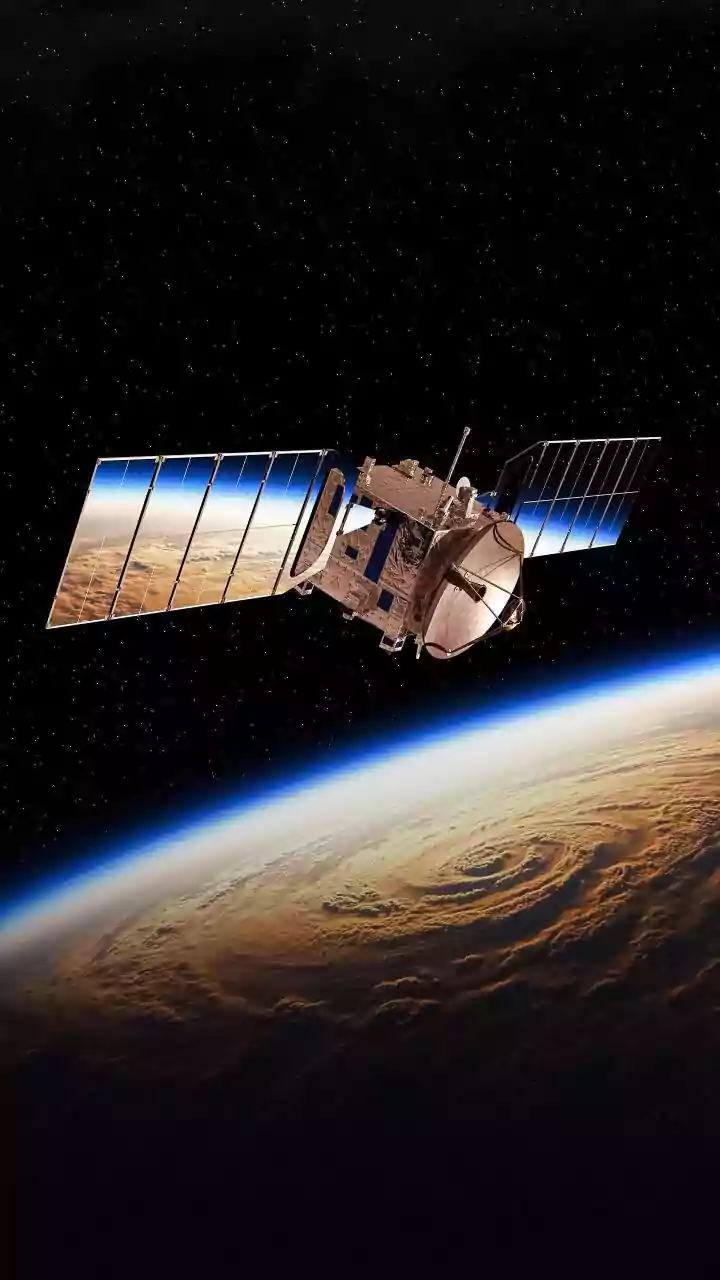
Officially named the Venus Orbiter Mission (VOM), Shukrayaan-1 received formal approval from the Indian government on September 18, 2024, with a launch planned for March 29, 2028. The spacecraft will be launched aboard the powerful LVM-3 rocket, the same vehicle that successfully carried Chandrayaan-3 to the Moon. After a 112-day journey, it is expected to enter a large elliptical orbit around Venus on July 19, 2028. From there, it will perform a series of complex aerobraking manoeuvres—using the friction of the Venusian upper atmosphere to gradually lower its orbit—to settle into a final science orbit of approximately 200 x 600 km. This fuel-saving technique allows the orbiter to carry a heavier suite of scientific instruments, weighing around 100 kg in total.
The Scientific Toolkit: Key Sensors
The heart of the Shukrayaan mission lies in its sophisticated payloads designed to peer through the planet's thick cloud cover and analyze its atmosphere. The headline instrument is a high-resolution Synthetic Aperture Radar (SAR), which can map the Venusian surface in incredible detail, searching for evidence of volcanic activity and other geological features hidden beneath the clouds. The mission will also carry a first-of-its-kind ground-penetrating radar to study the planet's subsurface layers. For atmospheric analysis, a key objective mentioned in the headline, instruments like the Venus Infrared Atmospheric Gases Linker (VIRAL) will study the chemical composition of the atmosphere. Other sensors will measure wind speeds, cloud structure, and how the solar wind strips away particles from the Venusian ionosphere.
A Global Scientific Collaboration
Reflecting India's growing stature in space exploration, Shukrayaan-1 is a significant international effort. While the majority of the 19 planned payloads are Indian-developed, several key instruments are the result of collaboration. The VIRAL instrument, crucial for atmospheric gas analysis, is a joint effort with Russia and France. Sweden has formally joined the mission, providing a Venusian Neutrals Analyser (VNA) to study the interaction between the solar wind and the planet's atmosphere. This instrument will be part of a larger package called VISWAS (Venus Ionospheric and Solar Wind particle Analyser), a collaboration between Sweden and ISRO. Germany is also collaborating on an experiment. These partnerships underscore the global scientific community's trust in ISRO's capabilities following the successes of its Mars and Moon missions.