





Cardiovascular and Calorie Burn
Both running and dancing are excellent for heart health. Running is a high-impact, high-intensity activity renowned for its efficiency in burning calories. An hour of moderate-paced running can burn significantly more calories than a general dance class.
However, high-intensity dance styles like hip-hop or salsa can close that gap, offering a vigorous cardiovascular workout that rivals a steady run. Ultimately, running often has a slight edge in pure calorie-burning efficiency per minute, but the most effective workout is the one you do consistently. Recent studies have also shown that dancing can be as beneficial as other forms of exercise for overall health and may even be more beneficial for those with cardiovascular disease than walking.
Muscle Engagement and Body Conditioning
Running primarily targets the lower body, heavily engaging the quadriceps and hamstrings to propel you forward. Dancing, in contrast, is often a full-body workout. It involves fluid, multi-directional movements that engage the core, upper body, and lower body simultaneously, improving overall coordination and functional strength. Dancers often develop muscular endurance from holding positions, while runners build powerful leg muscles for forward motion. Because it uses a wider variety of muscle groups, dancing can be a great way to avoid the repetitive strain that can come from running.
The Mental and Cognitive Boost
Exercise in any form is a known mood-booster, but dancing offers unique cognitive benefits. Learning choreography requires memory, rhythm recognition, and spatial awareness, which actively challenges the brain. This process stimulates neural connections, enhances neuroplasticity, and can help delay age-related cognitive decline. Studies suggest that dancing, which combines physical and cognitive demands, can lead to larger increases in brain volume in certain areas compared to conventional fitness activities. While running provides its own mental release, often described as a 'runner's high', the constant learning and adaptation required in dance provide a different kind of mental workout that keeps the brain engaged.
The Social vs. Solo Experience
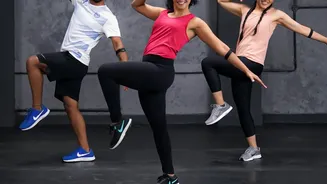
This is where the two activities diverge most clearly. Running is often a solitary pursuit, offering a chance for introspection and focus. While running clubs exist, the core activity is individual. Dance, particularly in a class setting, is inherently social. Group fitness provides a sense of community, accountability, and shared experience that can be highly motivating. Research shows that exercising in a group can lower stress levels even more effectively than working out alone and can deepen our sense of social connection. For those motivated by community and shared energy, a dance class is a natural fit. For those who prefer solitude and personal reflection, running is ideal.
Accessibility, Cost, and Injury Risk
Running is one of the most accessible forms of exercise; all you need is a pair of good shoes. There are no membership fees or special equipment required. Dancing can involve costs for classes, which can range from affordable community sessions to more expensive private lessons. However, the rise of free and low-cost online tutorials has made it more accessible than ever. In terms of injury, running is a high-impact activity that can be hard on the joints, particularly knees and hips. Most forms of dance are lower-impact, making them a joint-friendlier option while still providing cardiovascular benefits.