

A Sweet Steeped in Legend
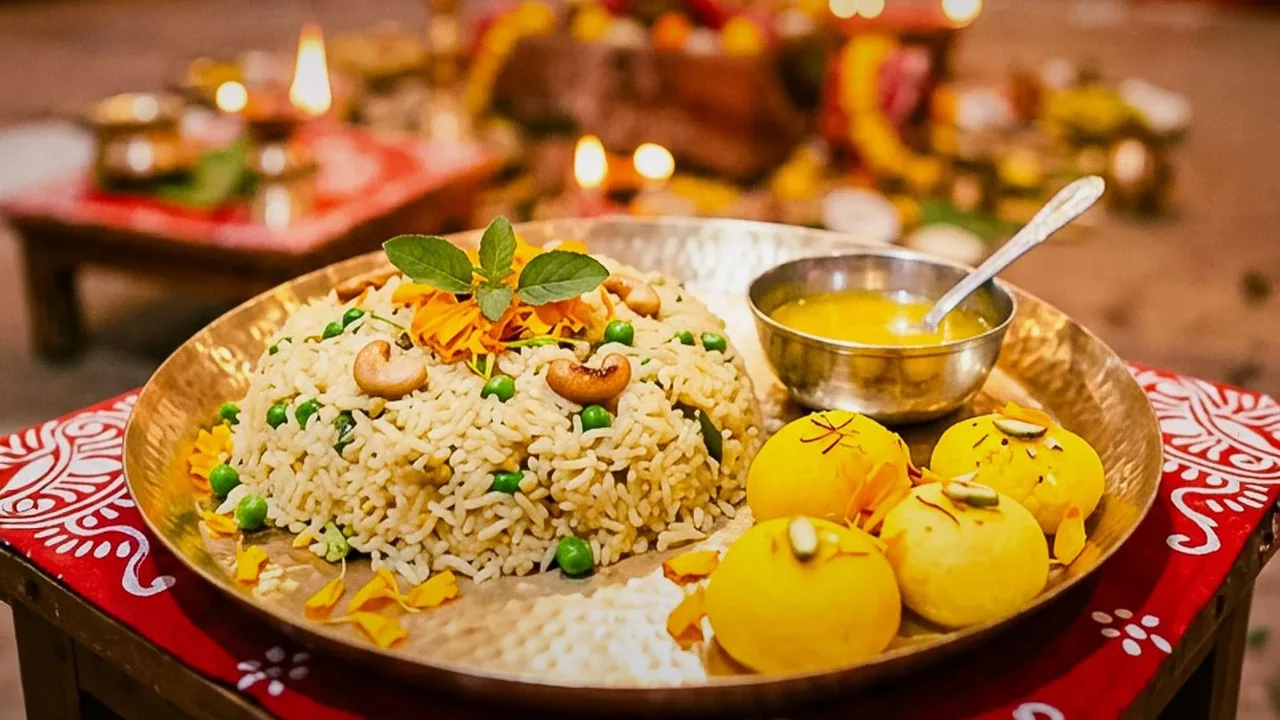
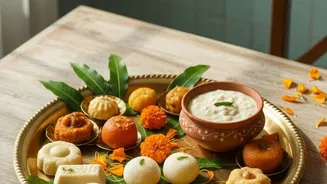
The story of Mathura peda is inseparable from the city itself, the sacred birthplace of Lord Krishna. Legends tell of this sweet being a favourite of Krishna, and it remains a primary religious offering, or 'prasad', in the temples of Mathura and Vrindavan.
This spiritual connection elevates the peda from a mere confection to a symbol of devotion. The region's history as a hub for dairy farming provided the perfect foundation for milk-based sweets to become central to the local cuisine. For centuries, this tradition has been passed down, solidifying the peda's place not just in kitchens, but in the cultural and religious life of the community.
The Art of Roasting Khoya
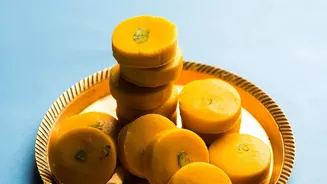
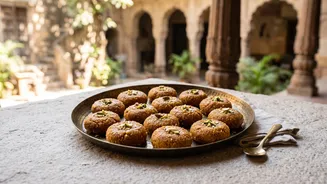
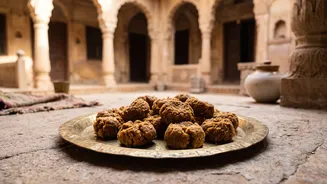
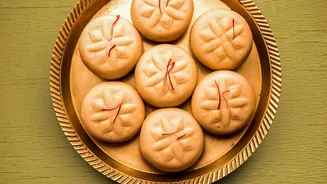
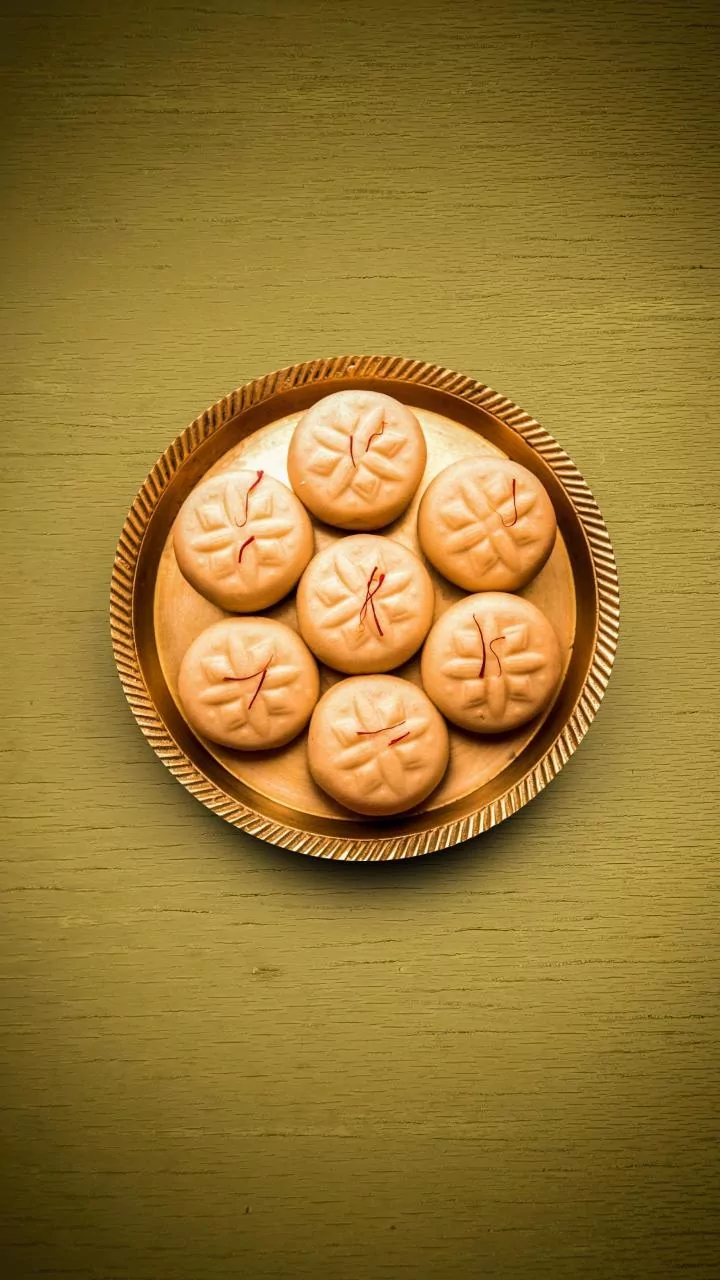
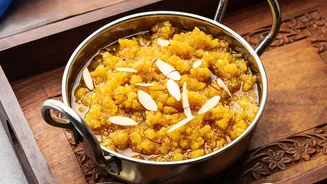
At the heart of every peda is khoya, or mawa, which is milk that has been simmered for hours to evaporate the water, leaving behind rich milk solids. While many peda varieties exist across India, the Mathura style is defined by one crucial step: roasting the khoya. Artisans patiently roast the khoya in large pans, often with ghee, until the milk sugars caramelize and the mixture turns a signature golden-brown colour. This slow-roasting process, known as 'bhunna', is what gives the peda its characteristic nutty, caramelized flavour profile, a world away from the paler, milkier taste of other pedas.
The Secret lies in the Sugar
Another element that distinguishes authentic Mathura peda is the type of sugar used. Traditionally, artisans don't use regular powdered sugar. Instead, they use 'tagar' or 'boora'. Tagar is a unique form of sugar made by boiling sugar syrup to a specific point of crystallization, then cooling it to form a fine, sandy, and porous powder. Unlike powdered sugar, which can be dense, tagar has a light, crumbly texture that doesn't melt away instantly. This gives the Mathura peda its signature grainy-yet-soft, melt-in-mouth quality that connoisseurs cherish. This specific ingredient is considered a secret of the 'halwais' (professional sweet makers) for achieving the perfect texture.
A Taste Profile Like No Other
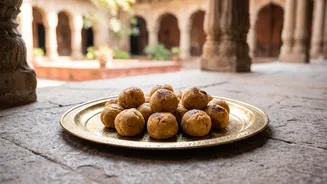
The combination of slow-roasted khoya and grainy tagar creates a truly unique sensory experience. The first bite of a true Mathura peda reveals a rich, milky flavour deepened by notes of caramel and nuts from the browning process. It is moderately sweet, allowing the complex flavours of the milk solids to shine through. The texture is a delightful paradox: slightly crumbly and grainy at first, which then dissolves effortlessly on the tongue. Often lightly scented with cardamom, the final product is a dense, aromatic, and deeply satisfying sweet that has a much longer shelf life than many other milk-based desserts, making it a popular souvenir for pilgrims and tourists.