



Why Five Minutes Is a Game-Changer
The idea that a workout must be long to be effective is a common myth. Research shows that short bursts of activity, sometimes called 'exercise snacks', can offer significant health benefits. Studies have linked brief, consistent exercise to improved
cardiovascular health, better blood sugar regulation, and enhanced mental clarity. These micro-workouts are not just better than nothing; they are a powerful tool for building a sustainable fitness habit. The low time commitment makes it easier to stay consistent, which is the true secret to long-term results. By reframing exercise as a small, manageable task, you can overcome mental hurdles and make movement a natural part of your day.
The Power of the Chair
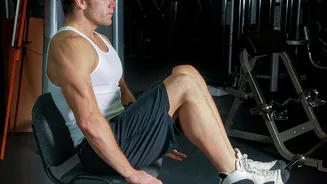
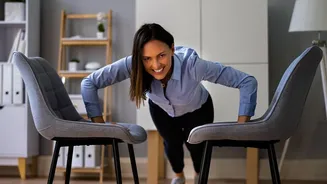
Chair-based exercises are a versatile and effective form of low-impact fitness. They are an excellent option for office workers looking to counteract the effects of a sedentary day, older adults concerned about balance, or individuals with limited mobility or joint pain. Working out from a chair provides stability, reducing the stress on joints while still allowing you to build strength, improve flexibility, and boost circulation. It is crucial to choose a sturdy, stable chair without wheels. If possible, select one without armrests to allow for a greater range of motion. This simple piece of furniture can become your personal gym, accessible whenever you have a few minutes to spare.
The Warm-Up: Seated Marching
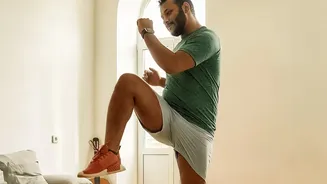
Begin every routine with a gentle warm-up to get your blood flowing. Seated marching is perfect for this. Sit tall towards the edge of your chair with your feet flat on the floor and your back straight. Engage your core muscles. Slowly lift your right knee towards your chest as high as is comfortable, then lower it with control. Repeat with your left leg, creating a smooth, continuous marching motion. This exercise strengthens the hips and thighs and improves flexibility. Continue alternating for about 30 to 60 seconds to prepare your body for the movements to come.
Strength: Seated Leg Extensions
This move targets the quadriceps, the large muscles at the front of your thighs. Sit upright, holding the sides of the chair for stability if needed. Extend your right leg straight out in front of you until it is as parallel to the floor as you can comfortably manage. Hold the position for a few seconds, feeling the muscle engage, before slowly lowering the leg back to the starting position with control. Repeat the movement with your left leg. Aim for 8 to 12 repetitions on each side to build functional strength in your lower body.
Core and Mobility: Seated Torso Twists
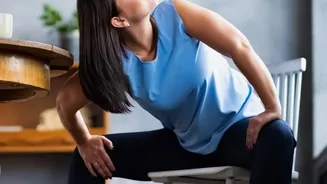
A strong core is essential for good posture and a healthy back. Torso twists help improve spinal mobility and engage your abdominal muscles. Sit upright with your feet firmly on the floor. Cross your arms over your chest, placing your hands on the opposite shoulders. Keeping your hips and legs still, slowly rotate your upper body to the right as far as feels comfortable. Hold the stretch for a moment, then gently return to the centre and twist to the left. This movement improves blood circulation and helps relieve tension in the spine.
Upper Body: Chest Stretch
Counteract the slouched posture that often comes from sitting at a desk or looking down at a screen. Sit upright, away from the back of your chair. Open your arms out to your sides, creating a 'T' shape. Gently push your chest forward and pull your shoulder blades together until you feel a pleasant stretch across your chest and the front of your shoulders. Hold this 'heart opener' pose for 15 to 30 seconds while breathing deeply. This simple stretch helps relieve tension in the upper body and promotes better posture.
Cool-Down: Ankle and Wrist Rotations
Finish your five-minute routine by bringing attention to your extremities, which can help improve circulation. While seated, extend one leg slightly and slowly rotate your ankle in a circle, first clockwise, then counterclockwise. Repeat with the other foot. Then, extend your arms and make gentle fists, slowly circling your wrists in both directions. This is a gentle way to wind down and can help reduce stiffness in these often-neglected joints.