




More Flavour, Less Waste
Moving beyond a simple wedge of fresh fruit opens up a world of culinary possibilities. When you use the entire orange, you capture a spectrum of flavours that are often discarded. The peel and zest contain aromatic oils that provide a potent citrus fragrance,
while the pith, when prepared correctly, can offer a pleasant bitterness that balances sweetness. Some recipes even call for boiling and puréeing the entire fruit to create an incredibly moist and flavourful cake base. This approach not only intensifies the orange essence in your desserts but also embraces a sustainable, no-waste philosophy in the kitchen, making the most of every part of the fruit.
Candied Slices: A Glistening Classic
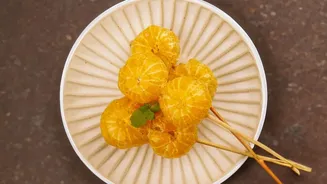
Candied orange slices are perhaps the most iconic whole-fruit garnish, turning simple oranges into beautiful, glossy, jewel-like treats. The process is straightforward: thin slices of orange are gently simmered in a sugar and water syrup until the pith becomes translucent. This poaching method sweetens the entire slice, including the rind, making it completely edible and deliciously chewy. After simmering, the slices are set on a wire rack to dry for up to 24 hours. The result is a stunning garnish perfect for adorning the tops of chocolate orange cakes, cheesecakes, or even as a standalone sweet treat, perhaps dipped in dark chocolate.
Dehydrated Wheels: Modern and Rustic
For a more modern, rustic aesthetic, dehydrated orange wheels are an excellent choice. This method involves baking thin slices of orange at a very low temperature for several hours until all moisture has been removed. A mandoline can help create perfectly uniform slices, which ensures they all dry at the same rate. The slow drying process concentrates the colour and flavour, resulting in brittle, stained-glass-like discs. These are perfect for decorating cupcakes, floating in cocktails, or stringing together to make a fragrant, edible garland. They also have a long shelf life, with properly dried wheels lasting for months or even years in an airtight container.
Peels and Zest: Aromatic Twists and Curls
The fragrant peel of an orange offers a wealth of garnish opportunities that deliver a powerful aromatic punch. Using a vegetable peeler or a special channel knife, you can create long, thin strips of zest. These strips can be twisted over a drink to release their essential oils, coiled into a tight rosette and secured with a toothpick, or simmered in sugar syrup to create candied peels. For a 'crystallised' look, you can dredge the soft, candied peels in sugar. To create elegant curls, the warm, pliable peels can be wrapped around a straw or chopstick as they dry. These smaller garnishes are ideal for finishing delicate desserts like panna cotta, mousse, or individual tartlets.
Putting It All Together
The key to a successful garnish is matching it to the dessert. A rich, dense chocolate and orange torte is the perfect canvas for a glossy candied slice. A light, airy orange chiffon cake might be better suited to delicate, sugared zest curls. Dehydrated wheels add a beautiful, structural element to the top of a creamy cheesecake or a simple loaf cake. You can even use the simple syrup leftover from candying the oranges to brush over a cake, infusing it with more flavour and moisture. Don't be afraid to mix and match; a combination of candied slices and fresh zest can provide both visual appeal and a multi-layered citrus experience.