



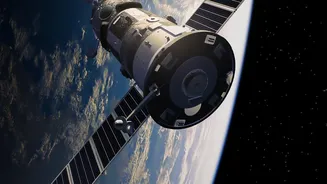
Smarter Satellites and Faster Insights
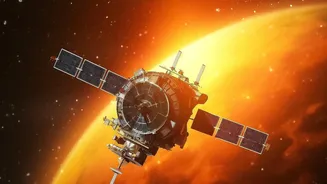
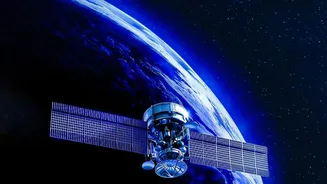
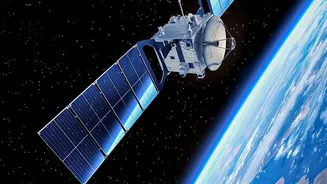
India operates one of the world's largest constellations of Earth observation satellites, generating a colossal amount of data daily. This data is crucial for everything from weather forecasting and urban planning to agriculture and national security.
Traditionally, this vast ocean of information had to be sent back to Earth for processing, a time-consuming step. The future lies in AI-powered, on-board processing. Imagine satellites that can autonomously analyse their own images, detecting floods, tracking deforestation, or identifying crop diseases in real-time without human intervention. By processing data at the source, AI can filter out irrelevant information, like cloud cover, and send back only the most critical insights, dramatically speeding up decision-making during natural disasters or for strategic operations.
Autonomous Navigation for Deep Space
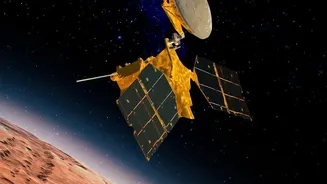
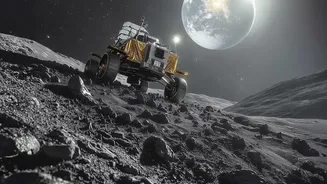
As India sets its sights on more ambitious interplanetary missions to Mars and beyond, one of the biggest challenges is communication delay. It can take many minutes for a command from ISRO's mission control to reach a spacecraft, making real-time control impossible. This is where AI becomes a game-changer, enabling autonomous navigation. Systems equipped with AI can make their own critical decisions, like adjusting trajectories, avoiding obstacles, or even selecting a safe landing spot, as was demonstrated in the Chandrayaan missions. The AI algorithms analyse data from cameras and sensors to understand the environment and navigate safely, reducing the mission's reliance on ground control and increasing the chances of success in the unpredictable conditions of deep space.
Predicting Health to Extend Mission Life
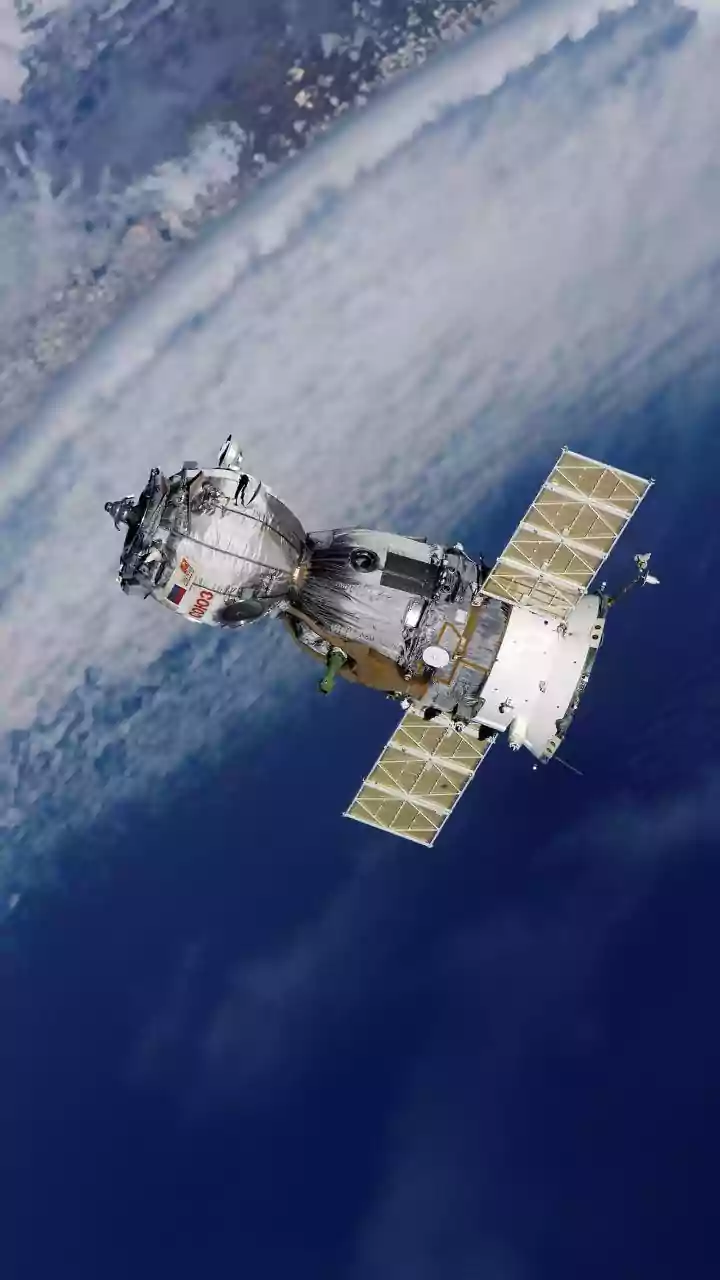
Satellites and spacecraft are incredibly expensive and complex machines operating in a harsh environment. A single component failure can jeopardise a multi-crore mission. AI offers a powerful solution through predictive maintenance. By constantly analysing telemetry data—the stream of health and performance information sent back from the spacecraft—AI algorithms can identify subtle patterns and anomalies that signal a potential future failure. This is similar to a doctor detecting early signs of an illness. By predicting when a component might fail, engineers can take pre-emptive action, such as switching to a backup system or adjusting operations to reduce stress on the part, thereby extending the satellite's operational life and maximizing the return on investment.
Enhancing Mission Safety and Robotics
For India's upcoming human spaceflight program, Gaganyaan, astronaut safety is the highest priority. AI will play a vital role here as well. ISRO is developing an AI-enabled humanoid robot named Vyommitra, which will fly on initial uncrewed missions to simulate human functions and test the life support systems. This robot can monitor the cabin environment, operate switch panels, and communicate with ground control, ensuring the vehicle is safe for human travel. In future crewed missions, AI could serve as an intelligent assistant to the astronauts, helping with data analysis, providing decision support, and managing complex systems, allowing the crew to focus on their primary mission objectives.
Managing an Increasingly Crowded Space
With thousands of active satellites and countless pieces of debris orbiting the Earth, space is becoming a crowded and hazardous domain. Managing this traffic is crucial to prevent collisions. AI is being developed for Space Situational Awareness (SSA) and Space Traffic Management. Recently, an Indian space-tech startup developed an AI-powered network of ground-based sensors to detect and track objects in orbit. Such systems can predict the trajectories of satellites and debris with high accuracy, providing timely warnings for collision avoidance manoeuvres. By automating the tracking of millions of objects, AI will be essential for the safe and sustainable use of outer space in the coming decades.