





What is an Israeli Caretaker Government?
In Israel's parliamentary system, when an election doesn't produce a clear majority to form a new government, the outgoing administration continues to govern in a 'caretaker' capacity. This isn't a term found in Israeli law, which refers to an 'outgoing
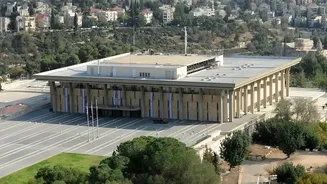
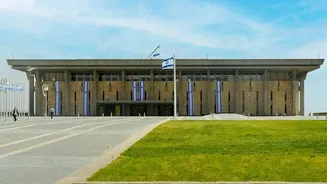
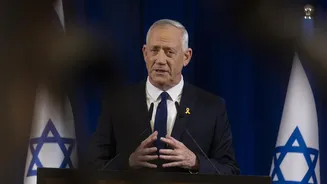
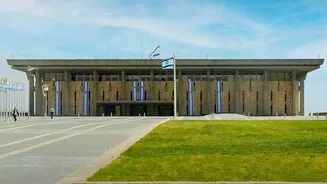
government', but it's the common term for this transitional period. The primary purpose is to prevent a governmental vacuum and ensure the state continues to function until a new, stable coalition is sworn into the Knesset, Israel's parliament. Following the October 27, 2026 election, neither Prime Minister Benjamin Netanyahu’s bloc nor the opposition led by Gadi Eisenkot secured the necessary 61 seats for a majority. President Isaac Herzog has since tasked Eisenkot with trying to form a government, but until he or someone else succeeds, Netanyahu and his ministers remain in charge.
What Powers Does Netanyahu Retain?
Legally, a caretaker government retains almost all the powers of a regular government. This means Prime Minister Netanyahu can still oversee ministries, direct foreign policy, and handle national security. Most significantly, a caretaker government can make decisions about war and peace. There is no legal distinction in the law between a regular and a caretaker government when it comes to launching military operations, provided the decision is made by the cabinet as required. Israel has historical precedents for this, including Operation Guardian of the Walls in 2021, which was launched while Netanyahu himself was a caretaker prime minister. The law also grants a caretaker prime minister one unique power: he can appoint a new minister to replace one who has left office without needing the Knesset's approval, something a regular government cannot do.
What Are the Limitations on His Power?
While the law is permissive, judicial precedent and guidelines from the Attorney General impose a crucial principle: restraint. The High Court of Justice has ruled that a caretaker government is subject to a stricter standard of reasonableness because it lacks a fresh democratic mandate. It must avoid making major, long-term decisions or sweeping reforms unless there is a 'vital public need for action'. This duty of restraint is especially stringent after an election has already taken place. The area most restricted by court rulings is the appointment of senior officials. A caretaker government is expected to avoid filling top posts like a new police commissioner or state attorney, leaving those decisions for the next administration unless absolutely essential.
How Do Coalition Talks Affect This?
The current political stalemate directly impacts how long Netanyahu remains caretaker prime minister. As of mid-November 2026, coalition talks are deadlocked. Gadi Eisenkot, leader of the Yashar party, holds the mandate to form a government but faces a difficult path. His bloc of 48 seats needs support from other parties, including potentially Arab-led parties, to reach a majority—a move some of his potential partners oppose. Meanwhile, Netanyahu has called for a 'national unity government', but Eisenkot has rejected this as a political tactic, insisting Netanyahu's extremist partners be excluded. Negotiating teams from Likud and Yashar met on November 15, but the talks were described only as 'businesslike' with no breakthrough. The longer these talks fail to produce a new government, the longer Netanyahu remains in power.
The Battle for the Knesset
While coalition talks are stalled, Netanyahu's opponents are not sitting idle. They are using their narrow majority in the new Knesset to assert control over the legislative agenda. A key move is the vote scheduled for November 17 to replace the Knesset Speaker, a position held by a Netanyahu loyalist. Installing their own speaker would allow the opposition bloc to advance legislation even without forming a government. Priorities for this bloc include reversing controversial judicial overhaul laws passed by Netanyahu's previous government and potentially introducing prime ministerial term limits. This creates a strange dynamic: Netanyahu's government holds executive power, but an opposition-controlled parliament could begin to dismantle his policies, further weakening his grip even while he remains in the prime minister's office.