




The Promise of a Miracle Age
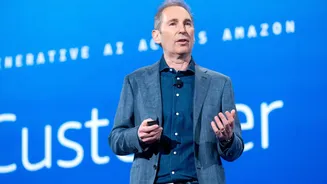
In a statement that captured widespread attention, Dario Amodei, the CEO of AI company Anthropic, predicted that major diseases including cancer, Alzheimer's, and heart disease could become history in less than ten years. The forecast was made during
a roadshow for the company's planned IPO, framing AI as a tool capable of compressing 50 to 100 years of medical progress into a single decade. This vision of an 'age of miracles' is not unique to Amodei; other tech leaders like Google DeepMind's Demis Hassabis have made similar pronouncements, pointing to AI's power to revolutionize biological research. The core idea is that advanced AI can analyse immense datasets, formulate hypotheses, and identify promising treatments at a speed that is simply impossible for human scientists.
How AI Is Already Changing Research
The optimism isn't entirely unfounded. AI is already making a significant impact on medical research. One of the most time-consuming and expensive parts of developing new medicines is the initial discovery phase, which traditionally involves screening millions of chemical compounds to find a few that might work. AI is changing this by predicting how proteins will fold—a key to their function—and then designing new drug candidates on a computer. Tools like Google's AlphaFold have already predicted the structures of over 200 million proteins, a task that once took years of lab work. This allows researchers to move a handful of promising, digitally-designed molecules directly into laboratory testing, dramatically accelerating the pipeline. Anthropic itself has reported collaborations with biotech firms where its AI helped redesign molecules to be more effective at killing tumour cells.
The Shift to Personalised Medicine
Beyond finding new drugs, AI's great promise lies in personalising treatment. Cancer is not one disease but over 200 distinct types, each driven by different mutations. Instead of treating all patients with the same cancer in the same way, AI can analyse an individual's unique genetic data to find the best approach. This could involve matching patients to the clinical trials most likely to benefit them or identifying specific molecular signatures that predict how a tumour will respond to a certain drug. This shift from population-level studies to a personalized 'research lab' for each patient is a profound change, turning cancer research from a lab-bench problem into a data problem that AI is uniquely equipped to handle.
A Reality Check on the Ten-Year Timeline
However, many in the medical and pharmaceutical worlds urge caution, viewing a ten year cure as highly optimistic. Finding a promising molecule is only the first step. A drug must still go through years of rigorous and expensive clinical trials to prove it is both safe and effective in humans. This process cannot be easily compressed, as it involves observing real world biological effects over time. Critics also point out that while AI is a powerful tool, it doesn't eliminate the fundamental biological complexity of cancer, which is known for its ability to evolve and develop resistance to treatment. Furthermore, challenges remain around data quality, algorithmic bias, and regulatory hurdles that must be overcome before AI driven therapies can become widespread. As one medical oncologist noted, until AI can conduct its own physical experiments, a cure for all cancers in a decade seems unlikely.
The Road Ahead: Incremental Revolution
Ultimately, the most significant impact of AI in the near term may not be a single 'cure' but a series of powerful incremental gains. AI is already improving early detection by helping radiologists read mammograms more accurately and spotting signs of cancer that humans might miss. It can help doctors manage the overwhelming amount of information in modern cancer care, from new drug approvals to a patient's specific comorbidities. AI's ability to accelerate research, improve clinical trial matching, and personalise treatment plans offers a revolutionary path forward. While the 10 year timeline for a cure may be more of a reflection of tech sector ambition than medical reality, the underlying trend is clear : AI is poised to become an indispensable partner in the fight against cancer, making treatments better, faster, and more tailored to each individual patient.