




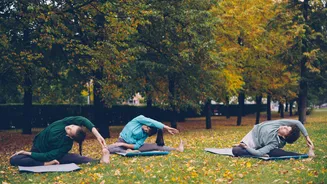
Yoga: The Journey Inward
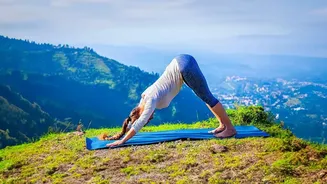
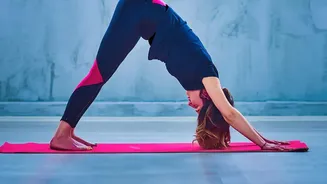
Yoga is fundamentally a practice of interoception—the ability to sense the internal state of your own body. Through deliberate postures (asanas) and controlled breathing (pranayama), the primary goal is to turn your attention inward. The movement is a tool
for self-observation. You are encouraged to notice the subtle signals: the rhythm of your heart, the depth of your breath, the sensation of a muscle stretching. This practice cultivates a state of mindful awareness, where the aim isn't to perform for an audience, but to listen to the body's quiet conversation. Studies show that this internal focus can help regulate the nervous system, lower stress hormones like cortisol, and enhance emotional regulation by creating a space between a feeling and your reaction to it. The 'expression' in yoga is one of containment and observation, allowing thoughts and emotions to arise without judgment.
Dance: The Expression Outward
Dance, in contrast, is largely a practice of exteroception and proprioception—awareness of your body in relation to the space and stimuli around you. Whether it's the beat of the music, the presence of other dancers, or the energy of an audience, the focus is often directed outward. Movement in dance serves as a medium for communication and emotional release. It is a form of non-verbal storytelling, allowing individuals to translate feelings into physical action. This expressive outlet can be incredibly therapeutic, leading to increased levels of serotonin, the 'feel-good' neurotransmitter that helps regulate mood. Rather than containing emotion, dance provides a platform to let it go, transforming internal feelings into an external, often shared, experience. This social component of many dance forms further enhances well-being by fostering connection and community.
Attention: Focused Stillness vs. Dynamic Awareness
The way each discipline trains attention is a core differentiator. Yoga hones a single-pointed, internal focus. The challenge is often to maintain concentration on your breath or a specific physical sensation while holding a pose, shutting out external distractions. This builds mental endurance and clarity, similar to meditation. The attention is disciplined and directed. Dance, on the other hand, cultivates a more diffuse, dynamic awareness. A dancer must simultaneously track the music, their own body's position, the movements of others, and their location on the floor. This requires a high degree of cognitive flexibility and multimodal sensory integration. Your brain learns to process multiple streams of information at once, enhancing skills like visual recognition and decision-making, which research has linked to a lower risk of dementia.
Expression: Observing vs. Emoting
When it comes to emotional expression, the philosophies diverge significantly. Yoga teaches you to be a calm observer of your inner world. Anxious thoughts or feelings of sadness are acknowledged as temporary states, much like clouds passing in the sky. The practice builds resilience by training you not to over-identify with these emotions. Dance offers the opposite approach: it encourages you to embody and express your emotions fully. It provides a healthy and creative channel for releasing pent-up feelings like joy, frustration, or grief through physical movement. For many, the catharsis of 'dancing it out' is a powerful tool for emotional processing. One practice is about finding peace within the feeling, while the other is about finding release by giving the feeling form and motion.