



A Cosmic Minefield Above Our Heads
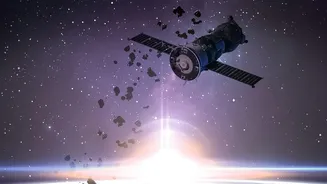
Imagine a highway where millions of tiny, untracked objects are moving at speeds over 27,000 kilometres per hour. That's the reality in low-Earth orbit (LEO), the band of space where most of our satellites live. Decades of space activity have left a legacy
of debris, from spent rocket stages and defunct satellites to minuscule fragments from past collisions. The European Space Agency estimates there are over a million pieces of debris larger than a centimetre, each carrying enough kinetic energy to cripple a functional satellite upon impact. This growing cloud of junk poses a direct and escalating threat to the operational spacecraft that power modern life, from weather forecasting and GPS to communications and national security.
Guarding India's Eyes in the Sky
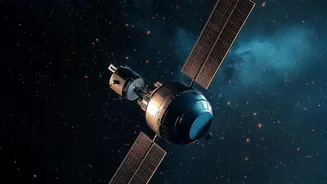
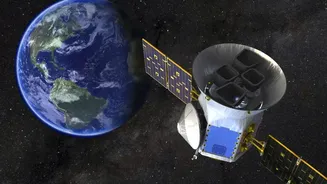
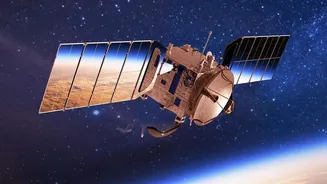
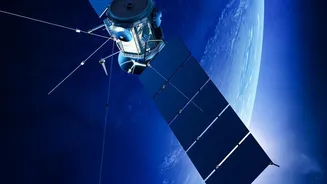
For the Indian Space Research Organisation (ISRO), protecting its space assets is a top priority. India operates a sophisticated fleet of Earth-observation and communication satellites that are the backbone of the nation's infrastructure, aiding in everything from disaster management and agricultural planning to defence surveillance. As of early 2026, a significant number of India's active satellites are in the crowded LEO region, making them particularly vulnerable. The risk is not theoretical; ISRO has seen a sharp increase in the number of collision avoidance manoeuvres it must perform, executing 20 in 2025 and nine in just the first part of 2026. Each manoeuvre uses precious fuel, shortening a satellite's operational life.
ISRO's Automated Defence System
The headline's "AI thrusters" refers to a highly automated system for collision avoidance. This is a core part of ISRO's broader Space Situational Awareness (SSA) initiatives, primarily housed under Project NETRA (Network for Space Object Tracking and Analysis). This project is designed to give India an independent capacity to track debris and other objects that could threaten its satellites. The system works by combining data from a network of radars and optical telescopes to create a comprehensive map of objects in orbit. When a potential collision threat is detected, sophisticated software models predict the trajectory and risk level. This data-driven process allows for more timely and efficient decision-making than relying solely on human ground control.
How the Automated Shield Works
The process of avoiding a cosmic crash is a multi-step sequence. First, ground-based sensors under Project NETRA, like the multi-object tracking radar in Sriharikota, detect and track tens of thousands of objects. Then, at ISRO's control centre, IS4OM (ISRO System for Safe & Sustainable Space Operations Management), this data is analysed to predict potential conjunctions—points where a satellite's path might intersect with debris. If the collision risk passes a critical threshold, the system calculates the most efficient evasive action. This is where automation and AI-driven logic come in, determining the precise timing and duration for firing the satellite's onboard thrusters. This nudges the satellite into a slightly different, safer orbit, averting disaster with minimal fuel expenditure.
Leading in a Crowded Space
Developing this autonomous capability is about more than just defence; it's a strategic move that positions India as a responsible and leading spacefaring nation. By automating parts of the collision avoidance process, ISRO can protect its assets more effectively, extend the life of its satellites by optimising fuel use, and reduce the immense workload on ground crews. This technology is a key component of India's goal for 'Debris-Free Space Missions', a commitment to sustainable space operations. As thousands more satellites are launched by global operators in the coming years, India's investment in SSA and automated protection systems will be crucial for safeguarding its interests and contributing to a safer orbital environment for everyone.