







The Concrete Conundrum
For decades, the go-to solution for stabilising slopes has been concrete. It’s strong, familiar, and seems permanent. However, in the specific context of Mizoram—a state defined by steep slopes, soft soil, and one of the highest rainfall levels in India—concrete
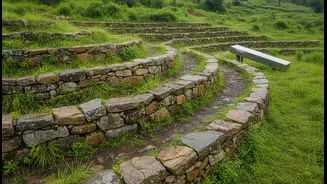
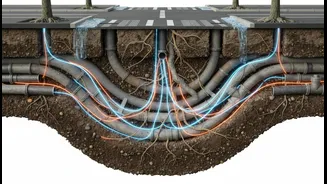
often proves to be a flawed solution. Recent years have seen numerous reports of retaining wall collapses during heavy rains. The problem lies in how concrete interacts with water. A solid concrete wall is impermeable. When torrential rain saturates the soil behind it, immense water pressure, or hydrostatic pressure, builds up. The wall, designed to hold back earth, is now also holding back a massive volume of water. If drainage is inadequate, this pressure can cause the wall to crack, buckle, or fail completely, leading to the very landslides it was built to prevent. Furthermore, these rigid structures don't adapt to the subtle shifts and settlements of the soft earth beneath, making them vulnerable in a geologically active region.
Nature’s Engineer: The Bamboo Advantage
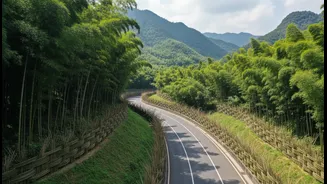
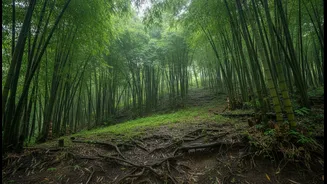
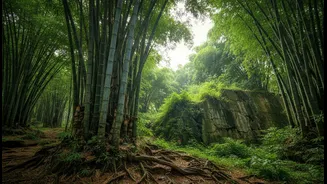
Enter bamboo, a plant deeply integrated into Mizoram’s ecology and culture. Far from being just a 'poor man's timber', it is a sophisticated piece of natural engineering. The secret to its success lies underground in its dense, fibrous network of roots and rhizomes. This subterranean mesh can extend for kilometres in a single hectare, binding topsoil particles together like a natural net. Unlike a rigid concrete wall, this root system holds the soil in place from within, preventing it from being washed away. Moreover, a bamboo grove acts like a giant sponge. The extensive root system improves soil porosity, allowing rainwater to infiltrate the ground smoothly rather than rushing down the surface as destructive runoff. The plant's canopy also plays a role, intercepting heavy raindrops and softening their impact on the soil. This comprehensive system doesn’t just prevent erosion; it actively manages water, mitigating both landslide and flood risks.
A Living, Breathing Solution
The most significant difference between the two approaches is that one is static and the other is alive. A concrete wall begins to degrade the moment it's built. A bamboo plantation, on the other hand, is a self-regenerating, dynamic system. Even if the stems are cut or damaged, the rhizomes can survive for over a century, continuously sending up new shoots. This makes it incredibly resilient. A slope stabilised with bamboo becomes a living ecosystem that strengthens over time, providing a permanent canopy and continually enriching the soil with organic matter from shed leaves. Concrete leaves a scar on the landscape, but bio-engineering with bamboo restores it, allowing other vegetation to grow and biodiversity to flourish.
From Theory to Widespread Practice
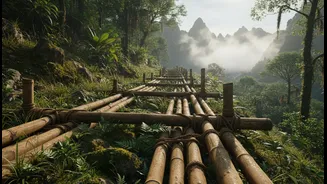
This isn't just a theoretical idea. Bio-engineering using bamboo has been successfully implemented in Mizoram. The Mizoram State Roads Project, supported by the World Bank, used innovative techniques with local bamboo to stabilise slopes at a fraction of the cost of conventional methods. The results showed that these measures were not only cheaper—costing significantly less than concrete works for the same area—but also faster to implement, a crucial advantage in a state with a short, rain-free construction season. Recognising its potential, the state government is actively promoting bamboo cultivation through initiatives like the Mizoram State Bamboo Mission. These programs support farmers and local communities, creating economic opportunities while simultaneously building a more resilient landscape. It’s a solution that addresses environmental, social, and economic needs in tandem.