

Why Venus? Earth's Runaway Twin
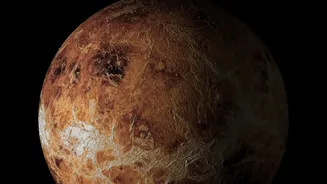
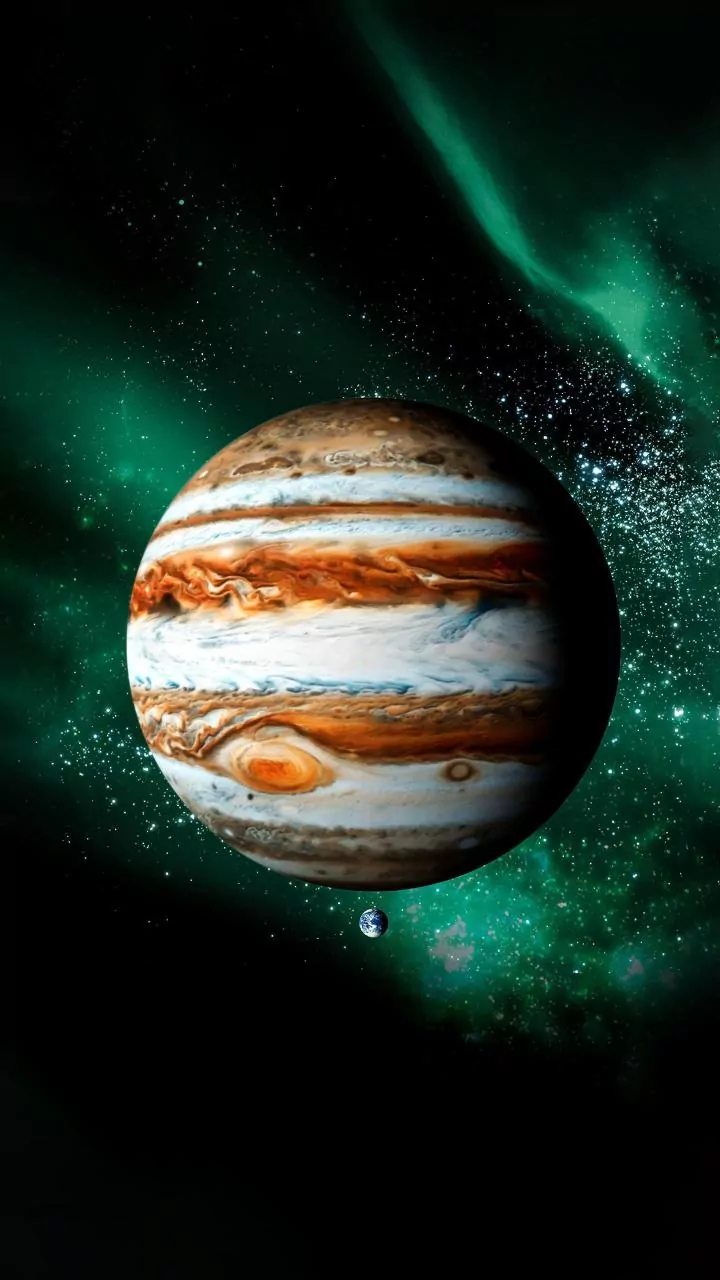
Venus and Earth are similar in size, mass, and density, suggesting they may have had similar origins. However, they evolved dramatically differently. While Earth became a haven for life, Venus turned into a hellscape with surface temperatures hot enough
to melt lead and a dense atmosphere that creates a runaway greenhouse effect. Scientists believe Venus may have once had liquid water oceans for billions of years. Understanding what caused this drastic divergence is crucial, not just for planetary science, but for understanding climate change on our own planet. It serves as a cautionary tale of how a planet's climate can be irrevocably altered.
Introducing the Shukrayaan Mission
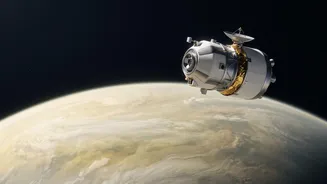
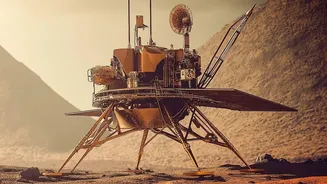
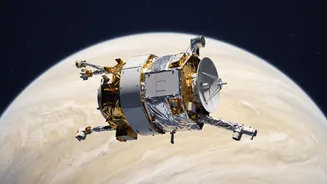
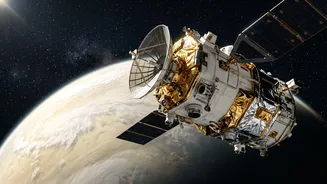
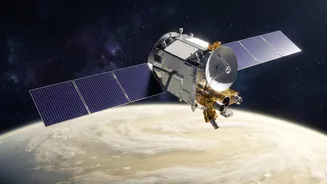
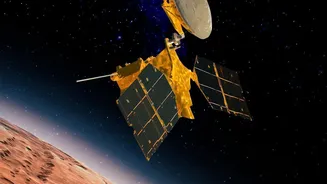
India's answer to the Venusian mystery is the Venus Orbiter Mission (VOM), informally known as Shukrayaan. Following the successes of its missions to the Moon and Mars, the Indian Space Research Organisation (ISRO) is targeting a March 2028 launch for this historic undertaking. The government formally approved the mission in September 2024. The spacecraft, weighing around 2,500 kg, will be launched aboard India's powerful LVM3 rocket. After a journey of about four months, it will enter a large elliptical orbit around Venus, then spend several months using a technique called aerobraking—skimming the upper atmosphere to slow down—to settle into its final scientific orbit of approximately 200 km by 600 km.
Peering Beneath the Acidic Veil
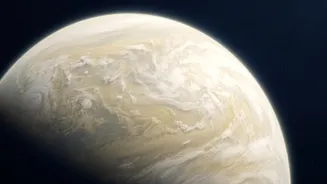
The single greatest challenge in studying Venus is its thick, opaque atmosphere, composed mainly of carbon dioxide with clouds of sulfuric acid. These clouds make it impossible to see the surface with conventional cameras. To overcome this, Shukrayaan will be equipped with a suite of advanced instruments designed to probe the atmosphere and peer through it. The primary goals are to study the atmosphere’s composition and dynamics, investigate the interaction between Venus and the solar wind, and map the planet’s surface and even subsurface features.
A Toolkit for Chemical Discovery
To understand the chemistry beneath the clouds, ISRO has developed and collaborated on a range of sophisticated instruments. A key payload is the Venus Surface Emissivity and Atmospheric Mapper (VSEAM), a hyperspectral spectrometer that will study the cloud structure and map water vapour. Another critical instrument, the VEnus THermosphere Ionosphere Composition Analyser (VETHICA), is a mass spectrometer that will analyze the neutral and ion composition of the upper atmosphere. International collaborations are also crucial. The VIRAL instrument, co-developed with Russia, will analyze atmospheric gases. Meanwhile, the RAVI instrument, a collaboration with Germany, will study the role of sulfuric acid in the atmosphere's energy budget. These tools will work in concert to build a comprehensive chemical profile of the Venusian atmosphere.
Beyond Chemistry: Mapping a Hidden World
While atmospheric chemistry is a core focus, Shukrayaan's ambitions are broader. Its flagship instrument is a high-resolution Synthetic Aperture Radar (SAR), which can pierce through the clouds to map the surface in detail. This radar is expected to have a resolution up to four times better than NASA's Magellan mission from 1989, allowing it to spot features like active volcanoes. In a groundbreaking first for Venus exploration, the mission will also carry a ground-penetrating radar to study the shallow subsurface, searching for buried geological layers and impact craters. This will provide the first-ever look beneath the Venusian ground, helping scientists piece together the planet's volcanic and geological history.