

A Sweet Born of Divine Legend
The story of the Mathura peda is inseparable from the city itself, the hallowed birthplace of Lord Krishna. The Braj region has always been cattle country, and its culture is steeped in stories of Krishna's love for milk, butter, and curd. It is this
deep connection to dairy that forms the foundation of the peda's legacy. For centuries, milk-based sweets have been a natural part of religious life here, and the peda is arguably the most famous offering, or 'prasad'. A popular local story even tells of Krishna's mother, Yashoda, accidentally over-heating milk, only to create a thickened, brownish sweet that the young god adored, cementing its place in culinary tradition.
The Soul of the Peda: Khoya
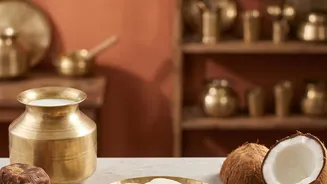
At the heart of every peda is 'khoya' (also known as mawa), which is simply milk that has been simmered for hours in a wide pan until most of the water has evaporated, leaving behind the concentrated milk solids. The quality of this core ingredient determines the final product's excellence. Traditionally, rich buffalo milk is preferred for its high-fat content, which lends a superior richness, though cow's milk is also used. The process is a labour of love, requiring constant stirring to prevent burning and to achieve a fresh, creamy-white base. This initial stage sets the stage for the transformation that makes Mathura's version so unique.
The Magic of Caramelisation
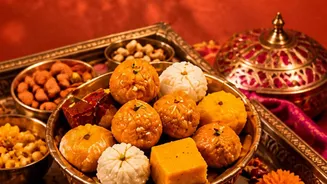
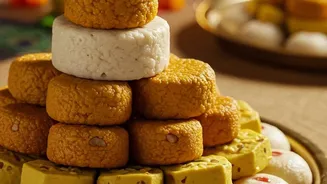
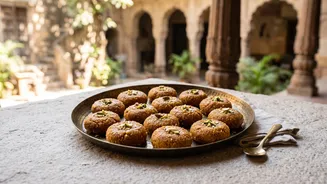
What distinguishes the Mathura peda from its paler, softer cousins across India is the next step: roasting the khoya. The prepared mawa is sautéed in a heavy-bottomed pan, often with a bit of ghee, and cooked patiently on a low flame. This slow roasting process can take a significant amount of time, as the halwai continuously stirs the mawa until the milk sugars begin to caramelise. This 'bhun-na' process is crucial, as it transforms the white milk solids into a beautiful golden-brown or even a dark, reddish-brown block, imparting a deep, nutty, and faintly smoky aroma that is the peda's signature.
Creating the Signature Grainy Texture
The rich, grainy texture—or 'danedar' quality—is where true artistry lies. This is not a flaw, but a deliberately cultivated characteristic that gives the peda its satisfying mouthfeel. This texture is achieved during the initial milk-reduction process or the subsequent roasting. Sometimes, the continuous scraping and cooking of the milk solids naturally create these granules. In other traditional methods, a special type of unrefined crystallized sugar known as 'tagar' or 'boora' is used instead of regular powdered sugar. This specific sugar doesn't completely dissolve when mixed into the warm khoya, lending the peda its characteristic granular bite. The combination of slow-roasting and the use of tagar results in a sweet that is not just smooth, but has a complex, slightly coarse consistency.
More Than a Mithai, a Sacred Offering
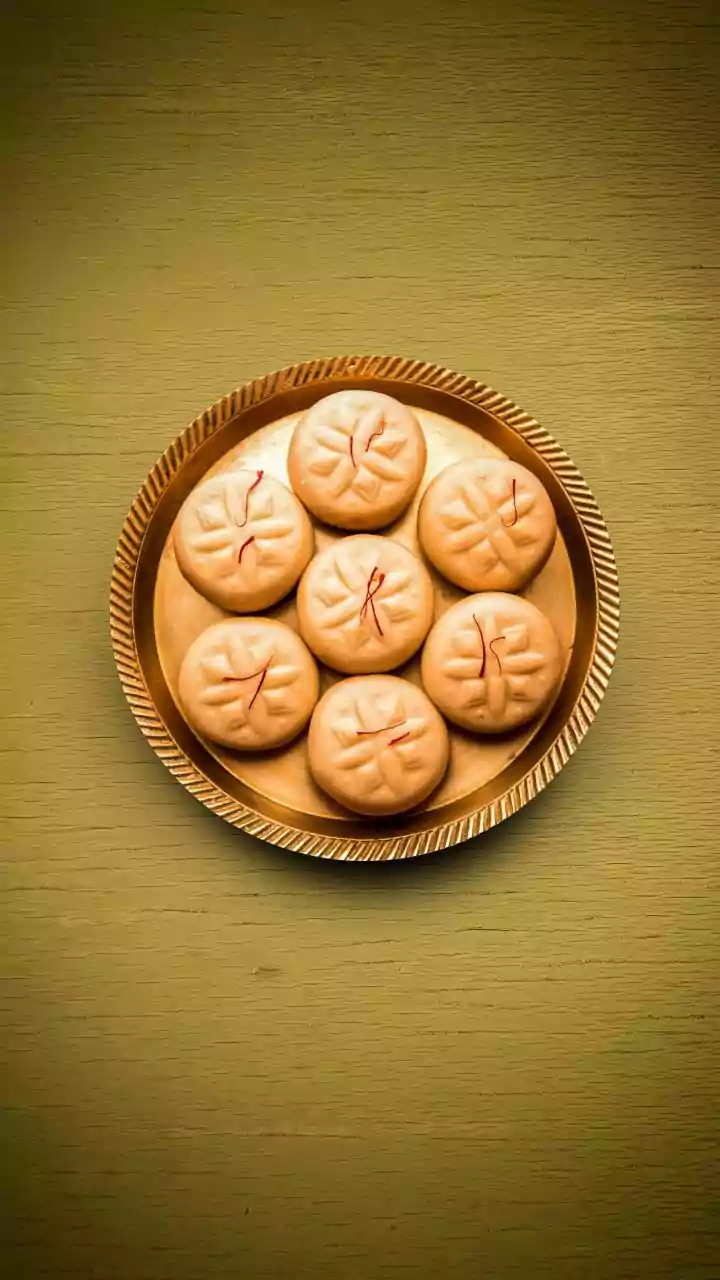
In Mathura, the peda is more than a dessert; it is an act of devotion. It is the most common sweet offered as 'prasad' in the city's countless temples, especially during festivals like Janmashtami. Pilgrims and tourists who flock to the holy city often consider their journey incomplete without tasting these pedas and carrying boxes home as blessed souvenirs. This has cemented 'Mathura ka Peda' as a brand in itself, a phrase that appears in folk songs and proverbs, synonymous with authenticity and divine favour. Every bite carries not just flavour, but the cultural and spiritual essence of Krishna's land.