




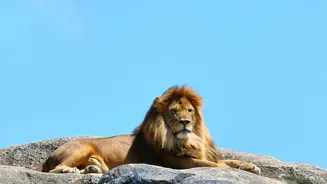
A Conservation Story with a Catch
For decades, the story of the Asiatic lion has been one of remarkable recovery. Brought back from the brink of extinction, their population has grown steadily under protection, centered almost exclusively in Gujarat's Gir National Park. The 2025 lion census
recorded an impressive 891 individuals, a testament to decades of dedicated conservation. This success, however, has a hidden vulnerability. Concentrating an entire species, especially one that is globally endangered, in a single geographical location is a high-stakes gamble. A single disease outbreak, like the Canine Distemper Virus that has been a threat, or an extreme natural disaster could be catastrophic.
The Genetic Bottleneck Problem
Beyond environmental risks, there is a deeper scientific concern: genetics. The entire Asiatic lion population descended from a very small number of founders. This creates a 'founder effect' and a 'genetic bottleneck', leading to low genetic diversity. While the lions have proven resilient, this lack of genetic variation can make the population more susceptible to diseases and reduce its ability to adapt to future environmental changes. Conservation science dictates that to ensure the long-term health and resilience of the species, establishing a separate, free-ranging population is not just an option, but an urgent necessity. This is the core principle behind the long-discussed idea of a second home for the lions.
Enter Barda: A Home After 144 Years
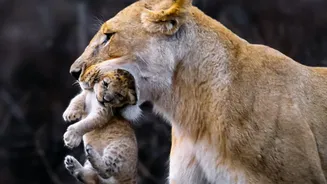
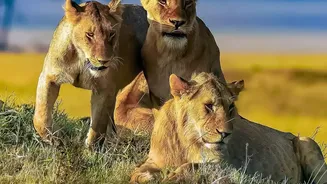
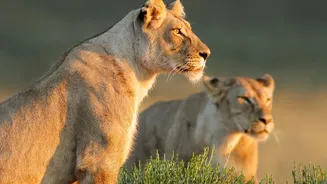
After years of deliberation, the Barda Wildlife Sanctuary, located about 100 kilometres from Gir, has emerged as that second home. Though lions historically roamed these hills until around 1879, they had been locally absent for nearly a century and a half. The journey back began naturally in January 2023, when a lone male lion dispersed from Gir and found his way to Barda, proving the viability of the corridor. Following this pioneering move, the Gujarat Forest Department translocated five females to help establish a new breeding population. By late 2025, the sanctuary was home to a budding population of 17 lions, including adults and cubs, officially marking its new chapter as India's second lion sanctuary.
The Science of a New Stronghold
The choice of Barda is backed by careful scientific study. As part of 'Project Lion', researchers have been tracking the new inhabitants closely. By radio-collaring several lions, they have mapped their movements, social structures, and habitat preferences. Studies published in 2026 confirmed that Barda's rugged terrain, mixed forests, and grasslands provide a suitable long-term habitat. Critically, the prey base is also being managed. While the lions initially preyed on wild pigs and some domestic cattle, a concerted effort is underway to reintroduce species like spotted deer (chital) and sambar to create a robust and sustainable wild food source. This ensures the lions can thrive without increasing human-wildlife conflict.
An Insurance Policy for a National Treasure
The establishment of the Barda population is more than just relocation; it's a strategic scientific intervention. This geographically separate group acts as a vital insurance policy for the species. Should disaster strike the Gir population, the Barda lions would carry the species forward. Over time, this separation will allow for natural genetic variations to emerge, creating a more robust and diverse gene pool for the Asiatic lion as a whole. The government is supporting this by investing in the sanctuary, including schemes to voluntarily relocate human settlements from within the core area to reduce pressure on the habitat. This frees up more space for wildlife and allows the new lion population to establish itself with minimal disturbance.