



Beyond the 'Healthiest' Oil Myth
The conversation around cooking oils has become a minefield of nutritional debates. Is coconut oil a superfood or a villain? Should you only use extra virgin olive oil? This pressure to find one single 'best' oil is not only stressful but also limiting.
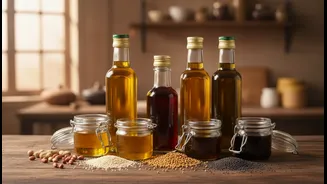
In many traditional Indian kitchens, rotating oils with the seasons—mustard and sesame in winter, sunflower in summer—is a long-standing practice. This wisdom understands that different oils offer different benefits and, just as importantly, different flavours. By focusing only on a narrow definition of 'healthy', we miss out on a world of culinary possibilities. Shifting your mindset from a health hierarchy to a functional toolkit allows you to appreciate each oil for what it does best in the kitchen.
The High-Heat Heroes
Certain cooking methods, like searing a steak, deep-frying pakoras, or getting a good char on vegetables in a wok, require an oil that can handle high temperatures without breaking down. When an oil is heated past its smoke point, it starts to smoke, which can release chemicals that give food a bitter taste. This is where high-smoke-point oils shine. Refined avocado oil is a champion here, with a smoke point that can exceed 260°C. Other great options for high-heat cooking include refined sunflower, safflower, soybean, and canola oils. Ghee, or clarified butter, is another excellent choice, offering a high smoke point of around 232-252°C and a rich, nutty flavour, making it a staple in Indian cooking for searing and sautéing. These are your workhorses for achieving that perfect crispy, golden-brown finish without a smoky kitchen.
Versatile Everyday All-Rounders
For daily tasks like sautéing vegetables, pan-frying, and general roasting, you need a reliable, multi-purpose oil. You don't always need the highest smoke point, but you want something stable and relatively neutral. This category includes oils like light (refined) olive oil, grapeseed oil, and canola oil. Contrary to popular belief, a good quality extra virgin olive oil can often be used for sautéing and roasting at standard oven temperatures (around 190-200°C), as its smoke point typically falls between 163-207°C. These oils strike a balance between performance and cost-effectiveness, making them perfect for the bulk of your cooking needs without overpowering the natural flavours of your ingredients.
The Flavour-Packed Finishers
Some oils aren't meant for heat at all; their purpose is to add a final flourish of flavour and aroma. These are your 'finishing oils'. A drizzle of high-quality extra virgin olive oil over a finished pasta dish or salad adds a peppery, fruity note. Toasted sesame oil, a cornerstone in many Asian cuisines, provides an intense, nutty fragrance to noodles, stir-fries, and dipping sauces when added at the end of cooking. Similarly, roasted walnut oil has a delicate, nutty taste that can elevate everything from salads to roasted vegetables. Because their flavours are more delicate and can be destroyed by heat, these oils are best used as a condiment to finish a dish, adding that final layer of complexity and making a simple meal feel special.
Keeping Your Toolkit Fresh
Building a collection of oils is pointless if they go rancid before you can use them. The primary enemies of cooking oil are heat, light, and air. To protect your investment, store your oils in a cool, dark place like a pantry or cupboard, away from the stove and direct sunlight. Always make sure the caps are sealed tightly to keep oxygen out. For delicate, expensive oils like walnut or flaxseed, refrigeration can significantly extend their shelf life. If an oil solidifies in the fridge, just let it sit at room temperature for a little while to liquefy before using. By storing them properly, you ensure that every bottle in your culinary toolkit is fresh and ready to perform at its best.