


The Sun's Violent Outbursts
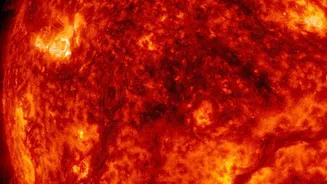
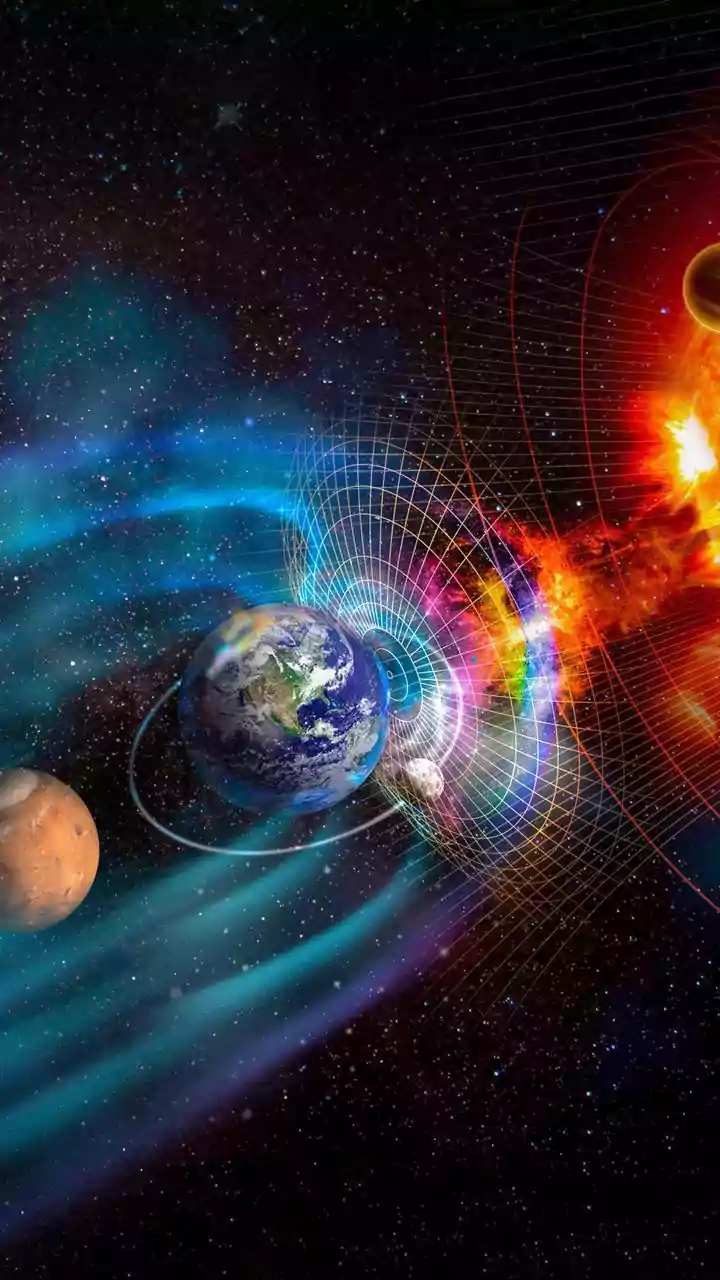
The Sun may seem like a steady source of light and warmth, but it has a violent side. It regularly unleashes powerful bursts of energy and radiation known as solar flares, as well as colossal clouds of magnetised plasma called Coronal Mass Ejections (CMEs).
When these events are directed at Earth, they can have serious consequences. The intense radiation can disrupt high-frequency radio signals, leading to communication blackouts. Energetic particles can damage the sensitive electronics on satellites, while CMEs can trigger geomagnetic storms that interfere with navigation systems like GPS and even destabilise power grids on the ground.
India’s Watchful Eye in Space
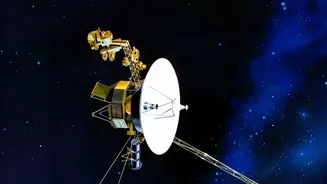
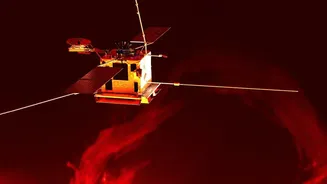
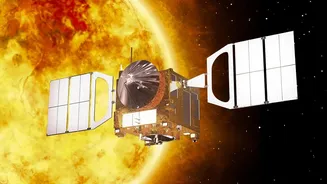
This is where ISRO's Aditya-L1 mission comes in. Launched in September 2023, it is India's first dedicated solar observatory. Its genius lies in its location. Aditya-L1 is positioned at Lagrange Point 1 (L1), a gravitationally stable spot about 1.5 million kilometres from Earth towards the Sun. From this unique vantage point, it has an uninterrupted, 24/7 view of the Sun, free from the eclipses or occultations that would block its sight from a lower orbit. This constant vigilance is key to monitoring the Sun's activity and providing an early warning of potentially hazardous space weather.
Seeing Flares Before They Happen
Aditya-L1 is equipped with a suite of seven advanced instruments designed to observe the Sun's atmosphere across different wavelengths. Payloads like the Solar Ultraviolet Imaging Telescope (SUIT), the Solar Low Energy X-ray Spectrometer (SoLEXS), and the High Energy L1 Orbiting X-ray Spectrometer (HEL1OS) work in concert. Recent findings from the mission have been groundbreaking. Scientists have discovered that small, short-lived brightenings appear in the Sun's atmosphere hours before a major flare erupts, clustering around the very spot where the larger event will occur. By detecting these ultraviolet and X-ray precursors, Aditya-L1 gives us something we’ve never had before: a reliable early warning sign.
From Data to Actionable Defence
Detecting a flare is one thing; defending against it is another. The data from Aditya-L1's measurements is the crucial link. The information on the intensity, location, and energy of solar events is fed into space weather prediction models. This improves the accuracy and timeliness of forecasts, turning raw data into actionable intelligence. For the operators of India's vast satellite network—assets worth thousands of crores—this warning is invaluable. An early alert provides a critical window of time to take protective measures. This is not a theoretical defence but a practical, data-driven strategy to safeguard national infrastructure.
Shielding Our Digital Lifeline
With an advance warning from Aditya-L1, satellite operators can proactively protect their assets. They can power down non-essential components or reorient the spacecraft to place more shielding between sensitive electronics and the incoming radiation. For communication systems, this might mean rerouting data traffic through less affected satellites. For power grid operators, it provides time to prepare their networks for potential voltage fluctuations caused by geomagnetic storms. In essence, Aditya-L1's measurements allow us to switch from a reactive to a proactive defence, minimising disruptions and protecting the technological backbone of modern India.