





A Closer Look Beneath the Dust
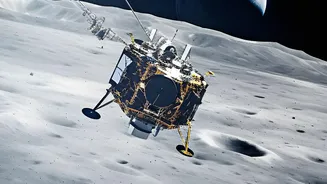
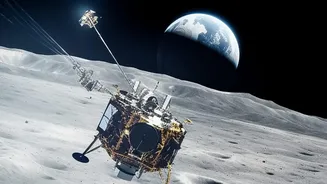
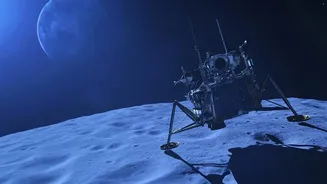
The Moon's surface might appear to be a uniform field of grey dust, but new findings from India's Vikram lander reveal a more complex story just beneath the surface. At the historic Shiv Shakti Point landing site near the lunar south pole, scientists
have identified three distinct layers within the top 10 centimetres of soil, or regolith. This discovery, based on data from the Chandra’s Surface Thermophysical Experiment (ChaSTE) instrument, provides the first-ever direct profile of the shallow subsurface at a high-latitude polar region. The analysis, led by scientists at the Physical Research Laboratory (PRL) in Ahmedabad, shows that the lunar soil is not a homogenous mixture but a structured deposit with varying physical and thermal properties. This fine-scale layering was not expected and offers unprecedented clues about the Moon's geology and surface processes.
The Three Surprising Layers
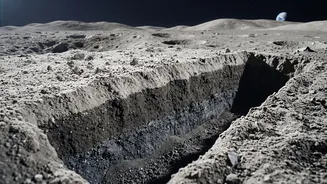
The ChaSTE probe, which penetrated the lunar surface, detailed a fascinating soil profile. The first layer, extending down to about three centimetres, is a highly porous and fluffy material, almost like a light powder with a porosity of around 80%. Below this lies a middle layer, from three to six centimetres deep, which is more compacted and has a higher thermal conductivity, meaning it transfers heat more readily. The third and deepest layer measured, between six and ten centimetres, is denser still, with its bulk density increasing to about 1,500 kilograms per cubic metre, more than double that of the topsoil. This layered structure has a profound effect on temperature. At local noon, ChaSTE recorded a massive temperature difference of about 73 Kelvin between the surface and a depth of 10 cm, showcasing how differently each layer responds to the Sun's heat.
A Story Told by Impacts
So, how did this 'cake-like' structure form? Researchers propose that the layers are the result of successive impact events from nearby craters over billions of years. Material ejected from different impacts, each with unique properties, likely settled over the Shiv Shakti Point area, creating the stratified deposit we see today. This finding builds on earlier work from April 2026, which analysed data after Vikram performed a short 'hop' manoeuvre. The lander's engine firing blew away the top 2-3 cm of soil, exposing the denser layers underneath and first hinting at a two-layer structure. The new analysis, using data from the original, undisturbed landing site, completes the picture by characterising the extremely porous topsoil that was blown away during the hop.
Why These Layers Matter for Future Missions
This detailed understanding of the lunar soil is far from just an academic curiosity; it has critical implications for future human and robotic exploration. The high cohesiveness, or 'stickiness', of the deeper soil was much greater than anticipated and must be factored into the design of future rovers and landing gear. Furthermore, the insulating properties of the topsoil could be a game-changer for building habitats. Knowing that temperatures are far more stable just a few centimetres below the surface could reduce the need for complex and heavy thermal management systems for lunar bases. The porosity and structure of the soil also influence how volatiles like water ice might be trapped or lost, providing crucial ground-truth data for scientists hunting for lunar resources.