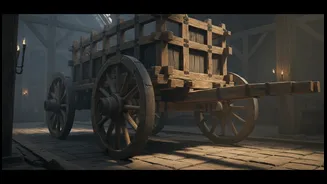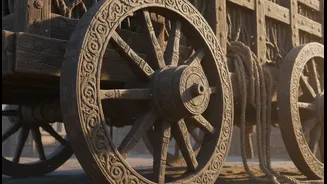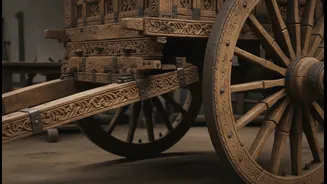







A Blueprint Passed Through Generations
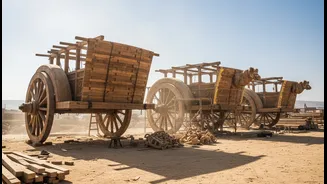
The construction of the three magnificent chariots—Nandighosha for Lord Jagannath, Taladhwaja for Lord Balabhadra, and Darpadalana for Devi Subhadra—is a marvel of tradition. There are no written manuals or modern architectural drawings. The entire process
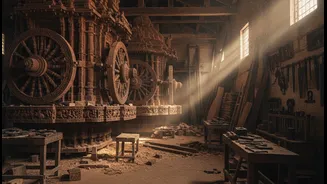
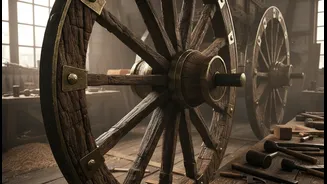
is guided by hereditary knowledge, passed down orally and practically through generations of craftsmen, primarily the 'Biswakarma' or Maharana families. These artisans use traditional units of measurement like 'haat' (hand size) and 'anguli' (finger size), yet they create three colossal, structurally sound, and virtually identical chariots year after year. The construction begins on the auspicious day of Akshaya Tritiya and is completed in just under two months, a testament to their incredible skill and project management. This system represents a living library of knowledge, where every measurement and technique is memorized and executed with devotional precision.
The Science of Sacred Wood
The choice of wood is the first lesson in ancient material science. Specific trees like Phasi (Anogeissus acuminata) and Dhausa (Anogeissus latifolia) are chosen for their unique properties. These woods are known for their strength, durability, and resilience, making them ideal for the main structural components. Around 4,000 pieces of wood are sourced from designated forests and are meticulously selected. For instance, Lord Jagannath's chariot, Nandighosha, alone uses around 832 wooden pieces. The selection process itself is a ritual, ensuring only logs of the right maturity and specifications—pencil-straight and with a specific girth—are used. This careful selection is akin to modern material engineering, where materials are chosen based on specific performance requirements for different parts of a structure.
A Masterclass in Structural Integrity
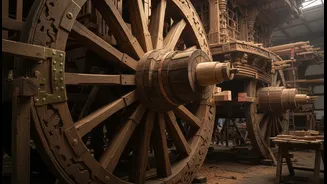
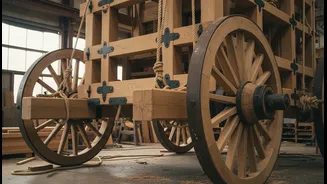
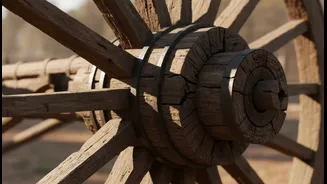
Perhaps the most astonishing engineering feat is the construction of these massive structures, some towering over 45 feet, largely without metal nails. The integrity of the chariots comes from sophisticated joinery. Craftsmen use interlocking wooden joints, dowels, and pegs to hold the massive timber pieces together. This technique creates a structure that is not only strong but also has a degree of flexibility. This flexibility allows the chariot to absorb the immense stresses and shocks experienced while being pulled by thousands of devotees over a 3 km route. The wheels and axles are joined in a sacred ritual known as 'Chaka-Akha Dera', marking a critical phase in the assembly. This method of construction, which relies on the precise fitting of components, showcases a deep understanding of structural forces and load distribution.
The Physics of Motion and Control
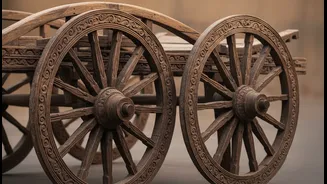
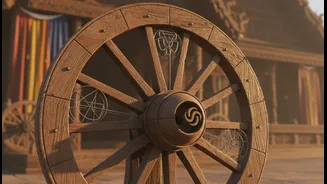
Controlling a 40-tonne chariot on a crowded street is a monumental challenge. For centuries, the primary braking system was rudimentary, relying on friction from wooden logs placed in front of the wheels. In recent years, this traditional system has been enhanced, but the original concept was ingenious. A long wooden beam is suspended at the front of the chariot, and when it needs to slow down, servitors lower this beam, forcing the wheels to climb onto it and lock up. The design of the wheels is also critical. Nandighosha has 16 wheels, Taladhwaja has 14, and Darpadalana has 12, each with a diameter of about seven feet. This distribution of wheels helps manage the immense weight and ensures stability. While modern enhancements like rubber grips and improved mechanical levers have been introduced to improve safety, the core principles of using friction and leverage remain rooted in the original design.