



The Fragile Giants
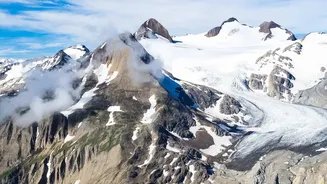
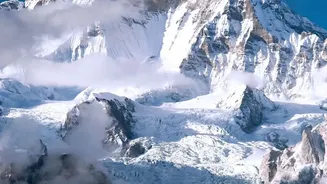
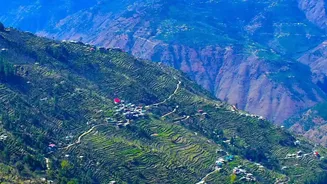
The Himalayas are the world's youngest and most tectonically active mountain range. This geological youth means they are inherently unstable, characterized by steep slopes, fractured rock formations, and sensitive ecosystems. For centuries, life and travel
adapted to this reality with seasonal migration and foot trails that worked with the landscape. Now, massive infrastructure expansion is meeting the forces of nature head-on. Intense monsoon rainfall, a natural feature of the region, acts as a primary trigger for disasters. Add to this the accelerating effects of climate change—which causes more erratic, heavy rainfall and faster glacier melt—and you have a recipe for recurring disruption.
When the Mountains Move
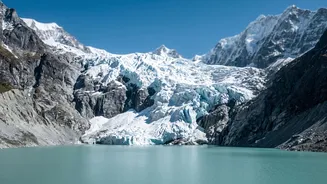
The primary culprits of travel disruption are landslides and floods. Heavy rains saturate the soil on steep slopes, many of which have been destabilized by road construction, deforestation, or unplanned building. This can trigger landslides, where vast quantities of rock, mud, and debris slide downwards, burying roads completely. Sometimes, a landslide blocks a river, forming a temporary dam. When this dam inevitably bursts, it releases a devastating flash flood downstream. Another growing threat is a Glacial Lake Outburst Flood (GLOF), where a lake formed by a melting glacier breaches its natural barrier, as seen in disasters in Sikkim and Chamoli. These events can wash away not just roads, but entire bridges, cutting off connectivity for weeks or months.
From Detour to Devastation
The impact of a blocked road goes far beyond a simple travel delay. For tourists and pilgrims, it can mean being stranded for days in unfamiliar places, often requiring large-scale rescue operations. Pilgrimages like the Char Dham Yatra are frequently suspended during the monsoon due to blocked routes, affecting lakhs of devotees. For local communities, these road closures are catastrophic. They sever access to essential supplies, healthcare, and markets. The apple harvest in Himachal Pradesh, for instance, is entirely dependent on roads being open to get the fruit to markets in the plains. When roads are cut, the economic lifeline for entire valleys is severed, impacting everything from small guesthouses to large-scale agriculture.
The Double-Edged Sword of Development
Ironically, the very infrastructure designed to improve access is often contributing to the problem. The push to build wider, all-weather roads in these fragile mountains often involves cutting precariously into hillsides and dumping debris into valleys, further destabilizing the slopes. While these roads enable more people to travel, they also concentrate risk. Where a washed-out trekking path might be repaired or rerouted in days, the collapse of a major highway is a multi-million rupee setback that can isolate thousands. Experts point out that construction often proceeds without adhering to scientific guidelines for building in such challenging terrain, leading to a cycle of construction, destruction, and reconstruction.
Searching for a More Resilient Path
The solution isn't to stop building, but to build smarter. There is a growing call for a shift towards more sustainable and resilient infrastructure, often called 'green roads'. This involves better geological surveys before construction, superior drainage systems to manage water flow, and avoiding the practice of simply dumping excavated rock down slopes. It means respecting the mountains' carrying capacity and perhaps regulating the massive, concentrated flow of tourist traffic during the most vulnerable seasons. Ultimately, it requires acknowledging that the Himalayas demand a different approach to development—one that prioritizes long-term stability over short-term expansion.