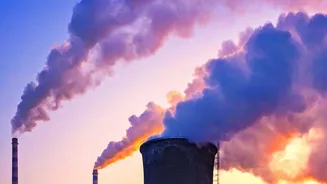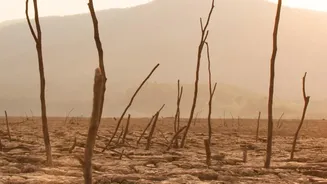





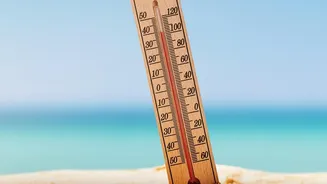

A landmark United Nations report has delivered a sobering verdict on the world's fight against climate change. Stalled progress and broken promises mean the crucial goal of limiting global warming to 1.5°C is now considered unavoidably out of reach.
The End of an Era for 1.5°C
The
United Nations Environment Programme (UNEP) has declared that there is no longer a feasible pathway to prevent global warming from exceeding the 1.5°C threshold set by the Paris Agreement without at least a temporary 'overshoot'. The finding comes from the 2026 Emissions Gap Report, titled 'The Point of Return', released in October ahead of the COP31 climate conference in Antalya, Türkiye. For years, the 1.5°C target was the 'North Star' for climate action, a line scientists warned we must not cross to avoid the most catastrophic and irreversible impacts of climate change, particularly for low-lying island nations. The report confirms what many had feared: due to insufficient action, the world's carbon budget to stay under this limit will be exhausted within just a few years.
A Chasm Between Promises and Reality
The report paints a stark picture of 'stalled' global action. Despite a flurry of national pledges, known as Nationally Determined Contributions (NDCs), progress has stagnated. Under current policies, the world is on track for a devastating 2.8°C of warming by the end of the century. Even if all countries fully implement their current commitments, warming would still hit 2.6°C. The gap is enormous. To limit the overshoot to a peak of around 1.7°C or 1.8°C before hopefully bringing temperatures back down, global emissions must fall by a staggering 45% by 2035 compared to 2025 levels. Current pledges, however, would only deliver a reduction of 11-15%, leaving a massive gap between ambition and reality. UN Secretary-General António Guterres stated the problem bluntly: 'The emissions gap is now a leadership gap'.
What Overshoot Means for the World
Exceeding the 1.5°C mark, even temporarily, is not a minor statistical blip. Scientists warn that it will trigger more intense and frequent extreme weather events, from deadly heatwaves to devastating floods. Every fraction of a degree matters. An 'overshoot' period risks initiating irreversible tipping points, such as the collapse of major ice sheets, the dieback of the Amazon rainforest, and permanent damage to coral reef ecosystems. The longer and higher the overshoot, the greater the risk of these large-scale changes that would reshape the world and endanger human health, food security, and water supplies for millions. This is why small island nations have fought so hard to keep the 1.5°C goal alive, as rising seas pose a direct existential threat.
A New, More Difficult Path Forward
While the report concedes that a direct path to 1.5°C is lost, it stresses that this is not a moment for surrender. The new, more challenging goal is to minimise the peak and duration of the overshoot and work to bring temperatures back down to 1.5°C by 2100. This requires an unprecedented acceleration of climate action. The report outlines clear sectoral targets, including tripling renewable energy capacity by 2035 and drastically cutting electricity generation from coal by at least 75% in the same timeframe. It calls for a rapid phaseout of all fossil fuels, an end to deforestation, and deep cuts in methane emissions. While some progress is noted, such as the rapid growth in solar power, the overall pace of change is dangerously slow. The report makes it clear that relying on unproven, large scale carbon dioxide removal technologies in the distant future is not a substitute for deep, rapid emission cuts now.