




The Unforgiving Lunar Night
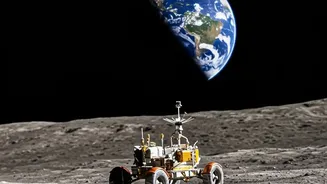
Imagine a night that lasts for 14 Earth days and where temperatures plummet to -173° Celsius (-280° F) or even colder in some regions. This is the reality of the lunar night. For robotic explorers and any future habitat, this is the ultimate survival
challenge. Without an atmosphere to retain heat, the Moon's surface experiences some of the most violent temperature swings in the solar system. This extreme cold is lethal for electronics and, especially, for batteries. The chemical processes inside most batteries grind to a halt at such low temperatures, and sensitive components can physically fracture. This is why many past lunar missions were designed to be short, ending as the first long shadows of night fell. To establish a long-term, sustainable presence under the Artemis program, cracking the lunar night problem is non-negotiable.
The Old, Costly Solution
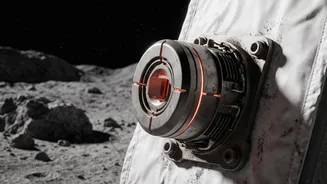
For decades, the go-to solution for keeping spacecraft warm has been the Radioisotope Heater Unit, or RHU. These small devices use the natural decay of a plutonium pellet to generate a steady supply of heat, keeping critical systems from freezing solid. While effective, RHUs have significant downsides. They rely on a radioactive material that is expensive, has a complex supply chain, and presents safety considerations for mission planning. This has made their widespread use on smaller, commercial landers and rovers impractical. As NASA and its commercial partners aim to dramatically increase the frequency and decrease the cost of lunar missions, a more affordable and scalable solution is essential. The goal has shifted from simply surviving with expensive, brute-force heating to operating efficiently and repeatedly through many day-night cycles.
A Smarter, Warmer Battery
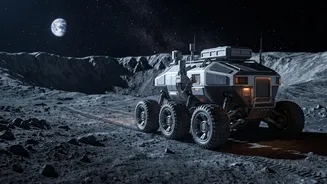
The latest breakthroughs aren't about attaching a heater to a battery, but about making the battery itself smarter. Several innovative approaches are being developed to enable power systems to survive and function. One method involves sophisticated thermal management systems that act like a smart thermos. Using technologies like Loop Heat Pipes (LHPs) and thermal switches, these systems can actively reject heat during the scorching lunar day and then, once night falls, act as a super-insulator, preventing heat from escaping. Another approach, pursued by companies like General Motors for NASA's future Lunar Terrain Vehicle (LTV), is to build heating elements directly into the battery pack. Combined with heavy insulation, the battery can use a tiny fraction of its own stored power to keep itself at a stable operating temperature, ready to recharge and resume work when the sun rises.
From Lab to Landing Pad
These aren't just theoretical concepts. Companies like Advanced Cooling Technologies and Astrobotic are actively developing and testing these thermal control systems with NASA funding. At NASA's Glenn Research Center, a machine called LESTR can simulate the intense cold of the lunar night, allowing engineers to test how new materials and components, like advanced shape-memory alloys for rover tires, will behave in these extreme conditions. Other research is exploring even more novel ideas, such as using controlled metal oxidation chemical reactions to provide a low-mass, non-radioactive source of heat. Even established battery developers are creating new formulas, like Salidian Technology's Gen-ECB battery, designed specifically to operate in a vast temperature range from -80°C to +60°C, a crucial capability for space systems that move in and out of shadow. Each test brings this technology closer to being a standard part of every lunar mission.
Unlocking the Future on the Moon
The ability to reliably survive the lunar night is more than just an engineering victory; it's the key that unlocks a sustainable lunar economy. Rovers that can operate for months or years instead of just a few days can conduct far more science, prospect for valuable resources like water ice, and build infrastructure like landing pads and habitats. By dramatically extending mission lifetimes, this technology improves the return on investment for every launch. It allows for the creation of permanent infrastructure, like the LunaGrid power system proposed by Astrobotic, which could provide consistent energy for a future moon base. This shift from short, fragile missions to durable, long-term operations is fundamental to humanity's plans for living and working on the Moon, and eventually, Mars.