



The Unforgiving Lunar Night
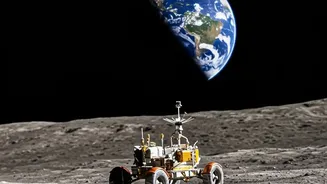
Imagine a night that lasts for 14 Earth days, where temperatures plummet to an unimaginable -170° Celsius or even lower. This is the reality on the Moon. With no atmosphere to trap heat or circulate warmth, the lunar surface becomes one of the coldest
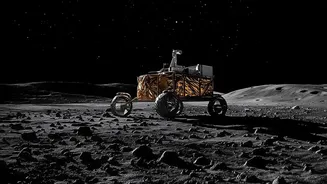
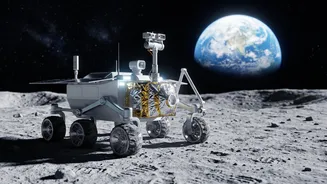
places in the solar system once the Sun goes down. This extreme cold is a mission-killer for robotic explorers. Batteries lose their ability to hold a charge, lubricants can freeze solid, and delicate electronics can crack and fail. For solar-powered rovers, the problem is twofold: no sunlight means no power generation, and the stored battery life is often consumed just trying to run internal heaters to prevent the vehicle from freezing to death.
A History of Cold Endings
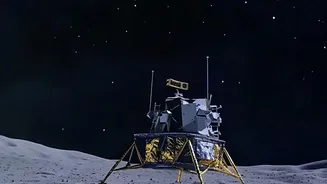
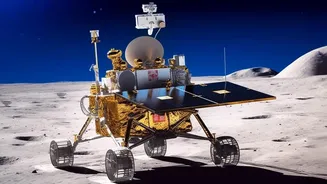
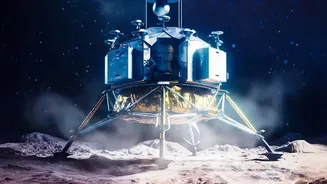
The challenge of the lunar night is not new. Russia's Lunokhod-2 rover, a pioneer of the 1970s, succumbed to the cold after its radioactive heater ran down. More recently, India’s highly successful Chandrayaan-3 mission, which made a historic landing near the Moon's south pole in 2023, was designed for a single lunar day. Despite hopes for a revival, the Vikram lander and Pragyan rover were unable to 'wake up' after the frigid night, their mission concluded by the deep freeze. These experiences underscore a fundamental obstacle: to establish a long-term presence on the Moon, whether robotic or human, we must first conquer the dark.
The Rise of Self-Heating and Smart Insulation
The headline-making solution is the development of advanced thermal management systems, often described as 'self-heating' modules. This isn't just about sticking a simple heater inside. It's a suite of sophisticated technologies designed to intelligently manage a rover's temperature. One promising approach is the Metal Oxidation Warming System (MOWS), which uses a controlled chemical reaction to generate heat without needing large amounts of electrical power from batteries. This provides a non-radioactive heat source that can keep critical components warm enough to survive. Other innovations focus on 'heat-switch' technology. A team from Japan’s Nagoya University developed a system combining a loop heat pipe (like those in laptops) with a tiny pump. During the scorching lunar day, it efficiently dissipates heat; during the night, it uses a minuscule amount of power to block the cooling process, effectively insulating the rover's electronics.
Beyond Heaters: A Hybrid Approach
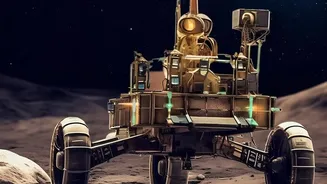
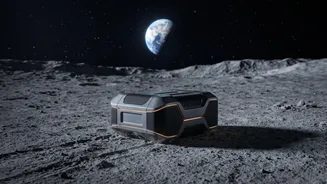
Surviving the lunar night requires more than just a good heater; it demands a complete thermal strategy. This includes advanced insulation, like Aerogel, which is 99.8% air and extremely lightweight. Engineers are also creating 'warm boxes'—super-insulated compartments in the rover's core where the most sensitive components are housed. The goal is to create a passive system that requires as little active power as possible. Some concepts involve variable conductance heat pipes that automatically stop transferring heat when temperatures drop, or thermal switches that physically disconnect components from external radiators at night to prevent heat from escaping. This hybrid approach, combining insulation, passive controls, and efficient, on-demand heating, is the key to longevity.
Enabling the Future of Lunar Exploration
This technology is not just about keeping rovers from breaking. It is a critical enabler for the next era of space exploration. Surviving the lunar night allows for missions to last for months or even years, instead of just 14 days. This transforms the science that can be done, enabling long-term environmental monitoring, extended geological surveys, and complex experiments. For India's ISRO, which is actively developing technology for missions that can survive multiple lunar day-night cycles, this is a major focus. The ability to keep equipment functional through the deep freeze is a prerequisite for building a sustainable lunar presence, supporting future Artemis missions, and potentially tapping into resources like water ice in permanently shadowed regions. In essence, conquering the cold lunar night is the next giant leap for lunar exploration.