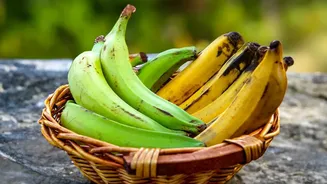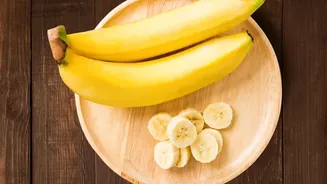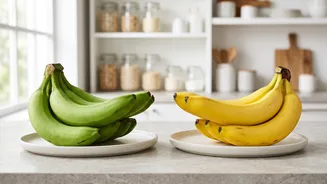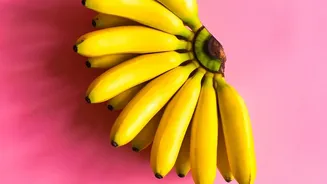

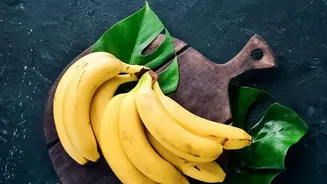

It's a classic fruit bowl dilemma: should you eat the firm, green-tinged banana or wait until it's soft, sweet, and spotted? With countless claims about gut health, the 'best' banana isn't a simple choice. The truth is, it depends entirely on you.
The Core Difference: Starch vs. Sugar
The
journey from a green to a yellow banana is a story of chemical transformation. A green, unripe banana is packed with resistant starch. This type of carbohydrate 'resists' digestion in your small intestine, functioning more like a dietary fibre. As the banana ripens, enzymes work to break down this complex starch into simple sugars like sucrose, fructose, and glucose. This is why a yellow, spotty banana tastes significantly sweeter and has a much softer, mushier texture compared to its firm, slightly bitter green counterpart. The total calories remain roughly the same, but the type of carbohydrate you're consuming changes dramatically.