





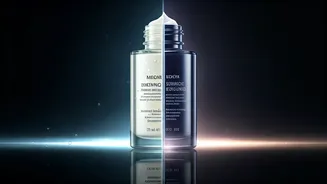



Your Skin’s 24-Hour Clock
Just like your body has an internal clock that makes you feel sleepy or alert, your skin also runs on a 24-hour cycle called a circadian rhythm. This internal clock dictates your skin's changing needs throughout the day and night. During daylight hours,
your skin's primary job is to play defence, shielding itself from environmental aggressors. At night, the script flips entirely. With the day's stressors gone, your skin switches into a dedicated repair and regeneration mode. Understanding this fundamental rhythm is the key to creating a skincare routine that delivers what your skin needs, when it needs it most.
The Morning Mission: Defend and Protect
From the moment you step outside, your skin is under assault. The main culprits are ultraviolet (UV) radiation from the sun, pollution, and other environmental stressors that generate damaging molecules called free radicals. These molecules are notorious for breaking down collagen, accelerating signs of ageing like wrinkles and dark spots, and compromising your skin's overall health. Your morning skincare routine should therefore be a protective fortress. The two non-negotiables are an antioxidant serum and a broad-spectrum sunscreen. Antioxidants act as a safety net, neutralising the free radicals that your sunscreen might miss.
Your Daytime Defensive Lineup
The star player in a morning routine is often a Vitamin C serum. As a potent antioxidant, Vitamin C helps shield the skin from oxidative stress, brightens the complexion, and even supports collagen production. Studies show that when you layer an antioxidant like Vitamin C under your sunscreen, you significantly boost your protection against sun damage. Think of it as a powerful duo: the sunscreen blocks the UV rays, and the Vitamin C cleans up any damage that manages to slip through. Finish with a moisturiser to keep the skin hydrated and a broad-spectrum sunscreen with at least SPF 30 to guard against both UVA and UVB rays.
The Night Shift: Restore and Regenerate
Once you're asleep, your skin’s repair crew clocks in for the night shift. During this time, several key restorative processes kick into high gear. Blood flow to the skin increases, delivering a fresh supply of oxygen and nutrients. The production of collagen, the protein that keeps skin firm and smooth, ramps up. Most importantly, cell turnover accelerates, with some studies showing cell production can be up to 30 times higher at night. This process involves shedding old, damaged skin cells to make way for fresh, new ones. Your evening routine should focus on supporting and enhancing these natural regenerative functions.
Your Nighttime Repair Crew
This is the time to bring in the heavy hitters. Ingredients like retinoids (a derivative of Vitamin A) are considered the gold standard for night repair. Retinol is highly effective at accelerating cell turnover, stimulating collagen, and improving skin texture and tone. It's best used at night because it can make the skin more sensitive to the sun and sunlight can degrade its effectiveness. Alongside retinoids, your night routine can include other powerful ingredients. Peptides can signal to your skin to produce more collagen. Hyaluronic acid provides deep hydration, as the skin is more permeable and can lose more moisture at night. Richer moisturisers help to lock everything in and support the skin barrier while it repairs.
The Perfect Pair in Action
When you put it all together, the synergy is clear. Your morning routine protects your skin from the damage you'll encounter throughout the day. By reducing the number of free radicals and blocking UV rays, you are essentially minimising the amount of repair your skin needs to do later. Your nighttime routine then takes over to fix the unavoidable daily wear and tear and to actively regenerate and rebuild. The protective efforts in the morning make the reparative work at night more effective. It's a complementary cycle: the morning protection lessens the nighttime workload, and the nighttime repair ensures your skin is strong and ready to be protected again the next day.