


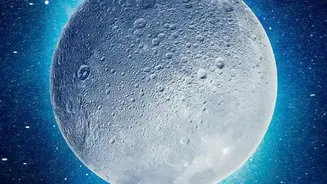
A Frozen Treasure Confirmed
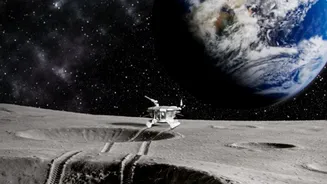
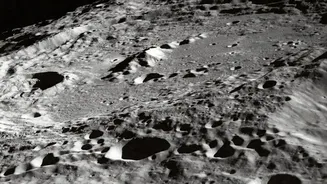
For decades, scientists have theorised that the Moon’s poles could hold frozen water. Now, fresh analysis of spectrometer data has provided some of the clearest evidence yet. Significant deposits of water ice have been identified, mixed within the lunar
soil, or regolith, in permanently shadowed craters near the south pole. These craters are some of the coldest places in the solar system, with temperatures plunging below -160°C, creating perfect 'cold traps' that have preserved this ice for potentially billions of years. This discovery is a landmark moment, building on the legacy of missions like India's Chandrayaan-1, which first detected signatures of water in 2009. The new data moves beyond mere detection, suggesting the ice is not just present, but potentially accessible.
How Spectrometers Uncover Hidden Water
Finding this ice from hundreds of thousands of kilometres away is a remarkable feat of technology. It’s done using instruments called spectrometers, which are often mounted on orbiters or rovers. Think of a spectrometer as a highly advanced prism. It analyses light that bounces off the lunar surface. Different materials, like rock, soil, or water ice, reflect and absorb light in unique ways, creating a distinct chemical 'fingerprint'. By capturing this reflected light and breaking it down into its component wavelengths, scientists can identify the clear signature of H₂O. Recent advancements, including data from rovers and orbiters, have allowed for more detailed maps, pinpointing areas with higher concentrations of hydrogen—a key component of water.
The 'Accessible' Breakthrough
The key word in these new findings is 'accessible'. Previous studies confirmed ice existed, but it was unclear if it was locked away deep underground or was in a form that could be realistically extracted. The latest spectrometer scans suggest that in many areas, the ice is mixed into the top layers of the regolith, like a frozen, dusty soil. This is a crucial distinction. It means that instead of needing to drill deep into hard rock, future robotic missions could potentially 'bake' the soil with focused heat to release the water vapour, which would then be collected and condensed. This process, known as in-situ resource utilization (ISRU), is the foundation for making the Moon a sustainable base rather than just a place to visit.
Water: The Oil of Deep Space
Why is water such a big deal? On the Moon, it is three resources in one. First, it can be purified for drinking water for astronauts. Second, its oxygen can be extracted for breathable air. Most importantly, water (H₂O) can be split into its component parts, hydrogen and oxygen, through a process called electrolysis. Liquified hydrogen and oxygen are the most powerful and efficient chemical rocket propellants known. Essentially, this discovery means the Moon could host its own refuelling station. This would revolutionise space travel, as the immense cost and weight of a mission is dictated by the amount of fuel needed to escape Earth’s powerful gravity. Launching from the Moon's lower gravity to go to Mars or beyond would be vastly more efficient.
India's Pivotal Role at the South Pole
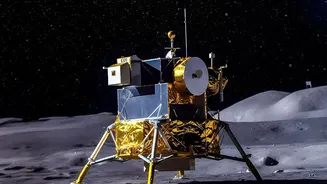
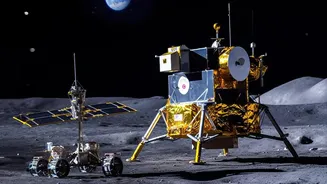
This new era of lunar exploration has India positioned as a key player. With the historic successful landing of Chandrayaan-3 in August 2023, India became the first and only nation to soft-land a spacecraft in the lunar south pole region. This unprecedented achievement not only demonstrated immense technical skill but also provided crucial ground-level data from this highly sought-after area. Missions like Chandrayaan have paved the way, proving that exploration of the rugged polar terrain is possible. As the world looks to establish a long-term presence on the Moon, the expertise and data gained from India's pioneering efforts will be invaluable in the global quest to tap into these vital frozen resources.