



A New Lunar Gold Rush
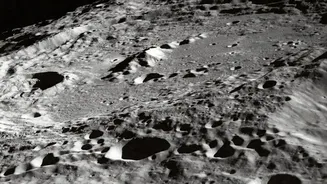
For years, scientists have known that water exists on the Moon, primarily locked away as ice in the permanently shadowed craters of its polar regions. Early evidence from missions like India's Chandrayaan-1 hinted at its presence, but the crucial questions
remained: How much is there, and could we actually get to it? Recent advancements have shifted the conversation from one of mere existence to one of accessibility. The latest data suggests these ice deposits are not just deep-frozen relics, but potentially a usable resource mixed into the top layers of lunar soil, or regolith. This is a monumental development. Accessible water changes the Moon from a barren outpost into a vital refuelling station for humanity's journey into the cosmos.
How the New Map Was Made
The key to this new understanding lies in sophisticated instruments called neutron spectrometers. These devices don't 'see' water directly. Instead, they act like a high-tech divining rod for hydrogen, the 'H' in H₂O. The Moon's surface is constantly bombarded by high-energy cosmic rays, which smash into the regolith and send neutrons flying. A neutron spectrometer measures the energy of these escaping neutrons. When hydrogen is present in the soil—for example, in water ice—it slows these neutrons down in a predictable way. By mapping the areas with fewer high-energy neutrons, scientists can create a detailed map of hydrogen concentrations, and therefore, likely water ice deposits, even those buried under the surface.
From Theory to Practicality
The implications of finding accessible water are immense, a concept known as in-situ resource utilization (ISRU). Launching anything from Earth is incredibly expensive; every kilogram matters. The ability to source vital materials on the Moon itself is a complete game-changer. Water can be harvested for drinking and life support. More critically, it can be split into its component parts: oxygen for breathable air and hydrogen for powerful rocket fuel. This would allow a future lunar base to become a self-sustaining launchpad, enabling more ambitious and cost-effective missions to Mars and beyond. The Moon stops being just a destination and becomes a critical piece of interplanetary infrastructure.
India's Stake in a Watery Moon
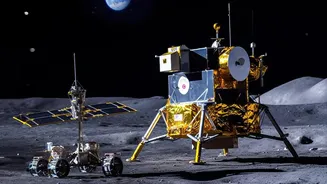
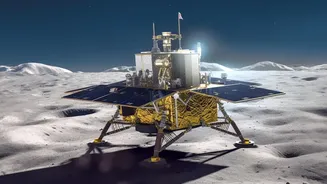
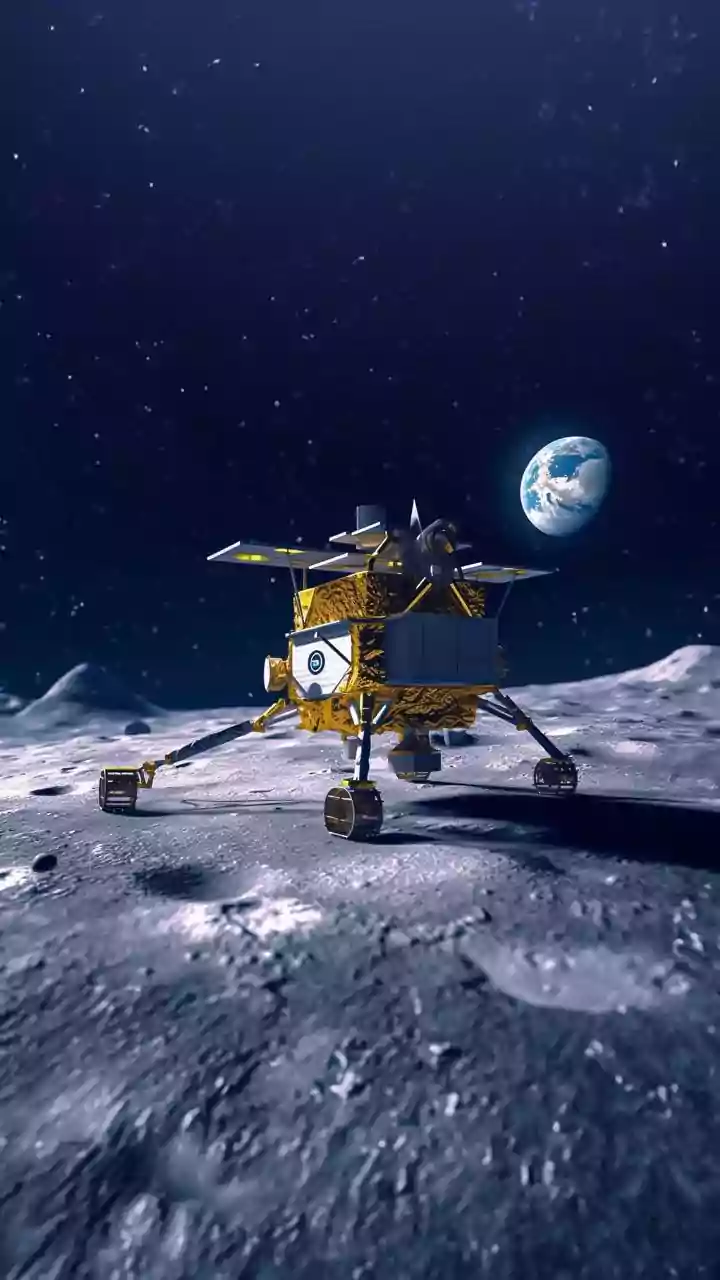
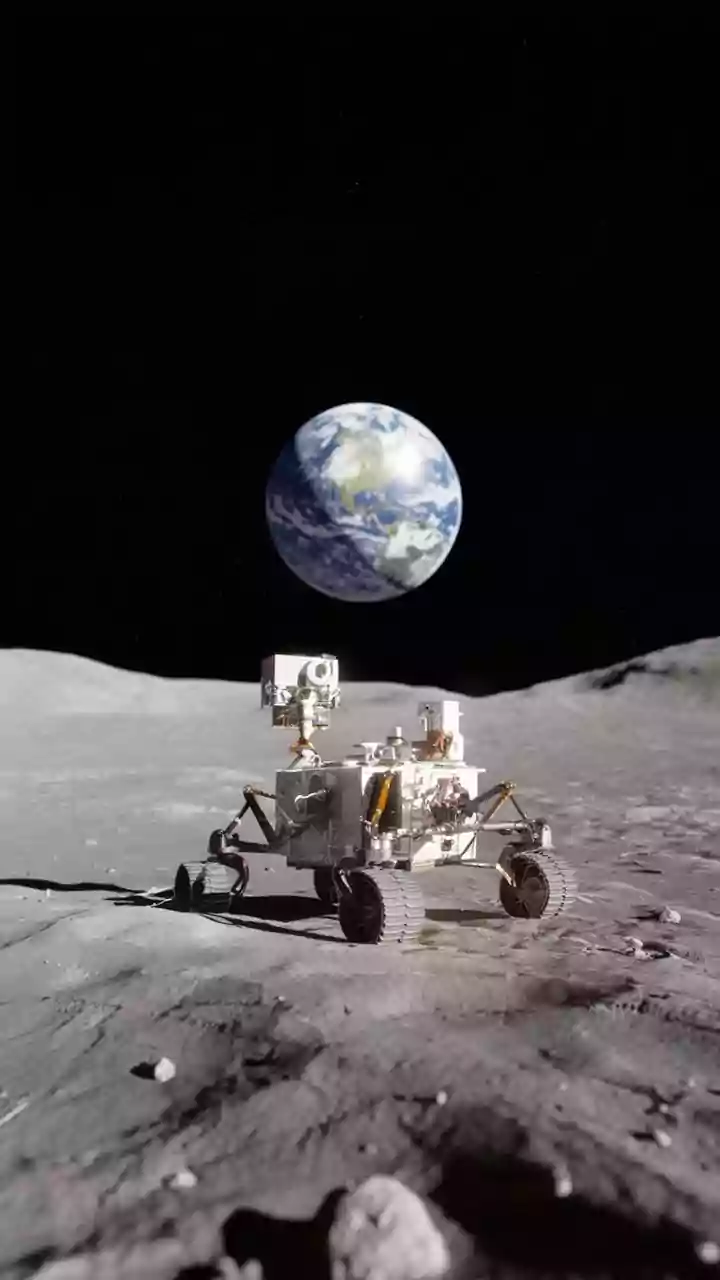
This global breakthrough holds special significance for India. ISRO has been a pioneer in lunar South Pole exploration. The Moon Mineralogy Mapper (M3) instrument on Chandrayaan-1 played a key role in the initial confirmation of lunar water. More recently, data from Chandrayaan-2's orbiter and the historic landing of Chandrayaan-3 near the South Pole have provided crucial ground-level data and further evidence of subsurface ice. ISRO is also collaborating with Japan's JAXA and NASA on the upcoming LUPEX (Lunar Polar Exploration) mission, which will deploy a rover carrying a state-of-the-art Neutron Spectrometer System (NSS) to precisely map these water ice deposits. India's consistent focus on the lunar South Pole has placed it at the heart of this new space race.
The Next Steps for Humanity
With confirmation of accessible water, the focus now shifts to the engineering and logistical challenges of extraction. Missions like LUPEX and NASA's Artemis program are designed to answer these next questions. Rovers will need to drill into the frozen regolith in some of the coldest places in the solar system to verify the purity and distribution of the ice. This knowledge is essential for designing the mining and processing plants that could one day dot the lunar landscape. Beyond the technical hurdles, this discovery also raises important geopolitical questions about resource rights and stewardship in space. The race to the Moon's water has just begun, and the results will shape the future of human presence beyond Earth.