
A Storm Unlike Any Other
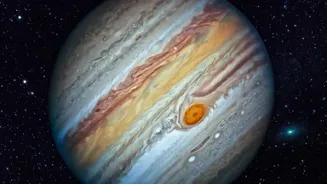
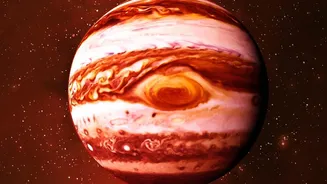
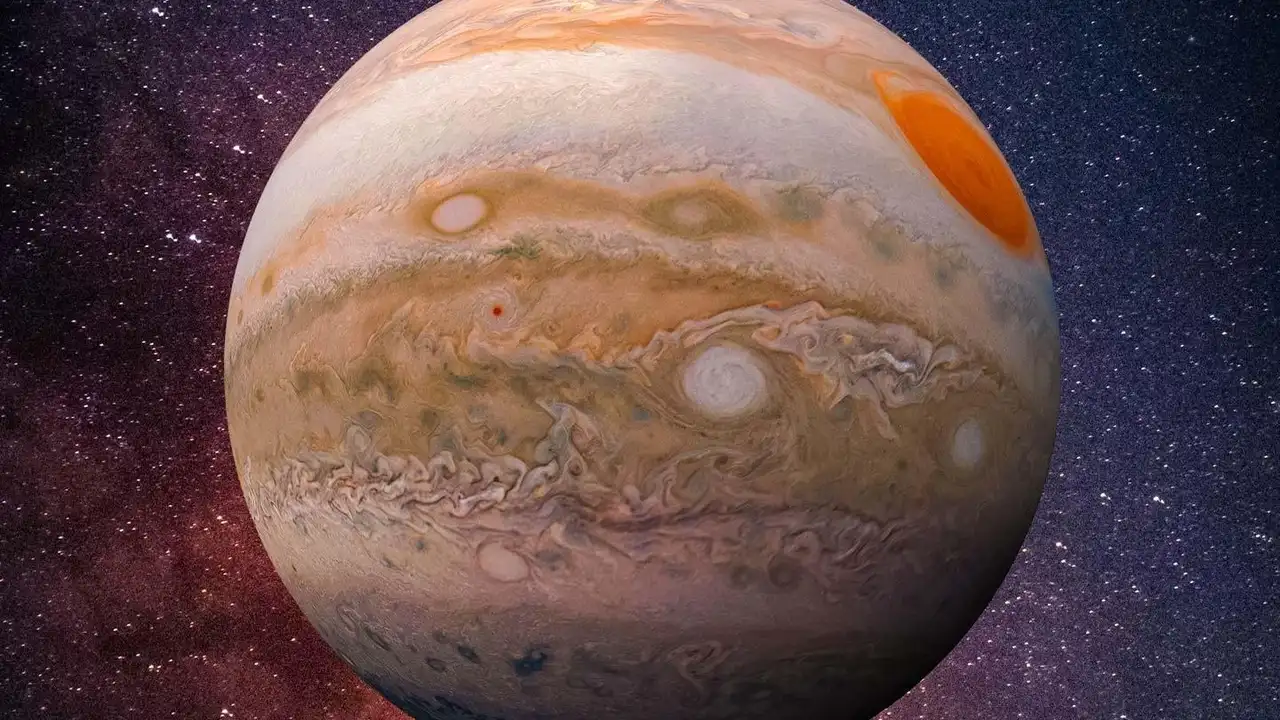
For at least 150 years, and possibly much longer, astronomers have tracked a swirling, crimson eye in the southern hemisphere of Jupiter. This is the Great Red Spot, a high-pressure storm system known as an anticyclone that spins counter-clockwise with
ferocious winds. Unlike hurricanes on Earth that form over water and die over land, Jupiter has no solid surface to slow it down. This has allowed the Great Red Spot to rage for centuries, becoming the largest and longest-lived storm in the solar system. At its largest recorded size in the late 1800s, it was wide enough to swallow three Earths side-by-side.
The Incredible Shrinking Spot
One of the most significant discoveries of the modern era is that this planetary landmark is shrinking. Observations from the Voyager flybys in 1979 to the consistent monitoring by the Hubble Space Telescope have confirmed the trend. Today, the Great Red Spot is the smallest it has been in recorded history, now only slightly wider than a single Earth. While its width is decreasing, some evidence suggests the storm might be growing vertically, stretching taller into Jupiter's atmosphere. This transformation from a wide oval into a more circular shape has scientists puzzled, as the exact reasons for the shrinking are still not fully understood.
What Are These ‘Cosmic Tornados’?
The term 'cosmic tornado' evokes a powerful image, but it's important to clarify. The Great Red Spot itself is a high-pressure anticyclone, while Earth's tornadoes are low-pressure systems. The 'tornados' inside are better understood as smaller vortices or eddies, dynamic features swirling within the larger storm. For years, telescopes have captured glimpses of these complex internal dynamics. In 2015, Hubble spotted a strange, wispy filament twisting across the storm’s core. Jupiter’s atmosphere is a chaotic place, with smaller storms often getting absorbed by the Great Red Spot, which may act as a source of energy that helps sustain it.
New Views Reveal a Wobbling Giant
The latest chapter in this story comes from a recent, detailed analysis of Hubble images taken between late 2023 and early 2024. These observations revealed that the Great Red Spot is not just shrinking, but it’s also behaving in a bizarre way. Scientists observed the storm oscillating in shape, jiggling back and forth like a bowl of gelatin over a 90-day cycle. The cause of this newly discovered wobble is unknown, but it adds another layer of complexity to the storm's behaviour. It shows that even as the storm contracts, its internal physics are incredibly active and far from stable.
An Enduring Mystery
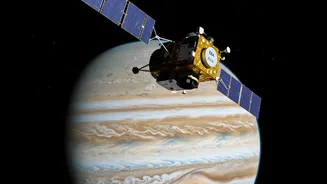
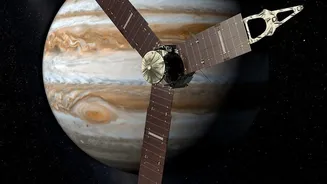
The ongoing changes to the Great Red Spot highlight how many questions remain unanswered. Scientists still debate what chemical compounds, exposed to the Sun's ultraviolet light, give the storm its distinctive reddish-orange hue. They don't have a definitive answer for why it has been shrinking for over a century. And now, the strange 90-day oscillation adds a new puzzle to solve. Each new set of data, whether from Hubble or from missions like Juno orbiting the gas giant, seems to open up more avenues for research. The storm is not just a static landmark; it is a living, evolving weather system on a planetary scale.