







What is Active Recovery, Really?
After a strenuous session, the instinct is often to collapse on the sofa and not move until the soreness subsides. This is known as passive recovery. Active recovery, on the other hand, involves performing low-intensity exercise to help your body heal
more efficiently. The goal is to stimulate blood flow to the muscles, which delivers vital oxygen and nutrients needed for repair while helping to flush out metabolic byproducts that contribute to soreness. Think of it as a gentle nudge to your body's natural healing processes, rather than a full stop. This approach can reduce muscle soreness, prevent stiffness, and get you back to your peak performance faster.
Why Swimming is a Recovery Superstar
Swimming is arguably the perfect active recovery exercise for several reasons. First, the buoyancy of water counteracts gravity, supporting your body weight and relieving stress on your muscles, bones, and joints. This allows for freer, less painful movement when you're feeling stiff. Second, the water exerts gentle, uniform pressure on your body, known as hydrostatic pressure. This acts like a full-body compression garment, promoting blood circulation and helping to reduce inflammation and swelling. The horizontal position in the water further assists with blood flow, making it easier for your heart to pump blood to your extremities. Finally, swimming engages all major muscle groups in a gentle, rhythmic motion, providing a full-body workout without the harsh impact of land-based activities.
The Perfect Low-Intensity Pool Session
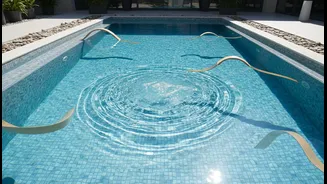
A recovery swim shouldn't feel like another punishing workout. The focus is on gentle movement and technique, not speed or distance. An ideal session should last between 20 to 40 minutes and be performed the day after your most intense workout of the week. Keep the intensity low, enough to feel the muscles stretch and your breathing become fluid. Start with a light warm-up. Focus on smooth, efficient strokes like freestyle and backstroke. You can incorporate tools like a kickboard to isolate your legs or a pull buoy to focus on your upper body, allowing different muscle groups to work gently while others rest. This low-impact movement promotes circulation and helps alleviate delayed-onset muscle soreness (DOMS) without causing further strain.
Don't Forget Your Mobility Drills
While swimming is fantastic for muscle recovery, mobility drills are crucial for maintaining and improving the health of your joints and connective tissues. Mobility is about increasing your joints' active range of motion, which is essential for efficient movement and injury prevention. Unlike static stretching, where you hold a position for an extended period, dynamic mobility drills involve continuous movement through a full range of motion. These are ideal for a warm-up before your swim or as a cool-down afterwards. Combining swimming with mobility work creates a comprehensive recovery strategy that addresses both your muscles and joints, ensuring your body is ready for its next challenge.
Essential Mobility Moves for Recovery
You can perform these simple yet effective drills before or after your swim to enhance your recovery. Focus on controlled, fluid movements. Cat-Cow: Start on your hands and knees. As you inhale, drop your belly and look up, creating an arch in your back. As you exhale, round your spine, tuck your chin, and press the floor away. This is excellent for spinal mobility. Leg Swings: Holding onto a wall for support, gently swing one leg forward and backward 10-15 times, then side to side. Repeat with the other leg. This helps to open up the hips. Thoracic Spine Windmills: Lie on your side with your knees bent and arms extended in front of you. Keeping your hips stable, rotate your top arm up and over in a large circle, following your hand with your eyes. This opens up the chest and upper back, areas that often get tight in athletes.