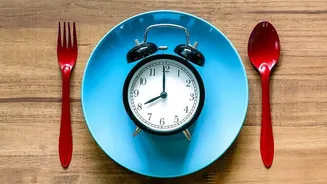







Your Body's Internal Clock
Deep inside your brain is a 'master clock' known as the suprachiasmatic nucleus (SCN). This tiny cluster of cells operates on a roughly 24-hour cycle, governing everything from your sleep-wake patterns to hormone release and metabolism. This is your circadian
rhythm, and its main job is to keep your body's internal processes synchronized with the daily cycle of light and dark. When the sun is up, your body is primed for activity and eating. When it's dark, it prepares for rest and repair. This elegant system works beautifully, until a night shift schedule throws a wrench in the works.
When Work Fights Your Clock
Shift work forces your body into a state of 'circadian misalignment'. While the master clock in your brain tries to follow daylight cues, your work and sleep schedule demand the opposite. This isn't just about feeling tired; it has profound metabolic consequences. Studies consistently show that shift work is associated with a higher risk of obesity, type 2 diabetes, and cardiovascular disease. The reason is that it's not just your brain that has a clock. Your organs, including your liver, pancreas, and gut, have their own 'peripheral clocks' that are highly sensitive to when you eat.
Food as a Powerful Timing Cue
While light is the primary cue for your brain's master clock, food is the most powerful signal for the clocks in your digestive organs. When you eat a meal during your night shift, you're essentially telling your liver and pancreas to 'wake up' and get to work processing nutrients. This happens at the very moment your master clock is telling them to power down for the night. This conflicting information creates chaos in your metabolic system. Your body becomes less efficient at processing sugar, leading to higher glucose levels and impaired insulin function, which are key risk factors for developing diabetes.
What the Science Says
A growing body of research confirms that timing your meals can be a powerful countermeasure. In a landmark study, researchers simulated night work conditions and divided participants into two groups. One group ate meals during the day and night, typical for a shift worker, while the other group ate only during daytime hours. The results were striking: the nighttime eating group saw their average glucose levels increase by 6.4%—a significant jump that pushes the body toward a prediabetic state. The group that ate only during the day showed no such increase. This demonstrates that simply restricting eating to daylight hours can prevent the adverse metabolic effects of working at night. It helps keep the peripheral clocks in your organs better aligned with your brain's master clock.
Making Daylight Eating Work
Adopting a daytime eating schedule, also known as time-restricted eating (TRE), can feel challenging but is highly effective. The goal is to consume all your calories within a consistent 8- to 10-hour window during daylight. For a night shift worker, this might mean having a substantial meal before your shift begins and then fasting through the night, hydrating with water. Your 'breakfast' would then be after you finish your shift and get some sleep. While it may go against the social norm of a midnight 'lunch' break, this strategy gives your metabolic organs the consolidated rest period they need to function optimally. It’s a simple, cost-free intervention that can yield significant health benefits.