



The Weeknight Cooking Dilemma
For many of us, the desire for authentic, home-cooked regional Indian food clashes with the reality of modern life. After a long day of work, the intricate process of preparing a traditional dish from scratch—the chopping, grinding, and slow sautéing—can
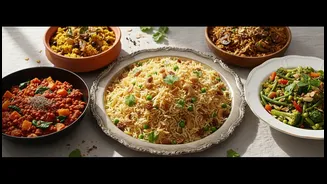
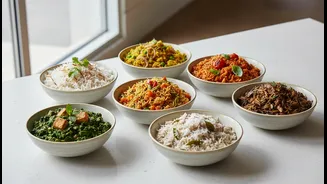
feel more like a chore than a joy. This often leads to a compromise: either settling for a quick, less satisfying meal or ordering in, yet again. The rich, complex flavours of a home-cooked meal seem reserved for weekends and special occasions. But this doesn't have to be the case. The solution lies not in cutting corners on flavour, but in rethinking our approach to preparation.
Rethinking 'From Scratch' with Smart Prep
The term 'from scratch' can be intimidating. But what if we redefined it? Cooking from scratch doesn't have to mean starting with a whole raw onion and a knob of ginger every single time. It can mean assembling a beautiful meal using high-quality components that you've prepared in advance. This is a practice that has long existed in Indian kitchens, where women would prepare spice blends, pickles, and chutneys in large batches. Today, we can apply that same logic to our daily cooking. By front-loading some of the work, you can turn a 60-minute recipe into a 20-minute weeknight triumph. This approach is about cooking smarter, not harder, and reclaiming your weeknight dinners.
The Power of a Master Gravy
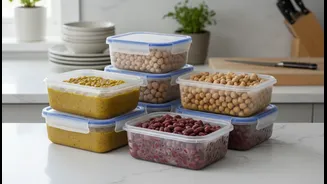
At the heart of many North Indian dishes is the 'bhuna masala' or a basic onion-tomato gravy. This foundation, made by slowly cooking down onions, tomatoes, ginger, garlic, and spices, is what builds deep, complex flavour. The process is time-consuming, but the masala itself is incredibly versatile and freezes beautifully. Imagine having this 'master gravy' ready to go. On a busy evening, you can simply take out a portion, add your protein (like paneer or chicken) or vegetables (like chickpeas or potatoes), and finish with a splash of cream or a sprinkle of garam masala. A dish that would normally take an hour is suddenly ready in minutes. You can make a large batch on the weekend and freeze it in single-use portions in ice cube trays or small containers for ultimate convenience.
Beyond the Basic: Your Prep-Ahead Pantry
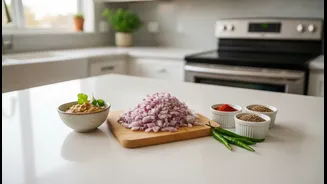
Beyond the master gravy, a range of other partly prepared ingredients can drastically cut down your cooking time. Think of it as building a 'mise en place' that lasts for weeks. You can have ginger and garlic pastes ready in your fridge, either homemade or store-bought. For South Indian cooking, having tamarind pulp, frozen grated coconut, or a pre-made spinach 'saag' base can be a game-changer. Many dishes across regions use similar foundational elements. Pre-made spice mixes like sambar powder for South Indian lentils or a tandoori masala for grilled dishes can also save you from measuring out multiple individual spices. Even simple tasks like boiling dals or sprouting pulses in advance can make a huge difference.
Putting It All into Practice
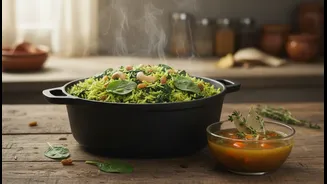
Let's see how this works with a few examples. For a quick Chana Masala, you would typically spend 20 minutes just making the onion-tomato base. With a frozen bhuna masala, you can skip that step entirely. Simply heat the base, add your boiled chickpeas, a splash of water, and your chana masala spice blend, and let it simmer for 10 minutes. For a weeknight Saag Paneer, instead of blanching and pureeing spinach, you can use a pre-made saag base. Just heat the base, add your paneer cubes, and finish with a touch of cream. A speedy Goan fish curry becomes possible with a quality store-bought curry paste, coconut milk, and your fish of choice. These shortcuts allow you to enjoy the diversity of regional Indian cuisine without being tethered to your stove.