




The Problem with Stillness
Sitting itself isn't the enemy—staying in one position for hours is. When you're seated, your body adapts. Your hip flexors shorten, your glutes can become less active, your chest muscles tighten, and your head often drifts forward, straining your neck.
This doesn't just cause stiffness; it can affect your posture and overall mobility. Over time, the muscles and joints that are meant to move and rotate become stuck. The good news is that a short, targeted active recovery session can make a significant difference, and you don't need any special equipment or a lot of time. Active recovery involves gentle, low-intensity movements that increase blood flow and help muscles repair without adding stress.
Hack 1: Awaken the Spine with Cat-Cow
This is the perfect starting point to gently mobilize your entire spine. Start on your hands and knees in a tabletop position, with your wrists under your shoulders and knees under your hips. On an inhale, drop your belly towards the floor, lift your chest and tailbone, and look slightly forward (Cow Pose). On an exhale, round your spine toward the ceiling, tucking your chin to your chest and your tailbone under (Cat Pose). Flow between these two positions for 60-90 seconds. Focus on moving your spine segment by segment, from your tailbone to the base of your skull. This movement helps counteract the static, C-shaped curve your spine holds while sitting.
Hack 2: Open Your Hips with a Kneeling Lunge
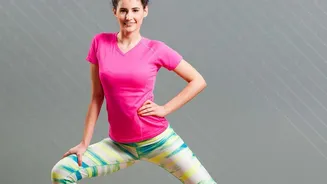
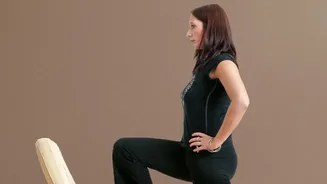
Your hip flexors are chronically shortened from sitting. This stretch provides an immediate release. Kneel on one knee, placing the other foot forward with the knee bent at 90 degrees. Gently tuck your tailbone and squeeze the glute of the back leg. You should feel a stretch in the front of your hip and thigh. For a deeper stretch, raise the arm on the same side as the back knee straight up. Hold for 45-60 seconds on each side, breathing deeply. This simple move directly counteracts the hip-flexed position of sitting, restoring length to these tight muscles.
Hack 3: Unlock Your Mid-Back with Thoracic Rotations
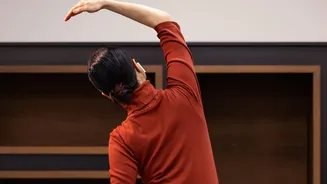
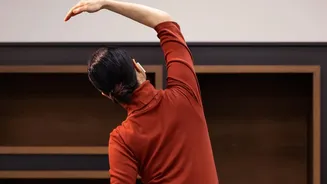
Most desk work happens directly in front of you, leaving your mid-back (thoracic spine) stiff and unable to rotate. From your hands and knees position, place your right hand behind your head. On an exhale, rotate your right elbow down toward your left wrist. On an inhale, open your chest and rotate your right elbow up toward the ceiling, following it with your eyes. Perform 10-12 slow, controlled rotations on each side. This movement restores crucial rotational mobility to your upper body, which can relieve strain on your neck and lower back.
Hack 4: Activate Your Glutes with a Glute Bridge
Sitting for long periods can lead to sleepy, underactive glutes. Activating them is key for hip health and lower back support. Lie on your back with your knees bent, feet flat on the floor about hip-width apart, and your arms by your sides. Squeeze your glutes and lift your hips off the floor until your body forms a straight line from your shoulders to your knees. Hold for a second at the top, then slowly lower back down. Perform 15-20 repetitions. This exercise strengthens the muscles that get turned off by sitting and improves pelvic stability.
Hack 5: Reset Your Posture with a Deep Squat
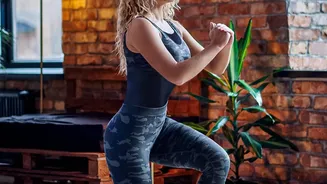
The deep squat is a fundamental human resting position that we've largely lost. It opens the hips, lengthens the spine, and stretches the ankles. Stand with your feet slightly wider than your shoulders. Slowly lower your hips down as far as you can comfortably go, aiming to get your hips below your knees while keeping your heels on the ground. You can hold onto a desk or door frame for support. Try to keep your back straight and chest up. Hold for 30-60 seconds, breathing into the stretch. This one move counteracts sitting by putting your hips, knees, and ankles through their full range of motion.