





The End of an Era
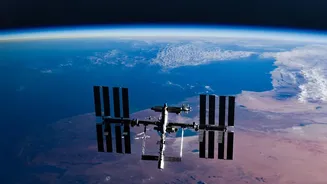
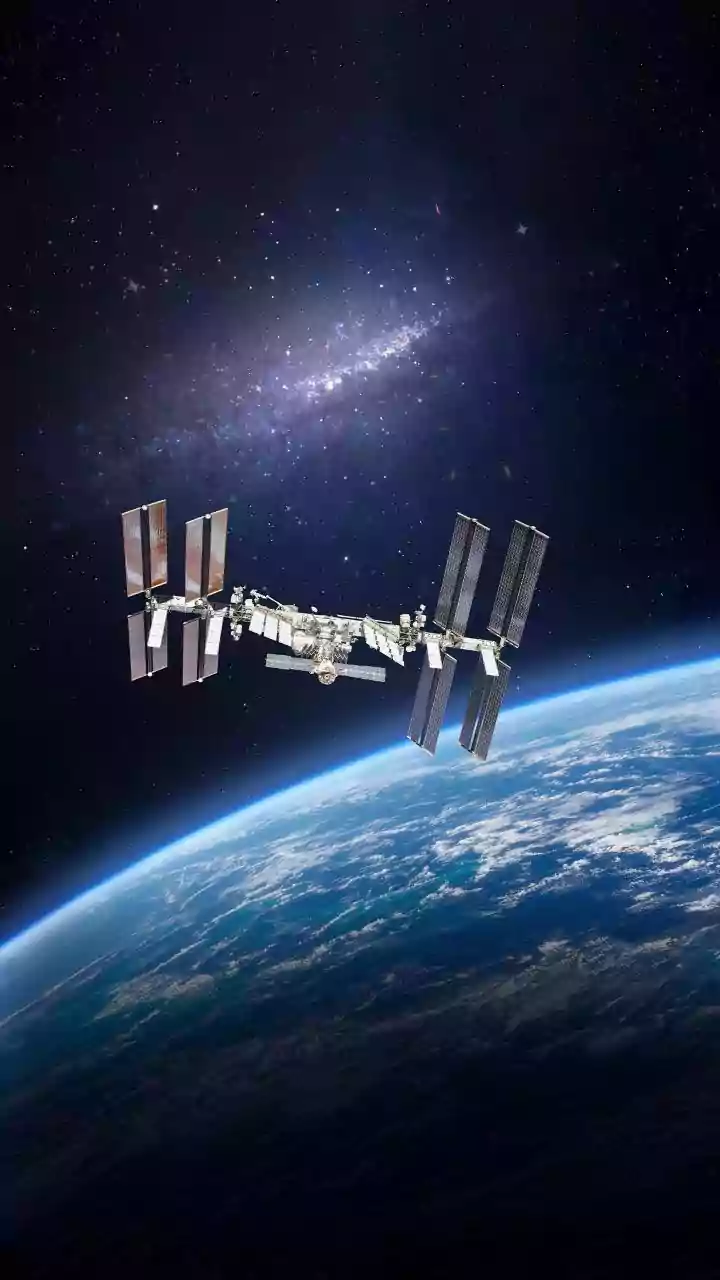
Since its first crew arrived in November 2000, the ISS has been a cornerstone of human spaceflight, hosting thousands of experiments and astronauts from around the globe. However, the massive structure is aging. Concerns about its structural integrity
and rising maintenance costs have led NASA and its international partners to plan for its controlled deorbit into a remote part of the Pacific Ocean around 2030. This impending retirement creates a potential vacuum, not just in orbit, but for the countless scientific and commercial endeavors that rely on a microgravity environment. Ensuring there is no gap in America's ability to live and work in space is a top priority.
NASA's Pivot to Commercial Partner
Rather than building a new government-owned station, NASA is championing a new model: becoming a customer. Through its Commercial Low Earth Orbit Destinations (CLD) program, NASA is funding private companies to design, build, and operate their own space stations. This public-private partnership strategy mirrors the successful approach used for developing commercial cargo and crew transport to the ISS, which dramatically lowered costs and spurred innovation. NASA's goal is to transition from being an owner-operator to one of many customers in a bustling LEO economy, purchasing services like research time and astronaut accommodation as needed. This shift allows NASA to focus its resources on deep space exploration, like the Artemis missions to the Moon and Mars, while fostering a self-sustaining commercial ecosystem closer to home.
The Frontrunners in the New Space Race
Several companies are at the forefront of developing these commercial outposts. Axiom Space is a key player, already flying private astronaut missions to the ISS. The company is building a modular station, with its first module planned for launch around 2027 and a free-flying, two-module station operational by 2028. Another major contender is Starlab, a joint venture between Voyager Space and aerospace giant Airbus. Starlab is being designed as a single-launch station with a habitat and lab, aiming for a 2029 launch to ensure a seamless transition from the ISS. A third venture, Orbital Reef, led by Blue Origin and Sierra Space, envisions a "mixed-use business park" in space, complete with research, manufacturing, and tourism capabilities. Though its timeline has seen some uncertainty, it remains a part of NASA's long-term commercialization plan.
The Business of Orbit
For these private stations to succeed, they must build a business case that extends beyond NASA. Their revenue models are diverse, targeting a wide range of potential customers. This includes supporting other nations' space agencies, hosting private astronauts and space tourists, and offering a unique platform for in-space manufacturing of specialized products like fiber optics or bioprinted organs. Microgravity research is another key market, with pharmaceutical and materials science companies keen to conduct experiments that are impossible on Earth. The operators are betting that falling launch costs will make access to their orbital platforms attractive to a broad array of industries, creating a new "Space-as-a-Service" model.
Challenges on the Final Frontier
The transition is not without significant hurdles. A primary concern is the tight timeline. The U.S. Government Accountability Office has noted the risk of a gap between the ISS retiring and commercial stations becoming fully operational. Delays in developing the new heavy-lift rockets required to launch these large station modules could push schedules back. Furthermore, the business case for commercial stations is still developing; securing enough non-NASA customers to ensure long-term financial viability is a major challenge. NASA itself has faced funding uncertainties and has had to adjust its CLD strategy, underscoring the complexities of this ambitious pivot.