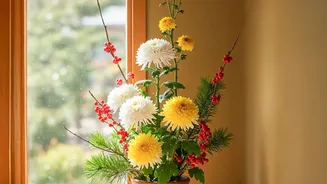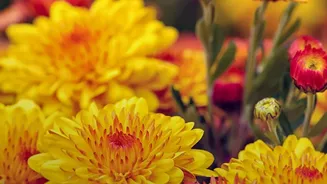

As the cooler weather arrives, many gardens begin to lose their vibrancy. But winter doesn't have to mean a colourless balcony or yard. Enter the chrysanthemum, a spectacular winter-flowering plant that can fill your space with brilliant hues.
The Queen of the East
Commonly
known as Guldaudi, Shevanti, or Samanthi across India, the chrysanthemum is one of the most popular winter-flowering plants for home gardens. Native to East Asia, it has been cultivated for centuries and holds a special place in Indian culture, frequently used in festivals and decorations. These plants are celebrated for their ability to produce a profusion of flowers—from dozens to even hundreds on a single plant—during the cooler months when other flowers are dormant. Their bloom time in the Indian plains is typically from October to February, making them a perfect choice for a stunning winter display.
Choosing Your Perfect Chrysanthemum
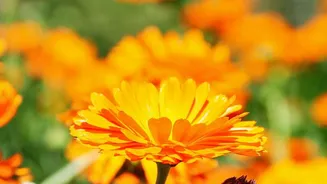
Chrysanthemums come in a dazzling array of colours and forms. For home gardeners, popular types include the small, rounded 'pompom' and 'button' varieties, which are easy for beginners. 'Spray' types produce multiple medium-sized flowers per stem and are great for pots. For those seeking a dramatic effect, large-flowered 'standard' types produce one big bloom per stem. Some popular varieties suitable for Indian conditions include 'Arka Swarna' (a yellow variety from IIHR, Bangalore), 'CO-1' (a white variety popular in South India), and many local selections like 'Ratlaam Selection' and 'Punjab Gold'. You can find them in shades of yellow, white, pink, red, bronze, and purple.
Planting for Success
The best time to plant chrysanthemums for winter blooms is during the monsoon season, from June to August. This gives the plants enough time to establish themselves before the flowering season. Propagation is most commonly done from stem cuttings or by separating rooted suckers from a 'mother plant'. If you're starting with new plants from a nursery, choose a pot that is at least 10 to 12 inches wide with good drainage holes. Chrysanthemums hate waterlogged soil, so a well-draining potting mix is crucial. A good mix can be made from garden soil, compost or coco peat, and a small amount of sand to improve drainage.
Sunlight and Watering Needs
Chrysanthemums are sun-loving plants and need at least five to six hours of direct sunlight each day to produce abundant blooms. Morning sun is ideal. They are also 'short-day' plants, meaning they require long, uninterrupted nights to trigger bud formation. This is naturally provided during the winter months. Be mindful of artificial lights from balconies or streetlights, as they can sometimes delay flowering. Water your plants deeply but allow the top inch of soil to dry out between waterings. Overwatering, especially in cooler weather, is a common mistake and can lead to root rot.
Feeding and Encouraging More Flowers
To get a bushy plant with more flowers, a technique called 'pinching' is essential. When a young plant reaches about 6 to 8 inches tall, simply pinch off the top inch of each growing tip. Repeat this every few weeks until about mid-November in North India, or generally stop by late August or September in other regions to allow flower buds to form on the new branches. Feed your plants with a balanced liquid fertiliser every 15-20 days during their growing period (September to November). Stop fertilising once the flower buds begin to show colour, as feeding too late can interfere with blooming.
Common Problems and After-Bloom Care
Keep an eye out for common pests like aphids and spider mites, which can be managed by washing the plant with a spray of soapy water. Fungal diseases like powdery mildew and leaf spot can occur with poor air circulation or wet foliage. Once the flowering season is over, don't throw the plant away. Chrysanthemums are perennials. Cut the stems down to about 10-15 cm from the base. In late winter or early spring, you will notice new shoots, or 'suckers', growing from the base. These can be separated and potted up to become your plants for the next season, starting the beautiful cycle all over again.