



The Treasure in the Shadows
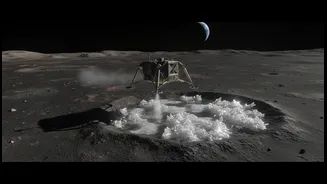
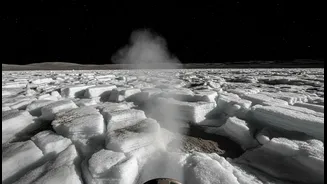
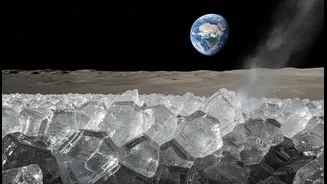
For decades, the Moon was considered a bone-dry wasteland. That picture changed dramatically with the confirmation of water ice, locked away in Permanently Shadowed Regions (PSRs) near the lunar poles. These are craters and depressions where the sun never
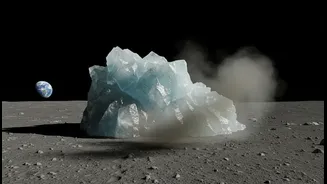
shines, creating extreme cold traps that can preserve volatiles like water for billions of years. This ice represents a monumental resource. For future lunar bases, it offers drinking water and breathable oxygen. More importantly, it can be split into hydrogen and oxygen, the primary components of rocket propellant. The ability to refuel on the Moon—a concept known as in-situ resource utilization (ISRU)—would revolutionize space travel, making it cheaper to explore the solar system by eliminating the immense cost of launching fuel from Earth. But these icy deposits are also a priceless scientific record, potentially holding clues about the delivery of water and organic molecules to the early Earth-Moon system.
An Unavoidable Side Effect
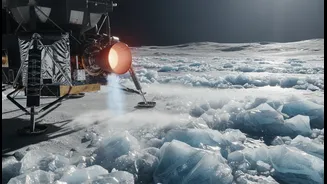
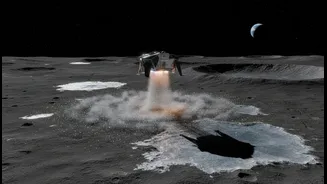
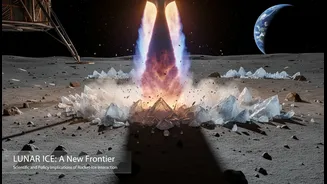
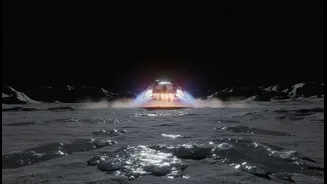
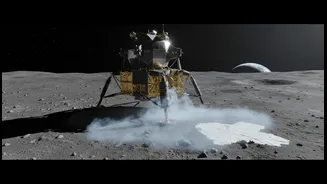
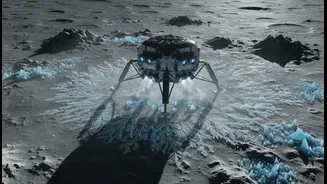
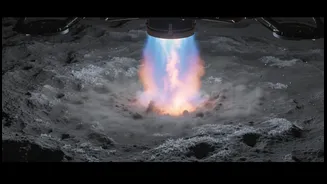
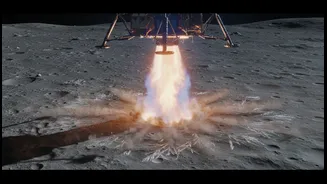
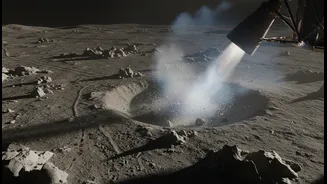
The problem is that getting to the Moon means using rockets, and rocket engines produce exhaust. The landers planned for NASA's Artemis program and missions from other agencies and private companies primarily burn fuels that release significant amounts of water vapor (H2O) and other gases, like methane (CH4), upon combustion. A single large lander, such as a SpaceX Starship, could release metric tons of water into the Moon's incredibly thin atmosphere, known as an exosphere. Unlike on Earth, where a thick atmosphere contains and disperses exhaust, the Moon's near-vacuum allows these gas molecules to travel vast distances unimpeded. This isn't a new concern; scientists worried about it during the Apollo missions. But the focus then was on rock samples. Today, the prize is the ice, making the exhaust a direct threat to the primary scientific and economic objectives.
How Contamination Spreads Globally
Recent computer simulations have painted a startling picture of how this contamination unfolds. A study led by scientists at the Johns Hopkins Applied Physics Laboratory showed that exhaust from a medium-sized lander can spread around the entire Moon in just a few hours. The gas molecules effectively "hop" across the surface in ballistic trajectories. When they land in the ultra-cold PSRs, they freeze and stick, becoming indistinguishable from the native ice. Shockingly, simulations show that exhaust from a landing at the South Pole can contaminate the North Pole in less than two lunar days. Within months, a significant percentage of the exhaust gases can become permanently trapped in these polar cold traps. One study on methane exhaust predicted that over half of it would be trapped at the poles within about seven Earth months. This means that even landings hundreds of miles away from a scientifically sensitive area could still compromise it.
The Risk of Masking History
The consequences are twofold. First, it complicates the scientific quest. The ancient ice in PSRs is a time capsule that could contain prebiotic organic molecules—the building blocks of life—delivered by comets and asteroids billions of years ago. Studying this pristine material could fill a major gap in our understanding of how life began on Earth. If we contaminate these sites with our own organic molecules and water, we could destroy or obscure this irreplaceable record forever, mistaking our own pollution for a profound discovery. Second, it poses a challenge for resource utilization. If lander exhaust significantly adds to the water ice deposits, it could skew assessments of how much native water is actually available, complicating long-term planning for mining and processing operations. The contamination is, as one researcher put it, an experiment we're going to conduct whether we intend to or not.
Finding a Cleaner Path Forward
As the reality of this global contamination becomes clearer, scientists and space agencies are calling for mitigation strategies to be a routine part of mission planning. This doesn't mean stopping exploration, but rather proceeding with caution. Potential solutions include carefully planning landing trajectories to minimize how much exhaust directly enters PSRs. Mission planners could also weigh the tradeoffs between a heavy, localized contamination event versus a lighter, more widespread one. Another key step is to include instruments on future missions specifically designed to monitor the spread of these exhaust gases, which would help validate and refine the simulation models. Ultimately, the issue highlights a new challenge for humanity: as we become a multi-planetary species, we must also become responsible stewards of the extraterrestrial environments we explore, ensuring that our search for knowledge and resources doesn't inadvertently destroy what we set out to find.