

A Major Celestial Event
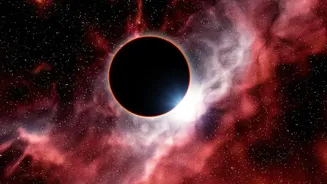
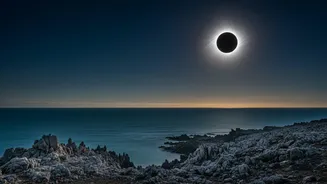
On August 12, 2026, a significant total solar eclipse will occur, captivating sky-watchers across the globe. This event is particularly notable as it's the first total solar eclipse to be visible from mainland Europe in more than 25 years. During totality,
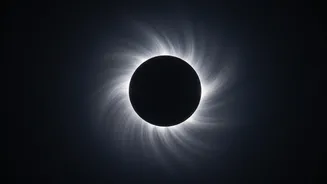
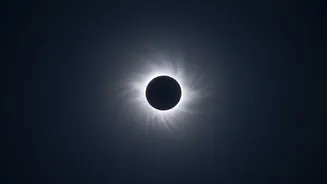
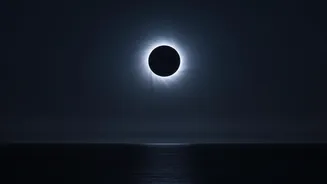
the Moon will completely block the Sun's bright face, plunging parts of the Earth into an eerie daytime darkness and revealing the Sun's spectacular outer atmosphere, the corona. This celestial alignment offers a rare opportunity for both scientific research and public wonder. The period of total darkness will be brief, lasting just over two minutes at its maximum point, making every second a precious moment for those in its path.
Where in the World?
The path of totality—the narrow track where the full eclipse can be viewed—will begin over remote parts of northern Russia and the Arctic. It will then sweep across Greenland and western Iceland before reaching Europe. The grand finale of the eclipse will occur over Spain, with cities like Valencia and Palma de Mallorca falling within the path of totality just before sunset. A small part of northeastern Portugal will also witness the event. Unfortunately for astronomy enthusiasts in India, the eclipse will not be visible anywhere in the country. The event will take place late at night according to Indian Standard Time, starting after 9:00 PM on August 12 and concluding in the early hours of August 13.
The Unwavering Importance of Safety
Even though this eclipse isn't visible from India, the focus on safety is a crucial reminder for all celestial events. Looking directly at the Sun, even when it's partially covered, can cause severe and permanent eye damage. Regular sunglasses, no matter how dark, are not safe for viewing an eclipse. Specialized solar eclipse glasses that meet the ISO 12312-2 international safety standard are essential. It is also critical to never look at the Sun through an unfiltered camera, binoculars, or telescope, as these devices can concentrate the solar rays and cause instant injury. The only time it is safe to look at a total eclipse without protection is during the few brief moments of totality, a phase that will not be observable from our region for this event.
Your Virtual Front-Row Seat with NASA
This is where technology bridges the geographical gap. NASA is committed to making this spectacular event accessible to everyone, including millions of fans in India. The space agency will host a comprehensive live broadcast across its platforms, including NASA TV and its official YouTube channel. The stream is scheduled to begin at 1:15 p.m. EDT on August 12, which corresponds to the late evening in India. The broadcast will feature live telescope feeds from various locations along the path of totality in Iceland and Spain. Viewers will be treated to expert commentary from NASA scientists, who will explain the science behind the eclipse, answer questions submitted via social media, and guide the global audience through this incredible phenomenon.
More Ways to Watch Online
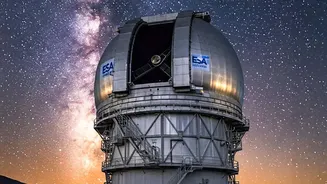
NASA isn't the only organisation bringing the cosmos to your screen. The European Space Agency (ESA) is also providing extensive live coverage, as the eclipse is a major event for the continent. ESA will broadcast live from the Javalambre Astrophysical Observatory in Teruel, Spain, a prime location within the path of totality. Their stream, available on ESA Web TV and YouTube, will also feature space scientists and communicators discussing the event's significance. These multiple official sources ensure that no matter where you are, you have a reliable and stunning view of the Sun’s corona, a sight usually hidden from human eyes.
Get Ready for an Evening of Wonder
For Indian viewers, this is an opportunity to participate in a global astronomical event from the comfort of home. To make the most of it, check the exact timings of the live streams in IST and set a reminder. The partial eclipse phase begins around 9:04 PM IST on August 12, with the peak eclipse expected at approximately 11:16 PM IST. Consider turning it into a special occasion by gathering with family or friends for a virtual 'viewing party'. Follow the discussions online using relevant hashtags to connect with a worldwide community of fellow astronomy lovers. This eclipse isn't just a spectacle; it's a shared experience that connects people through the universal language of curiosity and wonder.