







A New Educational Blueprint
The phrase “climate change” is no longer just a topic for special assemblies or science fairs. Following India's National Education Policy (NEP) 2020, the updated National Curriculum Framework (NCF) for School Education, released in 2023, formally embeds
environmental education into the core learning experience for all students. The goal is ambitious: to move climate literacy from a niche, optional topic into a foundational element of schooling, from the foundational years right up to Grade 12. This isn't about adding another textbook to a student's already heavy bag. Instead, the policy mandates an interdisciplinary approach, weaving concepts of environmental consciousness and climate action into the fabric of existing subjects.
Why Now? The Urgent Reality
This educational shift is not happening in a vacuum. India is one of the world's most vulnerable countries to the impacts of climate change, from extreme heatwaves and unpredictable monsoons to rising sea levels and water scarcity. Policymakers recognise that tackling this crisis requires more than just technological and political solutions; it requires a fundamental shift in public awareness and behaviour. By integrating climate education early, the government aims to foster a generation of citizens who not only understand the science behind the crisis but also feel empowered to be part of the solution. The curriculum aims to connect global climate patterns to local realities, helping a student in Ladakh understand glacial melt while one in Chennai learns about coastal erosion.
Beyond Just Science Class
So, what does this look like in practice? It’s far more than just diagrams of the greenhouse effect in a science textbook. A social studies class might explore the migration patterns caused by drought. A language and literature class could analyse poems and stories about nature and human impact. A mathematics lesson could involve calculating carbon footprints or interpreting data from climate reports. At the foundational stage (ages 3-8), this will be about fostering a love for nature through stories, games, and outdoor activities. As students get older, the concepts become more sophisticated, covering topics like sustainable development, circular economies, renewable energy, and climate justice. The focus is on building a holistic understanding that connects science, society, and personal responsibility.
From Awareness to Action
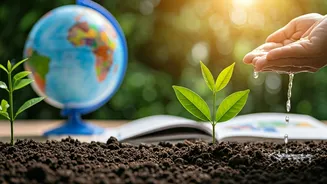
A key pillar of the new framework is its emphasis on action-oriented learning. The curriculum encourages students to engage in practical, community-based projects. This could mean participating in local tree-planting drives, conducting waste audits in their school or neighbourhood, learning about rainwater harvesting, or creating awareness campaigns. The idea is to bridge the gap between knowing and doing. By empowering students to take tangible steps, the education system hopes to combat the sense of helplessness that can often accompany discussions about climate change. It’s about cultivating a sense of agency and demonstrating that even small, local actions contribute to a larger, positive impact.
Challenges on the Road Ahead
While the policy is a landmark step, the path from paper to practice is filled with challenges. The biggest hurdle is training India's millions of teachers to effectively deliver this new, interdisciplinary curriculum. Many educators will need significant support and resources to confidently integrate complex climate topics into their subjects. Furthermore, ensuring that teaching materials are up-to-date, scientifically accurate, and contextually relevant for different regions across the country will be a massive undertaking for bodies like the NCERT. The success of this initiative will depend heavily on sustained investment in teacher development and the creation of high-quality, accessible educational resources. The vision is clear, but the execution will require a monumental effort from the entire education ecosystem.