



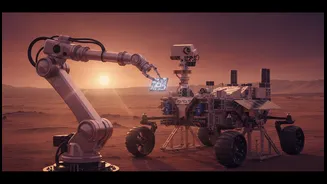


Beyond the Lone Rover
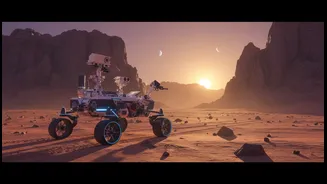
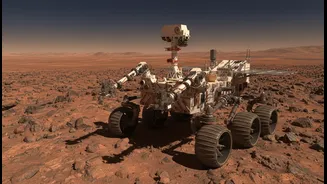
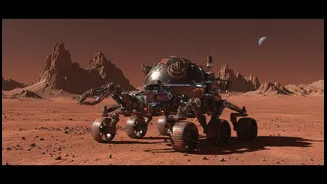
For decades, Mars exploration has been the story of solitary, wheeled explorers. From the small Sojourner to the SUV-sized Perseverance, these rovers have acted as remote geologists, covering incredible distances and rewriting our understanding of the Red
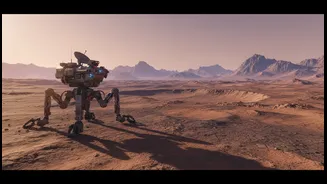
Planet. But the next great leaps—establishing permanent outposts, exploring treacherous lava tubes, or returning precious rock samples to Earth—demand a new approach. The days of a single, albeit brilliant, robot are evolving. The future lies in collaboration, specialization, and, most importantly, autonomy. Mars is simply too far away for real-time remote control, with communication delays making every command from Earth a painstaking process. The next generation of explorers must be able to think for themselves, and for each other.
Enter the Robotic Team
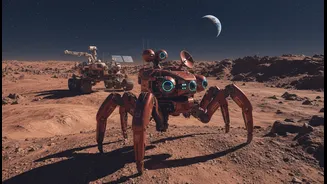
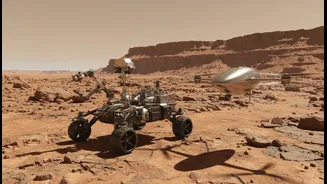
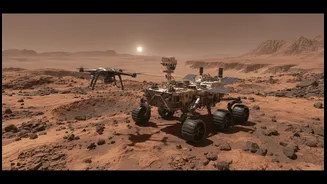
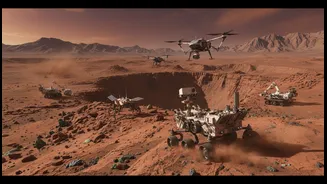
A glimpse of this future is already taking shape, not just in concepts but in funded initiatives. Recently, NASA announced its Science Transport and Robotic Innovation for Deployment and Exploration (STRIDE) initiative, awarding contracts to seven companies to develop next-generation mobility systems. This program is designed to foster commercial innovation for robots that can tackle tougher Martian terrain and travel farther than ever before. Another key project is CADRE (Cooperative Autonomous Distributed Robotic Exploration), which, while slated for a lunar demonstration, is a vital testbed for Mars. This mission will deploy a team of small, shoebox-sized rovers that work together without direct human control. They will autonomously elect a leader, distribute tasks, and create a 3D map of the subsurface, communicating via a mesh network. This cooperative, autonomous model is exactly what future Mars missions will require to efficiently survey large areas or assemble structures.
The Spinoff Effect: Mars Tech on Earth
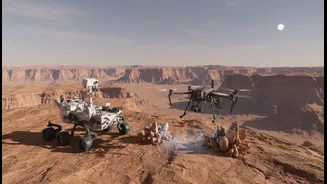
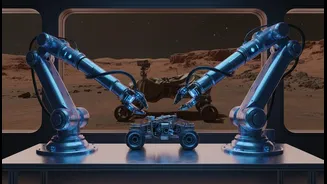
The immense challenges of operating on Mars have a powerful side effect: they accelerate technological development that has profound applications back on Earth. Developing robots that can navigate alien landscapes autonomously pushes the envelope for self-driving technology here. The artificial intelligence required for a rover to identify a scientifically interesting rock is not so different from the AI needed to spot a defect in a manufacturing line or assist in medical diagnostics. Technologies developed for lightweight, dexterous robotic arms could revolutionize prosthetics or advanced manufacturing. Likewise, systems designed for robotic teamwork in space could be adapted for disaster relief, where teams of drones and ground robots could autonomously search dangerous and unstable environments without risking human lives. Every dollar invested in solving a Martian problem is also an investment in solving terrestrial ones.
A New Public-Private Frontier
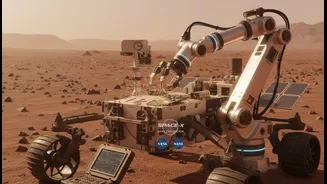
NASA is not building this future alone. The STRIDE initiative, which brings in companies like Astrobotic, Intuitive Machines, and Honeybee Robotics, signals a strategic shift. Rather than handling all development in-house, the agency is leveraging the speed and innovation of the commercial sector. This public-private partnership model allows NASA to focus on its core scientific and exploration goals while fostering a vibrant commercial space economy. By clearly defining the technological needs for future Mars missions—such as advanced mobility, autonomous operation, and sample handling—NASA creates a market that incentivizes private investment and innovation. This approach aims to deliver lower-cost, higher-frequency missions, ensuring a steady stream of scientific discovery and technological advancement. It's a strategy that builds a broader, more resilient industrial base for all of America’s space ambitions.