
Sendha Namak: The Pure Salt
The most fundamental switch in any Vrat kitchen is replacing regular table salt with Sendha Namak, or rock salt. But this is more than just a simple substitution. From a traditional perspective, Sendha Namak is considered a pure, unprocessed form of salt,
making it suitable for religious fasts where processed foods are avoided. Unlike commercially produced iodised salt, which undergoes chemical processing and often contains anti-caking agents, rock salt is mined directly and is rich in minerals like potassium, magnesium, and calcium. This mineral content gives it a milder, less sharp salinity that enhances the flavour of dishes without overpowering them. When cooking, you might notice you need a slightly larger quantity of rock salt to achieve the same saltiness as table salt. Its subtler taste profile allows the natural flavours of vegetables like potatoes, pumpkin, and bottle gourd to shine through in your Vrat preparations. Understanding this difference is key to creating balanced and flavourful fasting food.
Alternative Flours: The Grain-Free Staples
During most Vrats, common grains like wheat, rice, and millet are off the menu. This is where alternative flours like Kuttu ka Atta (buckwheat flour) and Singhara Atta (water chestnut flour) become indispensable. It's important to understand that neither of these are true grains. Buckwheat is technically a fruit seed, and water chestnuts are aquatic tubers, which is why they are permitted during fasts. Kuttu ka Atta is dark, dense, and has a distinctive nutty flavour. It's high in protein and fibre but can be tricky to work with as it lacks gluten. This means doughs made from it can be dry and crack easily. The key is to use hot water for kneading and to shape your puris or rotis gently. Singhara Atta is lighter in colour and texture, made from dried and ground water chestnuts. It has a slightly sweet taste and is starchier, which can make it a bit easier to handle than Kuttu. Often, a blend of the two flours, along with mashed potato as a binding agent, yields the best results for soft, pliable doughs perfect for deep-frying into delicious Vrat-friendly breads.
Sabudana: The Versatile Pearl
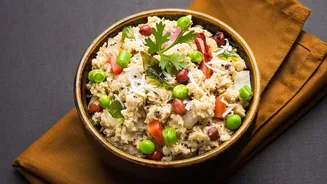
No Vrat menu feels complete without Sabudana, or tapioca pearls. From the iconic Sabudana Khichdi to crispy vadas and sweet kheer, its versatility is unmatched. However, this ingredient can be notoriously tricky, often resulting in a sticky, clumpy mess if not prepared correctly. The secret to perfect, non-sticky Sabudana lies entirely in the soaking process. First, rinse the pearls thoroughly to remove excess starch. Then, soak them in just enough water to cover them—a common mistake is using too much water. The ideal soaking time varies based on the size of the pearl, but a few hours is usually sufficient. A good test is to press a pearl between your fingers; it should smash easily. Once soaked, drain any excess water completely and let the pearls sit for a while, allowing them to dry out slightly. This preparation ensures that when you cook them, each pearl remains separate and translucent, whether you're making a savoury khichdi with peanuts and potatoes or deep-frying them into crunchy vadas. Master the soak, and you master Sabudana.